The government says it is on track to complete the Mozambique-Malawi Interconnection (MOMA) Project by December this year.
The project, led by the Electricity Supply Corporation of Malawi (ESCOM), has already achieved 69.34% completion.
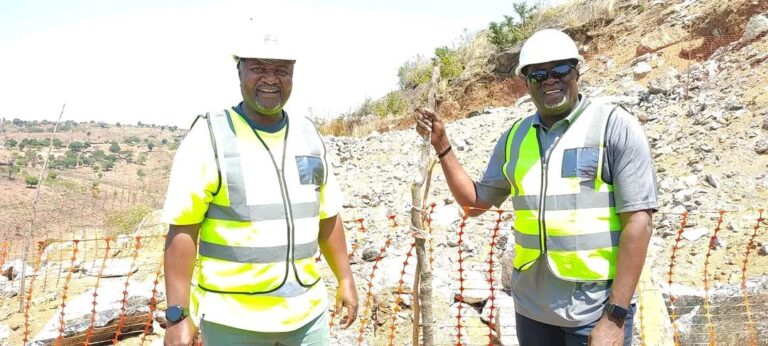
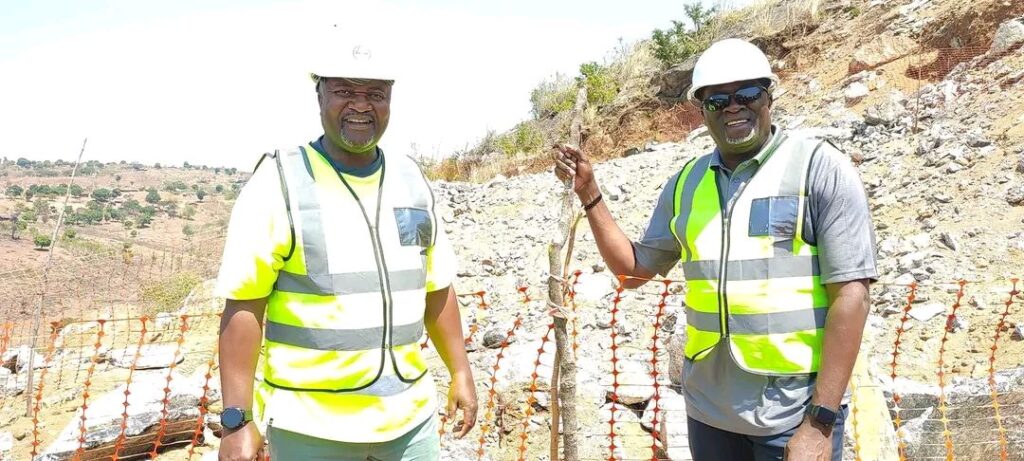
During a site tour on Wednesday, Minister of Energy Ibrahim Matola commended ESCOM for its successful execution of the project and ensured fair compensation for those affected by its implementation.
According to Matola,the project has impacted over 1,000 people, with 31,300 trees destroyed along the 76km stretch in Malawi.
However, on his part, ESCOM Chief Operations Officer, Maxwell Mulimakwenda, highlighted the positive impact on people’s lives, stating that the new shelters built for the affected people have improved their living conditions.
He added that the project has also benefited local communities by constructing 44 houses, 5 boreholes, a health center, a church, a community-based childcare center, school blocks, and planting 52,000 trees and distributing 64,000 fruit trees.
The Blantyre Registry’s Commercial Division has instructed the sheriff to seize and sell Joshua Chisa Mbele’s properties to recover the outstanding balance of MK42,500,000 for Regina T. Mbowera.
Chisa Mbele
The court order signed by Justice Msungama states that the sheriff must seize and sell Mbele’s properties, including goods and chattels, within the district or any other district within the court’s jurisdiction to recover the debt.
“The sheriff must report back to the court on the actions taken,” reads the court order.
Mbowera obtained a judgment on May 16, 2024, requiring Mbele to pay the above said outstanding balance.
Afro-pop musician Dan Lu, has joined fellow musician Joseph Nkasa in drumming support for the ruling Malawi Congress Party (MCP) and its leader President, Lazarus Chakwera in his latest song titled ‘Chakwera’.
The new song which features the voices of President Chakwera himself was released on Saturday morning and received both positive and negative feedback from Malawians.
Dan Lu
The song highlights a number of developments that the MCP led government has done like the construction of good modern roads and improved electric power supply.
The Chorus of the song goes…..
Sakuchoka Chakweraaaa!
Ali M’momo Chakweraaaa!
Ndi mkango Chakweraaaal
Kwacha kwayera × 2
The song comes in as a big surprise to most Malawians as the musician is known to be staunch member of the opposition Democratic Progressive Party (DPP), having previously done a number of song praising the party’s leadership.
You can listen to Dan Lu’s new song ‘Chakwera’ by following the link below https://m.youtube.com/watch?v=gVsQ49kqCDw&sfnsn=wa
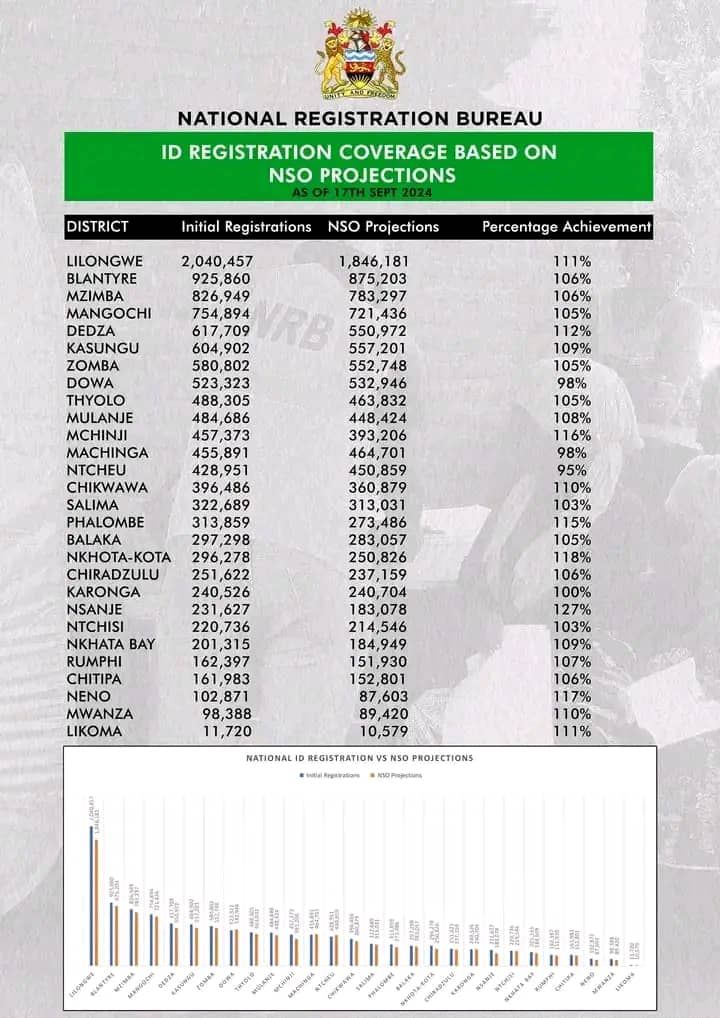
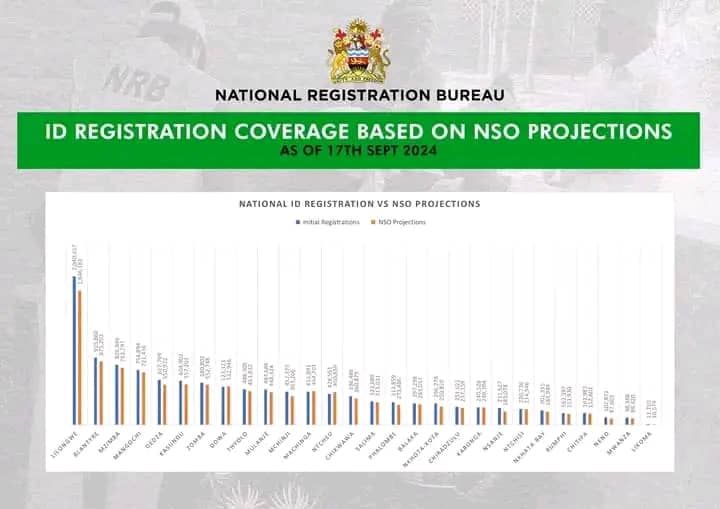
As Malawi approaches the 2025 general elections, the national identification (ID) registration process has taken center stage in the country’s political landscape. National ID cards serve as essential documents for voter registration, financial services, and access to government programs, making their distribution a critical issue. By 17th September 2024, the coverage of national ID registration is being closely scrutinized, with political analysts focusing on how well the National Registration Bureau (NRB) has met the projections provided by the National Statistical Office (NSO).
The NSO’s population projections have long been used as a benchmark for national registration coverage. According to the NSO, the estimated population of Malawi stands at approximately 21 million people, of which about 15 million are adults eligible for national ID registration. By September 2024, the NRB aimed to cover at least 90% of eligible citizens, meaning around 13.5 million people should have been registered.
However, discrepancies between NSO projections and actual registration numbers have emerged, especially in certain districts. With a significant focus on political battlegrounds like Lilongwe district, political stakeholders are keen to see whether the national ID registration process meets expectations.
By the 17th of September 2024, the NRB reported that approximately 11.8 million citizens had been successfully registered with national IDs, representing roughly 78% of the eligible population. While this number reflects significant progress, it falls short of the 90% target set for this period.
A deeper analysis reveals regional disparities in registration coverage. Urban centers such as Blantyre, Zomba, and Mzuzu have achieved coverage rates of over 85%, but the process has been slower in rural and peri-urban areas, particularly in districts like Chitipa, Nsanje, and Lilongwe.
Lilongwe, being the political capital and home to a substantial portion of Malawi’s electorate, has emerged as a focal point in the national ID registration drive. The district, which has an estimated eligible population of 1.3 million adults according to NSO projections, has become a strategic area for political parties ahead of the 2025 elections.
By mid-September 2024, Lilongwe had registered approximately 920,000 people, representing just over 70% of the eligible population. This shortfall is of particular concern to political actors, as Lilongwe is expected to be a decisive district in the next elections. Delays in registration, logistical challenges, and administrative inefficiencies have been cited as reasons for the slower pace in Lilongwe.
The lower registration figures in Lilongwe have sparked intense political debate. Opposition parties, particularly the Democratic Progressive Party (DPP) and United Democratic Front (UDF), have accused the government of deliberately slowing the registration process in areas where they enjoy strong support. The ruling Malawi Congress Party (MCP), however, has dismissed these claims, citing technical issues and challenges with resource allocation as the primary causes for the delays.
Several challenges have contributed to the disparity between NSO projections and actual ID registration coverage:
Firstly, many rural areas, including parts of Lilongwe, have faced delays due to inadequate staffing and equipment, with some centers lacking the necessary machines to process ID applications efficiently.
Secondly, a lack of adequate public awareness campaigns, particularly in remote districts, has led to lower turnout rates for registration. Citizens in rural areas are less likely to access information about registration deadlines and requirements.
Thirdly, allegations of political interference have emerged, with opposition parties claiming that certain areas are being marginalized in the registration process to influence voter turnout in the upcoming elections. These accusations have further fueled political tensions.
Fourthly, while the NRB’s efforts to register millions of citizens have been commendable, the bureau has faced funding shortages that have affected its ability to deploy adequate resources to all regions of the country.
Implications for the 2025 elections
As the country gears up for the 2025 general elections, the national ID registration process is more than just a bureaucratic exercise—it is a matter of political significance. With registration coverage falling short of NSO projections in key districts like Lilongwe, concerns are growing over voter disenfranchisement.
Political parties, civil society organizations, and electoral watchdogs are urging the government to address the gaps in registration coverage to ensure that all eligible citizens have the opportunity to participate in the democratic process. If the current challenges persist, there is a risk that thousands of Malawians—particularly in politically significant districts—could be excluded from voting, which could spark post-election disputes.
Conclusion
By 17th September 2024, the national ID registration process has made progress but remains behind NSO projections. The shortfall in registration coverage in critical areas like Lilongwe district is a major point of concern, especially with the upcoming elections. Addressing the challenges facing the registration process will be essential to ensuring that all eligible Malawians can participate in the 2025 elections. The political eyes on Lilongwe district reflect the high stakes of this issue, and how the situation unfolds will play a significant role in shaping the country’s electoral landscape.
The Ministry of Education has described this year’s Malawi School Certificate of Education (MSCE) examination results as a wake-up call, urging relevant authorities to investigate the root causes of poor performance and to find lasting solutions.
Speaking today in Lilongwe, the Ministry’s Director of Education, Youth, and Sports for Lilongwe Urban, Grace Kafulatira Mulima, emphasized the need for multi-stakeholder collaboration to improve academic performance. She noted that student success is not the responsibility of the government or parents alone but requires the combined efforts of various sectors.
“For a student to excel academically, it takes interventions from multiple stakeholders,” Mulima said. “If we are to achieve our long-term development goals outlined in Malawi 2063, the education sector must yield desirable results.”
Her remarks came during an awards ceremony at Philipina Memorial Secondary School, where the best-performing students and teachers from the recently released MSCE results were honored. The event was meant to celebrate academic excellence and highlight the importance of motivation in driving students toward success.
Joseph Patel, Director of Philipina Memorial Secondary School, echoed Mulima’s sentiments, adding that student motivation plays a crucial role in their academic achievements. “Motivation is key,” Patel said. “When students are motivated, they work harder and are more focused on achieving their goals.”
The Ministry’s call for a thorough investigation into the MSCE results underscores the need for comprehensive reforms in the education sector to ensure that Malawi’s youth are well-equipped to contribute to the nation’s development.
As stakeholders look ahead, it is clear that addressing the challenges in education requires a united effort to foster an environment where students can thrive and Malawi can build a self-reliant future.