Malawi’s fast-rising Afro-Pop star Pop Young real name Vitumbiko Chisoni has released a new song titled’ Patricia’.
In an interview, Pop Young said ‘Patricia’ is a must listen love song which is talking more about how people feel about their love partners in relationships.
He said the afrobeat song was produced at Chawa beats in Mzuzu and is currently available on his YouTube channel and Joynathu.com for downloads.
Pop Young
He then thanked his fans for the support they give him when he drops a new song and promised to keep releasing more hit songs.
“I am always grateful for the support from my fans because every time I drop a song they enjoy ,so I hope they will enjoy this one too . There are more good songs coming ahead,” he said.
Pop Young started his music in 2016.
So far, he has released popular songs like, Mesa, Sole and Story.
He also has an Extended Playlist (EP) titled ‘Love Ticket’ which has songs like Kupe, Woko, Chenge and Kaye.
Malawian gospel artist Mark George, who is based in South Africa, will launch his new album, “Alipano Baba,”*on May 5 at the Living Waters Church in Johannesburg’s Central Business District.
In a recent phone interview, George said that the album contains 10 tracks, all of which he composed and arranged himself.
The recording took place at Slate Records, owned by Alex Cholamula.
“All the songs on the album were written and arranged by me, and I’m excited to share them with the world,” George said.
Dan Mpinga, one of the artists supporting the launch,said that preparations are in full swing.
He encouraged people to attend the event, promising a mix of great music and spiritual blessings.
“George is both a good friend and a spiritual mentor, so I can’t wait to assist him on May 5,” Mpinga said.
The album includes songs such as “Yesu Amakonda,” “Landira Mayakho Ako,” “Ndinu Nokha Yesu,” “Tidzaimba Hosanna,” “Msandisiye Ndekha Hallelujah,” “Kudziwike,” “Alipano Baba,” “Ndampeza Mamuna Weniweni,” and “Moyo Wanga Ulemekeza Inu.”
The Catholic University of Malawi Students welfare committee has organised a fundraising dinner to mobilise resources for fellow students who are needy which is scheduled to take place on Saturday 4 May 2024.
The committee’s representative, Winter Kazembe, who is also the resource mobiliser, says through the dinner, the event will be held at the university campus hall.
“The committee is appealing to all stakeholders, religious institutions and individuals who are capable of helping to do so by sponsoring a particular activity or buying a table at the event.
“There will be a campus awards ceremony, live music, and dances among other activities and companies or individuals can sponsor any category,” says Kazembe.
The disadvantages facing low income college students are that college is for the rich. Universities may flaunt their financial aid packages and student resources but behind all that is the inequity low-income students face. A Harvard University study found that of 38 colleges in America, including five in the Ivy League, more students came from the top 1 percent of the income scale than from the entire bottom 60 percent. Colleges are not providing the resources that students need to get a good education.
Otherwise, there would be a much closer enrollment rate between the upper and lower income classes. In addition to academics, students are faced with costs that prevent them from succeeding in social settings. On top of all of that, expenses for food and housing. This lack of equity negatively impacts students’ ability to succeed socially, physically, and academically.
College is an opportunity to branch out, engage socially, and make connections. That is, if the student can afford it. Connections at college stem from joining clubs, sports, or participating in events and activities. Extracurriculars are for the rich. Joining just one sport can rack up costs of equipment, uniforms, travel, and more. Going out with friends is also expensive, a share of the dinner bill, and the uber ride. Even joining a weekly club can be too much when a job is the priority. Because of costs, low income students are often excluded from the social aspect of the college experience.
In a study of 12,000 students from 200 plus colleges, results showed that students from low income backgrounds were less involved in extracurriculars than their higher class peers. In a separate study of first generation college students, questions were asked to learn about personal experiences of classism. Students reporting lessaccess to financial resources experienced more incidents of exclusion. Playing a sport or going out with friends may not be a graduation requirement. However, social inclusion is vital in a student’s success in college and thereafter.
Low income students struggle to have basic necessities like food and housing. Low income students find themselves skipping meals or reducing food intake altogether to save money. Some college kids rely on staying at school over breaks. It may be too expensive to go back home, or there may be no home to go back to.
However, Universities contribute to national development. This involves providing invaluable contextualised knowledge, insights and locally relevant recommendations for policy formulation and implementation; solving existential problems; creating technological products; and producing new knowledge that can be adapted for economic, political and social improvement.
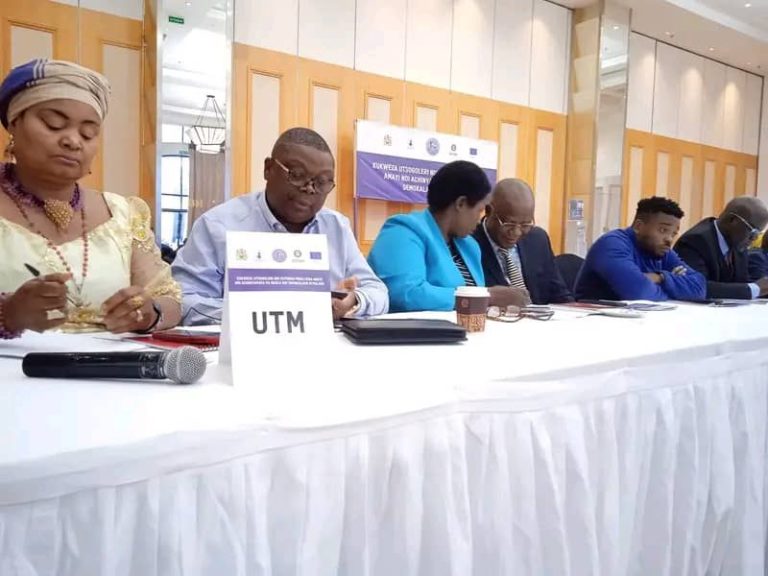
Oxfam is this morning conducting an engagement workshop with six major political parties on party conventions and strategies for promoting women,youth and people with disabilities in political processes and leadership.
Oxfam country director Lingalireni Mihowa says the meeting is aimed at discussing strategies and preparations for effectively promoting women and young people in the forth coming elections.
Gender minister Jean Sendeza believes formulation of deliberate policies can promote women in politics.
Oxfam in collaboration with Women Legal and Resource Centre (WORLEC) are implementing a five year project on Promoting Gender Transformative and Youth Inclusive Democracy in Malawi.
Every major election cycle, particularly those that lead to a presidential election, features a convention for the participating political parties. These conventions serve as a meeting of party delegates, coming together to nominate party candidates for office and establishing the party’s platform.
Less formally, conventions get party delegates and members organized and excited for an upcoming election day. This is a crucial step in preparing for the general election. It encourages people to become registered voters and increases voter registration turnout.
Conventions can occur at several local, statewide, or national levels. The most significant party conventions in Malawi are the national conventions of the Malawi Congress Party and Democratic Progressive Party and the United Democratic Party. These conventions are crowd pullers and happen every five years before a presidential election.
Thousands of people attend national conventions. The attendees include activists, party officials, election officials, volunteers, local business leaders, and news media.
National conventions have their roots in the early 1800s. At that time, members of Congress would meet with their party caucuses to determine a nominee. But as more newly settled western states started clashing with eastern states over nominee choices, a convention to resolve the matter became practical.
Those tensions set the tone for the 1824 Democratic-Republican convention. Factions of delegates refused to back the nominee endorsed by the party caucus.
Nowadays, thanks to the party’s primary elections, it’s rare that a nominee hasn’t been mostly decided on before a party convention begins. The last time a national party convention contained any drama regarding the nominee was in 1976. Here, delegates could not decide between President Gerald Ford and challenger Ronald Reagan.
Political parties in hold national conventions to select presidential and vice presidential nominees. In Malawi, they hold national conventions to select presidential and vice presidential nominees are picked by the presidential candidates.
In Malawi, the convention is important because it offers party members a chance to gather together and discuss the party’s platform. The platform is the party’s stance on the political issues of the day. For a long time in the past, the convention was a place for political debate, and important decisions were made there.
As the Malawi National Examinations Board (MANEB) gears up for this year’s French exams for both the Junior Certificate of Education (JCE) and the Malawi School Certificate of Education (MSCE), the board has issued a stern warning to French teachers to uphold professionalism during the examination process.
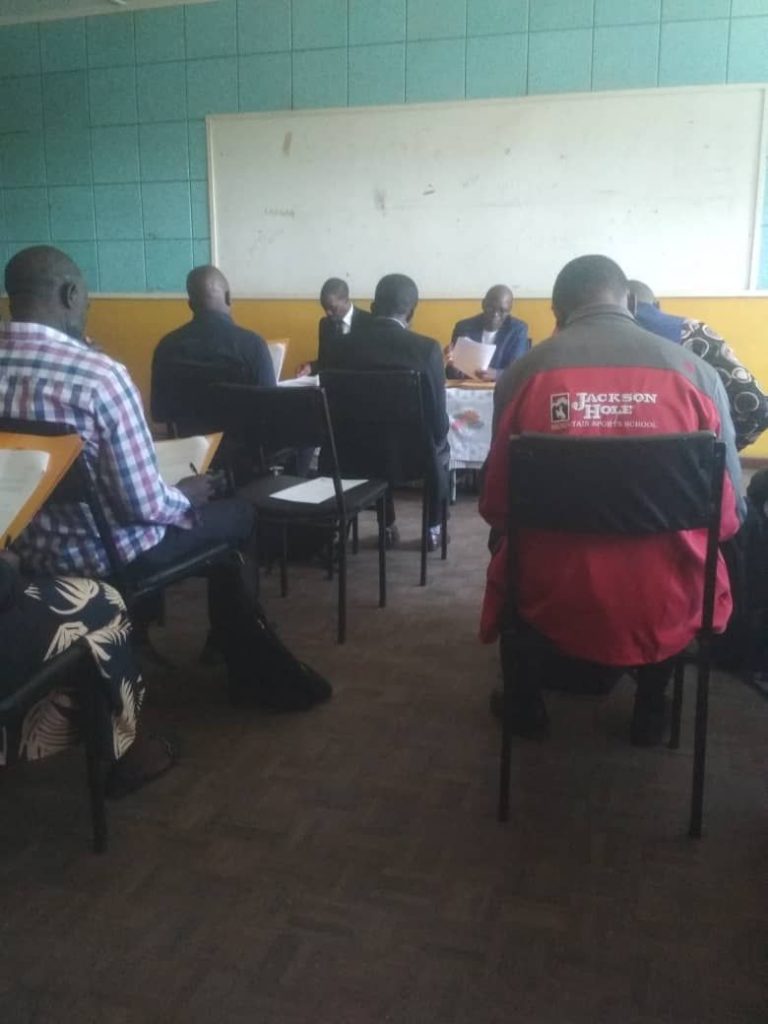
Mr. Kadzitche, the subject development officer at MANEB, emphasized the need for French teachers to refrain from administering exams while under the influence of alcohol. Speaking at the French standardization event for teachers in Chichiri, Blantyre, Mr. Kadzitche warned that any teacher found to be drunk while administering exams would tarnish the reputation of the subject and face consequences.
“Let us refrain from going to the centres while drunk. Should you go to the centre under the influence of alcohol you are putting the subject in disrepute and you will not be allowed to administer the paper,” Kadzitche said firmly.
MANEB has been conducting French standardization sessions across the country, starting from the north and center and now concluding in the south. French teachers from all schools offering French as a subject following the local syllabus have been participating in these sessions to ensure standardized exam procedures.
In addition to emphasizing professionalism, French teachers also raised concerns about the timely provision of stipends by MANEB to assist them during the national examination period. The teachers highlighted the importance of these stipends in helping them cover expenses during the examination period.
According to a survey conducted by our publication, there has been an observed increase in the number of schools offering French as a subject compared to previous years, when the number of schools offering French had decreased. This indicates a growing interest in French language education among students in Malawi.
With the JCE exams scheduled to roll out in June and the MSCE exams in July, French teachers are gearing up for the examination period with a renewed focus on professionalism and adherence to exam standards. The success of students in these exams relies not only on their preparation but also on the diligence and integrity of the teachers administering the exams.
As the education sector in Malawi continues to evolve, it is essential for teachers to uphold high standards of professionalism and dedication to ensure that students receive a quality education. MANEB’s call for French teachers to exercise professionalism during the upcoming exams is a reminder of the responsibility that educators hold in shaping the future of the next generation.