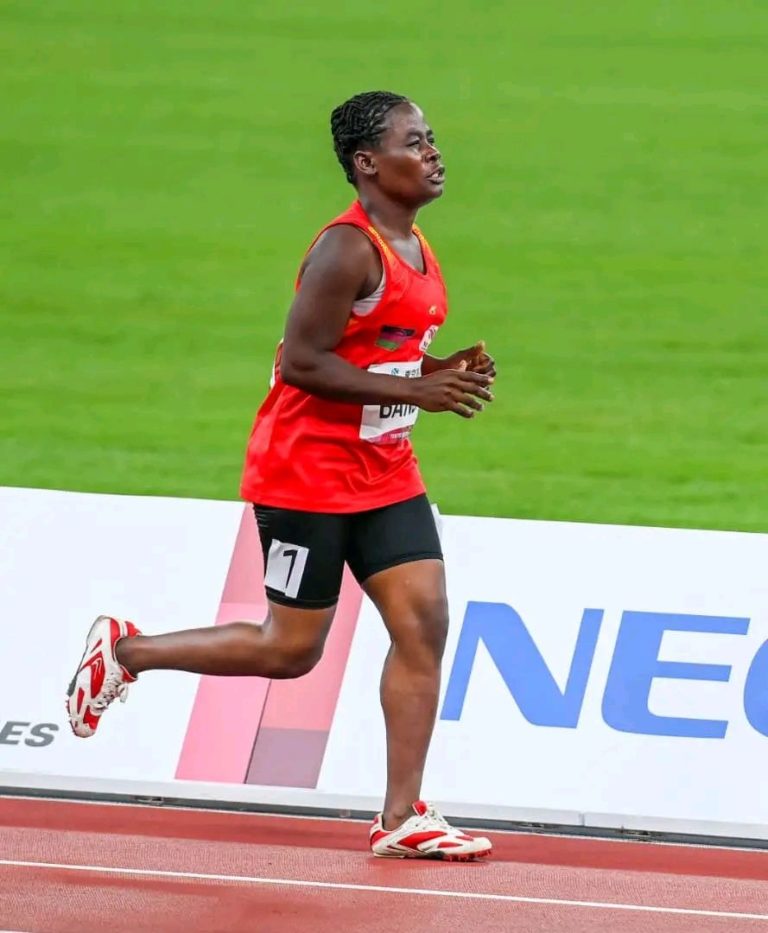
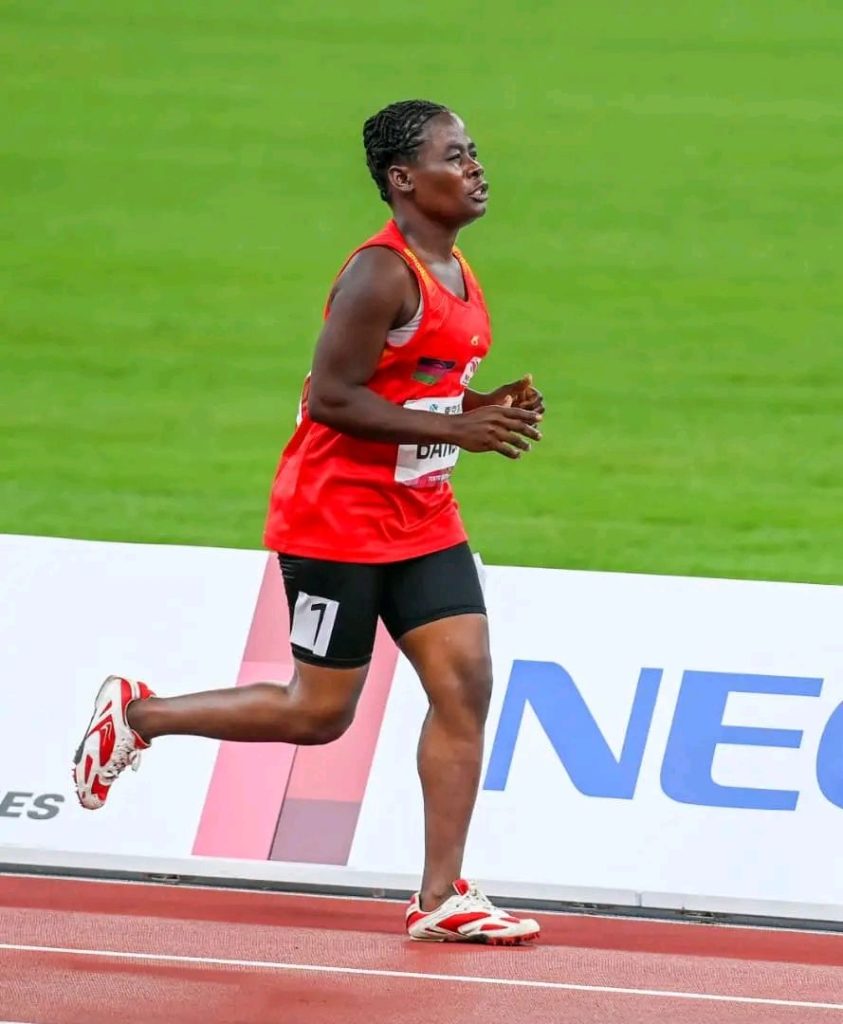
A 22-year-old Taonele Banda has become the second Malawian para-athlete to qualify for 2024 Paris Paralympics after meeting the qualification time during qualifiers in Morocco on Sunday.
Taonele, has qualified in the 400m T13 category after running 1:07:95, beating the minimum qualification time for this category which is 1:09:00.
Taonele Banda
She joins Mphatso Saukire, who qualified for the Paris event after an impressive medal winning performance at the 2022 African Union Region Five Youth Games, which the country hosted in Lilongwe.
Speaking in an interview with local media, MPC vice president Joseph Galenje who is also head of technical said he was proud of the two athletes for making it to Paris on merit.
Said Galanje:”given the bottlenecks we met along the way, this is a satisfying result.”
The Paris Paralympics, also known as the 2024 Summer Paralympic Games, will take place in Paris, France, from August 28 to September 8, 2024.
The event will feature 22 sports and 23 disciplines, with 549 events and 269 sessions.
Malawi Government says the construction of Kenyatta and Mzimba street roads in the capital Lilongwe will require an additional K24 billion, bringing the total cost to K52 billion from K28 billion.
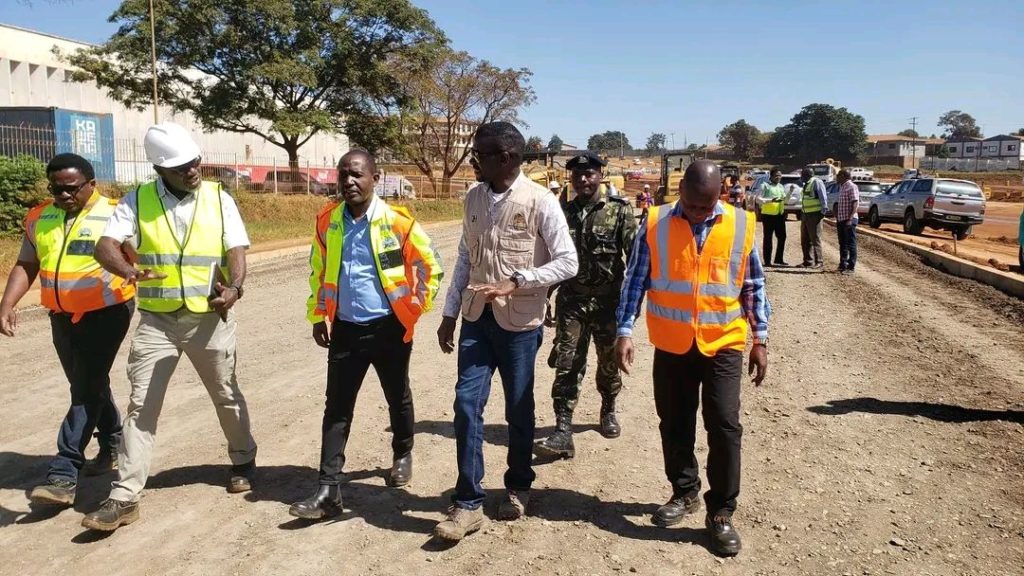
Minister of Transport Jacob Hara disclosed this on Monday during a tour to appreciate progress of the roads construction in the city.
Initially, the total cost for Kenyatta road construction was at K19 billion and now is at K35 billion whereas Mzimba was at K9 billion, now at K17 billion.
Hara inspecting the roads
The Minister said this follows a review of the projects cost as a result of the 44 percent devaluation of kwacha which resulted into an increase in the prices of construction materials.
Said Hara:”We have had to review the project costs, and unfortunately, the devaluation of the kwacha has resulted in an increase in the prices of construction materials.
“We will now spend K35 billion kwacha on the construction of Kenyatta road, up from the initial K19 billion kwacha, and K17 billion on Mzimba street, up from K9 billion.”
Despite the increased cost,Hara expressed optimism about the project’s outcome.
“We are committed to delivering high-quality roads that will benefit the people of Lilongwe and the nation as a whole. I am confident that the final product will be worth the investment,” he said.
On his part, Engineer Paul Kulemeka, the consultant for the two projects, assured the Minister that the construction will be completed by the end of December this year.
“We are working tirelessly to ensure that the projects are completed on time and within the new budget.
“We are committed to delivering quality roads that will meet the needs of the people of Lilongwe,” said Kulemeka.
The construction of Kenyatta and Mzimba street roads is a significant infrastructure development project aimed at improving transportation and reducing congestion in the city of Lilongwe.
The project is expected to have a positive impact on the city’s economy and residents’ quality of life.
The Malawi Congress Party (MCP) has announced that the preparations for its upcoming August elective convention in Lilongwe are now complete.
The party has made the announcement through a statement signed by its National Publicity Secretary Ezekiel Peter Ching’oma.
MCP has emphasized that anyone who wants to contest for any position must be a loyal member of the party and that all aspirants who wish to contest for any position must adhere to the party’s rules and regulations and demonstrate their commitment to the position they are vying for.
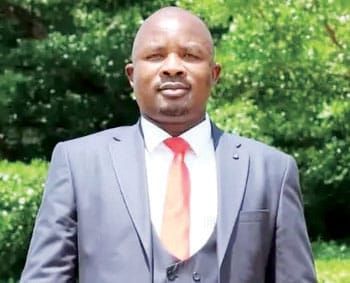
Ching’oma
The party says it has confidence that the August convention will bring unity and strengthen it ahead of the 2024 general elections.
Founded in 1959 by Orton Chirwa, Aleke Banda and other leaders of the Nyasaland African Congress (NAC),MCP is Malawi’s oldest political party.
It was formed as a successor party to the banned NAC when the country, then known as Nyasaland, was under British rule.
The party, under Hastings Banda, presided over Malawian independence in 1964, and from 1966 to 1993 was the only legal party in the country.
Malawi Police in the capital Lilongwe are keeping in custody lawyer Stanley Chirwa for being found in possession of a , ‘Ford Ranger’ car suspected to have been stolen in South Africa at gun point in 2018.
According to Police publicist, Peter Kalaya, Chirwa was arrested on Friday after the vehicle came for clearance at the Police Headquarters on 8th April this year.
Chirwa
“We detected the vehicle after noting that it’s details (chassis number, engine number, its make and its colour) matched that reported stolen in South Africa. He was arrested on Friday afternoon in Lilongwe and he has been in our custody,” says Kalaya.
Kalaya further says Chirwa will appear before court soon where he will answer charges of receiving or bringing in property dishonestly acquired outside Malawi, found in possession of property suspected of being stolen and receiving stolen property.
Meanwhile, Chirwa’s lawyer, Gilbert Khonyongwa says he is going to apply for bail at court.
Solidaridad, in collaboration with the Industrial Development Corporation of South Africa (IDC) and the Department of Trade, Industry and Competition (DTIC), is making significant strides in addressing unemployment and fostering economic growth through the Social Employment Fund Project. The learnings from the Social Employment Fund project suggest that the creation of jobs and stimulating economic activity has never been more urgent.
In South Africa, unemployment remains a pressing issue, with particularly dire consequences for young people. According to Statistics South Africa’s Quarterly Labour Force Survey, the official unemployment rate was 31,9 percent in the third quarter of 2023. While this indicates some progress, youth unemployment remains a significant concern in South Africa, underscoring the need for targeted interventions and sustainable solutions to create more employment opportunities for young people.
A Call for Action!
“The question presented by the Social Employment Fund is whether the smallholder sector can effectively absorb the unemployed population within rural and peri-urban communities. One significant barrier to scale for most smallholders is the substantial investment required for mechanization, a benefit often enjoyed by commercial farmers. As a result, labor emerges as a critical input in the business case for scaling up smallholders. Through initiatives like the Social Employment Fund Project, in 2023, we established one more soil lab and engaged 1,352 horticulture smallholder farmers in agriculture services, with the same number benefiting from digital inclusion initiatives. We also managed to involve 2,014 young individuals in agricultural projects. The project is spearing ahead at full speed in 2024,” says Mohau Mailula, Solidaridad Country Manager for South Africa.
The Social Employment Fund Project, currently implemented in two provinces – Gauteng and the North West – is aligned with Solidaridad’s thematic areas of focus: food and nutrition, greening and the environment, and support for digital inclusion. This holistic approach ensures comprehensive development and sustainable impact in the region. “At Solidaridad, we define scale in two dimensions: increased production, which pertains to a farm’s growth in hectareage, and intensification, which focuses on maximizing yield per hectare. This dual approach not only enhances farmers’ revenue but also establishes a self-sustaining cycle. In order to maintain the heightened productivity levels, smallholders must retain their labor force, thereby reinforcing the link between scale, productivity, and employment stability within the sector,” asserts Mailula.
In the Pursuit of “The Common Good”
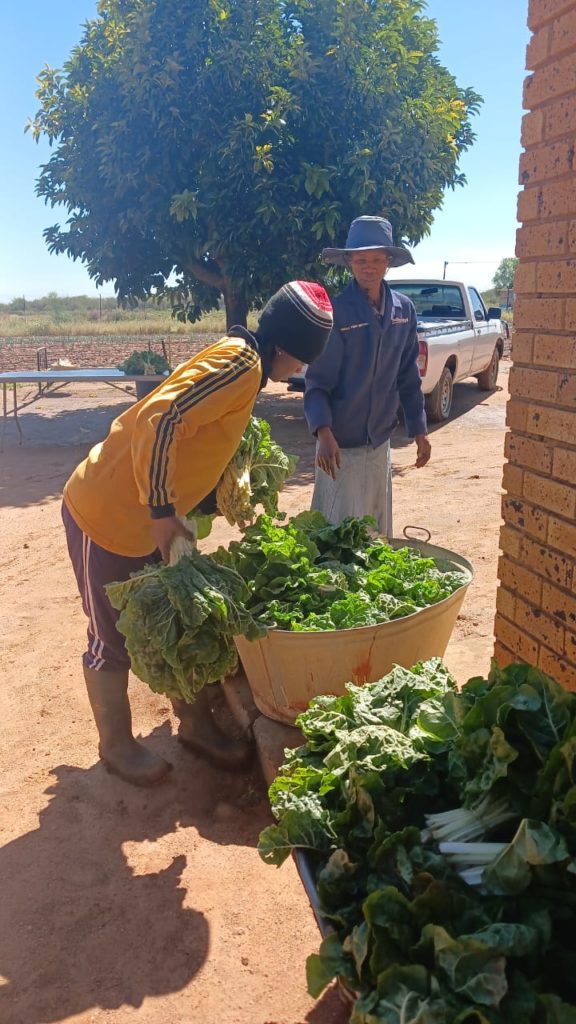
“The Social Employment Fund also operates on the principle of work for the common good, advocating for enterprises and individuals to incorporate activities and decision-making processes that benefit the broader community over narrow self-interests. With a focus on rural and peri-urban communities, the project identified food security as a critical thematic area. This is due to the reality that rural resources provide the urban market with the nutritional diversity it enjoys, while rural communities often find themselves deprived of such variety. By leveraging our proximity to these communities, it became imperative to enhance their food security and ensure access to a nutrient-rich diet. To achieve this, we established 300 food gardens, strategically distributing 10 percent of their collective yield to school feeding programs, ultimately benefiting 9,100 learners. This not only addresses immediate nutritional needs but also fosters long-term community resilience and well-being.” says Mailula.
As the African proverb goes, a river cuts through rock, not because of its power, but because of its persistence. As a river’s persistent flow gradually shapes the landscape, so do our consistent efforts collectively pave the path towards local community progress. Every step counts. Every job matters. Each hungry stomach that is sustained is significant. In this journey towards community resilience, job skills empowerment is crucial because individuals with job skills sustain themselves and strengthen our local food security. True to the Afrocentric cultural worldview of Ubuntu (humanity), we all need to unite and do our part for the improvement of all.
“As we move forward, we must work together to champion the horn of South Africa and our continent at large. The challenges facing our agricultural sector and workforce are multifaceted and require sustained commitment and collaboration from all stakeholders. Solidaridad remains steadfast in its dedication to empowering farmers, fostering job creation, and promoting sustainable livelihoods, and we call on all partners and stakeholders to join us in this vital endeavor. Together, we can build a more resilient and prosperous future for all,” concludes Shungu Kanyemba, Managing Director at Solidaridad Southern Africa.