
Saturday, December 20, 2025
No menu items!
spot_img
Home Blog Page 378

Legal clarity and judicial prudence: Analysis of the acquittal of Mwanamvekha in IMF misreporting case

By Burnett Munthali

The High Court of Malawi’s Financial and Economic Crimes Division, sitting in Lilongwe, has delivered a precedent-setting judgment by permanently discharging former Finance Minister Joseph Mwanamvekha in a case involving alleged misreporting to the International Monetary Fund (IMF).

At the heart of the matter was a US$350 million loan obtained from Afreximbank by the Reserve Bank of Malawi during Mwanamvekha’s tenure as Finance Minister.

The state had alleged that the loan had been misreported to the IMF, constituting a serious breach of financial integrity and transparency standards required by international lending institutions.
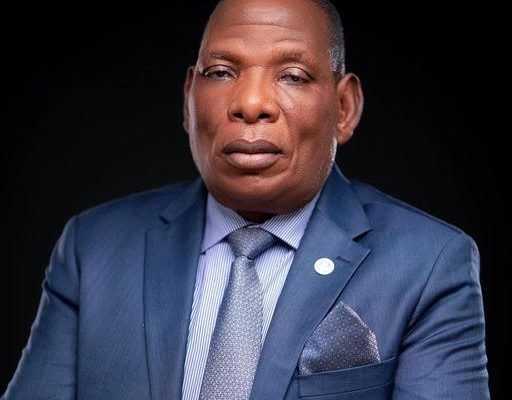
Mwanamveka


Justice Redson Kapindu, a respected jurist known for his meticulous reasoning, presided over the case and ultimately ruled in favor of the defense.

He held that the state had failed to bring forth any credible or direct evidence implicating Mwanamvekha in the alleged financial misrepresentation.

This ruling follows a drawn-out legal saga that began in 2022 when Mwanamvekha was arrested alongside three other senior public finance officials.

Though the case was initially dismissed in 2024 due to the state’s failure to satisfy the burden of proof, it was subsequently re-opened, signaling the prosecution’s continued belief in the merit of the charges.

Despite this, the court has now definitively closed the chapter for Mwanamvekha, affirming his acquittal and permanently discharging him from the proceedings.

The ruling is widely seen as a litmus test for the judiciary’s independence in politically sensitive cases involving high-profile figures.

In response to the verdict, lead defense counsel Kalekeni Kaphale—a former Attorney General and Senior Counsel—described the decision as a victory for the principles of justice and due process.

He argued that the case had highlighted the dangers of pursuing prosecutions absent solid and persuasive evidence.

Kaphale further stated his intention to seek a similar discharge for another of his clients, former Secretary to the Treasury Cliff Chiunda, who remains among the accused.

According to Kaphale, Chiunda’s position was primarily administrative, and he was neither the author nor the approving authority of the data or decisions that formed the basis of the IMF misreporting allegations.

With Mwanamvekha now cleared, the remaining defendants—Chiunda, Henry Mathanga, and former Reserve Bank Governor Dalitso Kabambe—continue to face legal scrutiny.

All three were similarly arrested in connection with the Afreximbank loan and accused of orchestrating or facilitating the submission of inaccurate data to the IMF.

Their next court appearance is scheduled for June 4th and 5th, 2025, with proceedings likely to be closely followed by stakeholders in Malawi’s governance and financial sectors.

Legal analysts suggest that the outcome of Mwanamvekha’s case may influence the direction and public perception of the remaining prosecutions.

The acquittal also reignites debate surrounding the use of prosecutorial discretion and whether political motivations play a role in high-level financial crime investigations.

There are growing concerns that some cases may be initiated or pursued more for their symbolic value than for their legal merit.

This raises broader questions about the state’s capacity to marshal sufficient investigatory resources when dealing with complex financial crimes involving powerful individuals.

Critics argue that premature arrests and weak prosecutions not only damage reputations but also undermine public confidence in the justice system.

Conversely, the court’s ruling demonstrates judicial restraint and a commitment to legal standards, reinforcing the idea that courts must be guided by facts and not public pressure.

The judgment is also a reminder that in criminal law, the burden of proof lies squarely on the prosecution, and failure to meet this threshold must result in an acquittal, regardless of the political climate.

In the broader context of Malawi’s governance landscape, this case underscores the tension between anti-corruption efforts and the safeguarding of individual rights and fair trial guarantees.

As the cases against Chiunda, Mathanga, and Kabambe progress, public attention will be fixed not only on the outcomes but on the integrity of the process itself.

The acquittal of Mwanamvekha could be a turning point in the way economic crimes are prosecuted in Malawi—favoring methodical investigation over prosecutorial zeal.

It may also catalyze reforms in how cases involving international financial institutions and state borrowing are handled, ensuring that such cases are guided by financial forensics and evidence-based prosecution.

Ultimately, the ruling reaffirms the judiciary’s role as a bulwark against arbitrary prosecutions and a guarantor of constitutional rights.

In this evolving legal environment, the Mwanamvekha ruling stands as a benchmark for judicial independence, prosecutorial responsibility, and the enduring value of the rule of law in a democratic society.
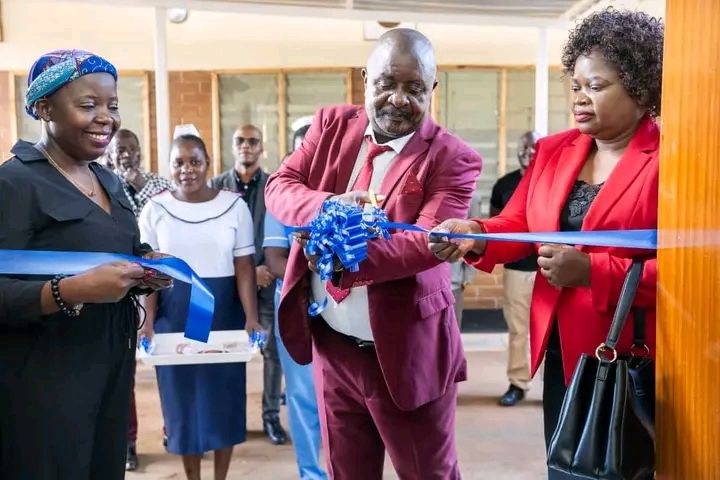
PIH hands over k452 million high dependency unit to neno district health office

0

By Jones Gadama

In a significant boost to healthcare delivery in Neno District, Partners In Health (PIH) has handed over a state-of-the-art K452 million High Dependency Unit (HDU) to the Neno District Health Office.

The unit, equipped with cutting-edge medical technologies, aims to minimize referrals of critically ill patients to Queen Elizabeth Central Hospital in Blantyre, thereby saving lives and resources.

PIH Executive Director, Basimenye Nhlema, emphasized that the opening of the HDU underscores the organization’s commitment to providing quality healthcare to the people of Neno.


“We want to ensure that no life is lost due to lack of relevant health structures,” Nhlema said, urging health personnel to assist patients with dignity while taking care of the unit.

The HDU is a game-changer for Neno District, which has long struggled with limited access to quality healthcare.

According to Dr. Enock Ndarama, Neno District Director of Health and Social Services, the facility will not only save lives but also reduce the financial burden associated with referrals.

“This unit will help us save lives and resources, and we’re excited to have state-of-the-art medical technologies at our disposal,” Dr. Ndarama said.

Neno District Council Chairperson Councilor Joseph Chiphaliwali commended PIH for the timely intervention, noting that the project will ease referral operations, which have been hampered by the poor road network in the district.

“This project comes at a time when we need it most,” Chiphaliwali said, adding that, “We’ll no longer have to worry about transporting critically ill patients to Blantyre, which will undoubtedly save lives.”

The PIH’s investment in Neno District’s healthcare infrastructure is part of its broader commitment to strengthening the health system in the area.

The High Dependency Unit is a testament to PIH’s dedication to delivering quality healthcare to the people of Neno.

As the district continues to grapple with healthcare challenges, the PIH’s intervention is a welcome development that promises to improve health outcomes and save lives.

The unit will enable healthcare personnel to provide quality care to critically ill patients, improving health outcomes and saving lives.

With this new facility, Neno District is poised to take a significant step forward in providing quality healthcare to its residents.

Ghosts of progress: Silence and inactivity at the judiciary headquarters construction site

0

By Burnett Munthali

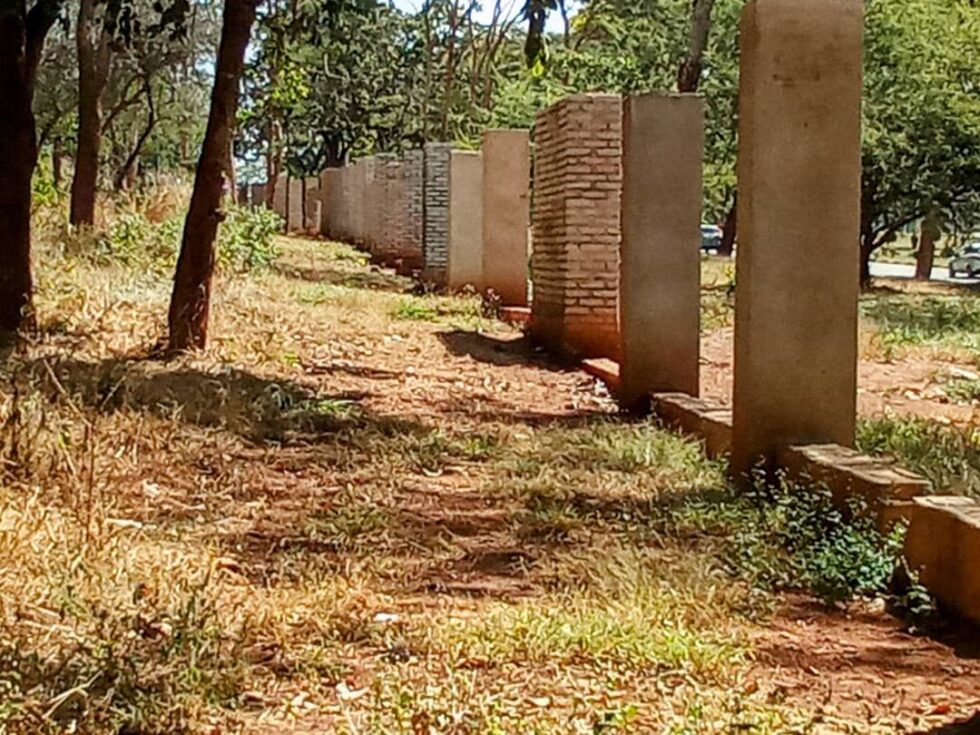
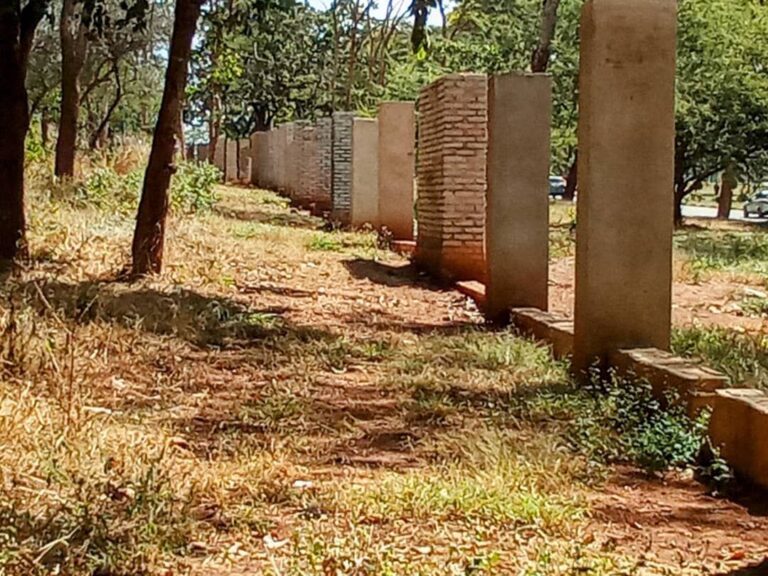
On Friday, 9th May 2025, we paid a visit to the construction site of the long-anticipated Judiciary Headquarters Office, situated just behind the Parliament building in the Capital City’s City Center.

What was meant to be a hub of progress and a testament to the state’s commitment to judicial reform and infrastructural development now stands as a colossal reminder of delay and neglect.

What we observed was striking.

The structure itself still towers dominantly, its grey skeleton a bold outline against the city skyline.

But the commanding presence of the building is betrayed by a haunting stillness.


The noise and movement of construction workers—once a hallmark of this location when the project commenced—have faded into an eerie, deafening silence.

The site that once bustled with ambition now slumbers in inertia.

As we approached what seemed to be the main entrance of the unfinished edifice, a sense of abandonment thickened.

Only a few men dressed in green work suits could be seen moving about, their actions slow and seemingly uncoordinated.

They touched a few materials here and there, with no tools in motion and no machinery roaring to life.

The energy was faint, as though the workforce had been reduced to shadows, performing a ritual of presence without the spirit of progress.

This construction project is one of national significance, fully funded by the Government of Malawi.

It is meant to embody a new era for the judiciary—a physical symbol of transparency, efficiency, and institutional integrity.

However, the reality observed on the ground tells a different story.

A story of public funds potentially hanging in limbo and of a grand vision being quietly postponed, if not forgotten.

The implications of this extended inactivity are profound.

At the most basic level, delayed construction means delayed justice infrastructure.

The judiciary continues to operate in crowded or outdated facilities, hampering efficiency.

Financially, the longer a project like this drags, the more expensive it becomes.

The government may find itself incurring additional costs due to prolonged contracts, material deterioration, or even legal battles with contractors.

Beyond infrastructure and economics, there is a silent erosion of public trust.

Citizens who were once hopeful about the government’s commitment to strengthening democratic institutions begin to question the sincerity of such initiatives.

Every silent day at that construction site becomes a symbol of broken promises, misplaced priorities, or possible mismanagement.

In a country battling economic constraints, high youth unemployment, and rising public scrutiny of state expenditure, the inactivity at the Judiciary Headquarters site should not be ignored.

It must spark serious conversations—within Parliament, among civil society, and across the public space—about accountability, transparency, and the true pace of our national development efforts.

The judiciary deserves a home that reflects the dignity of its mission.

The people of Malawi deserve visible, tangible results from the taxes they pay.

This project cannot be allowed to become yet another relic of good intentions buried beneath bureaucratic inaction.

It must be revived, completed, and serve the purpose for which it was envisioned.

IG Yolamu challenges political parties Directors of Youth to be role model

0

By Linda Kwanjana


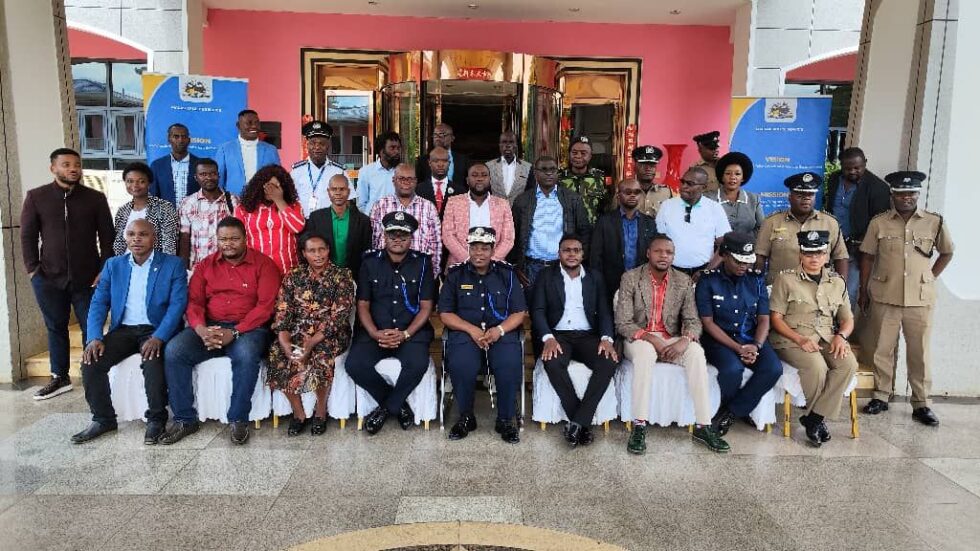
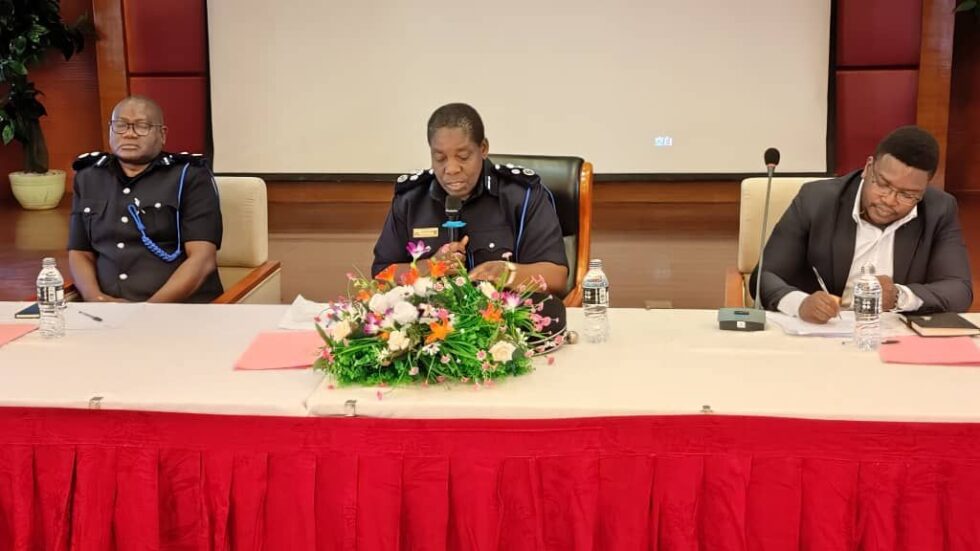
Malawi’s Inspector General of Police Merlyne Nachulu Yolamu on Thursday met Directors of youth from 18 political parties in the country.

What it means is that five Political parties were not represented because currently Malawi has 23 registered political parties.

The meeting follows another meeting which the Police Service held with Secretary Generals from from all the registered political parties.


Speaking during the meeting , Yolamu said there is need for peaceful coexistence as the country is maneuvering closer towards the tripartite polls.

“What we want as a security agent, as the one that are at the hub of providing security to Malawians before, during and after elections, is that they should be peaceful engagement all parties, including all stakeholders,” she said.

in this should always have time. If they have differences, they should invite each other, have a dialog, communicate properly with open mind and agree on certain issues that really matter in the electoral cycle. Why this is important is that as Malawians, we are different, different because we belong to different parties, different regions, and we have even different tribes. But what brings us together as Malawians is one thing, that we are all Malawi. We have a stake in this country. Hence, when there are issues to do with Malawi, we should always live aside whatever we know, whatever we have, and come together and demonstrate that we belong to one, Malawi.

According to Madam Yolamu , Directors of youth are very important arm of the parties which controls the youth.

“As youth they have powers to chose the destiny because they are of large numbers,” she said.

She said of late the country has been witnessing pockets of political violence.
Such as undressing of party clothes for other women.

She urged all Directors of youth for political parties to be role models to other political party members.

“Let us tame our speeches because we all belong to one Malawi.As leaders lets desist from hate speeches because what we speak have big effects on our followers,” she said.
Yolamu has since called on DOYs to condemn violence because as leaders themselves they know who are perpetrating these violence.

Speaking during the meeting Centre For Multi party Democracy Programs Manager , Dalitso Magelegele commended the Malawi Police for initiating the meeting.

Magelegele appealed to all political party leaders to encourage tolerance and peaceful coexistence at all levels as the country is matching towards the polls.

UTM Director of youth Penjani Kaluwa and MCP youth representative Vumani Chidzanja Nkhoma hailed Malawi police for the initiative.

Phwedo maintains innocence in defilement and child abduction case

By Jones Gadama

Malawi’s entertainment industry has been rocked by allegations against one of its most recognizable figures, Tumpe ‘Phwedo’ Mtaya. The actor has pleaded not guilty to charges of defiling a 15-year-old girl and child abduction. According to the charges, the alleged crimes took place between February 18 and February 22, 2025.

During the court proceedings, Phwedo’s defense team, led by lawyer Mkwima Tchizi, requested additional documentation from the prosecution.

The defense sought proof of the victim’s age, specifically her Malawi School Certificate of Education (MSCE) results or student identification card from the Malawi National Examinations Board (MANEB), as she reportedly sat for her exams in 2024. An age assessment report was also requested to further verify the victim’s age.

Phwedo


The court has adjourned the hearing to May 16, 2025, allowing the prosecution time to gather and present the requested documents.

This development has added a new layer of complexity to the case, with many eagerly awaiting the court’s decision on the matter.

The allegations against Phwedo are severe, and if found guilty, he could face significant penalties under Malawi’s laws protecting children. The case highlights the importance of child protection and the need for thorough investigations to ensure justice is served.

Phwedo’s defense team maintains that their client is innocent and looks forward to presenting their case in court.

The actor’s popularity and influence in Malawi’s entertainment industry have made this case a subject of widespread interest and discussion.

The outcome of this trial will have far-reaching implications, not just for Phwedo but also for the broader conversation around child protection in Malawi. As the legal proceedings continue, many are watching closely to see how the justice system handles this high-profile case.

In the meantime, the public remains divided, with some expressing support for Phwedo and others calling for accountability.

The case serves as a stark reminder of the challenges Malawi faces in protecting its children and the importance of upholding the law to ensure justice for all.

As the court date approaches, the anticipation builds. Will the prosecution be able to provide the necessary evidence to support their claims, or will Phwedo’s defense successfully argue his innocence? The answer to these questions will have a lasting impact on Phwedo’s career and the lives of those involved.

The case also underscores the critical role that documentation and evidence play in legal proceedings, particularly in cases involving serious allegations.

The request for the victim’s MSCE results and an age assessment report is a crucial aspect of the defense’s strategy, emphasizing the need for precise and reliable information in the pursuit of justice.

The case against Phwedo is a complex and sensitive matter that will continue to unfold in the coming weeks. With the court’s decision on the defense’s application pending, all eyes are on the legal system to ensure that justice is served fairly and impartially.