
Thursday, December 25, 2025
No menu items!
spot_img
Home Blog Page 519

The role of professionalism in security and the military: A discussion among Ex-Malawi Defense Force Soldiers

By Burnett Munthali

Security in Malawi has become a highly debated topic, especially concerning the role of private security firms aligned with political parties.

In a recent discussion on a WhatsApp platform for ex-Malawi Defense Force soldiers, several retired officers shared their insights on the state of security in the country, raising concerns about professionalism, political influence, and the distinction between security forces and political enforcers.
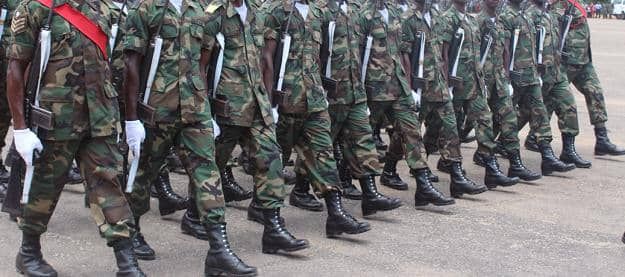
One former soldier opened the discussion by observing that many security companies attached to political parties prioritize hiring “bouncers” solely based on their muscular build.

According to him, these individuals often lack proper security training, having only gained their physical strength by lifting heavy merchandise in markets or warehouses.

He argued that true security work demands professionalism, not just brute strength, and that relying on untrained individuals compromises the integrity of security services.

Another retired soldier added that a major challenge among many leaders is their limited understanding of security matters.

He pointed out that most politicians associate security with body contact, likely because of what they experience in public places such as bars and nightclubs.

However, he warned that as the country develops, security threats will evolve, and politicians may eventually encounter more sophisticated threats, such as snipers.

He emphasized that in any situation involving gunfire, a trained security officer must prioritize self-protection while ensuring the safety of their client.

To achieve this, security personnel must be trained in maneuvering, taking strategic positions, and responding effectively under fire.

He urged security company owners, particularly those hired by political parties, to understand that modern security goes beyond hand-to-hand combat or martial arts.

A third retired soldier shifted the discussion towards the role of the military in governance and politics.

He reminded the group that the primary duty of the Malawi Defense Force (MDF) is to protect the government of the day, not individual political parties.

He acknowledged that while some officers within the Malawi Police Service may sometimes show political bias, this is not expected of the military.

The Malawi Police Service is responsible for internal security, which makes them more vulnerable to political influence, but the Malawi Defense Force must remain neutral and professional at all times.

He warned that when the military aligns itself with a political party, it risks losing the trust and confidence of the public.

The discussion then turned to allegations that the Malawi Defense Force is currently biased in favor of the ruling Malawi Congress Party (MCP).

One retired soldier expressed concern, saying that if true, such political affiliations would be both unfortunate and unprofessional.

However, he cautioned against assuming these allegations are factual, hoping instead that they remain mere speculation.

Another retired officer criticized the presence of unqualified individuals in security roles, reiterating that many so-called security personnel are simply weightlifters from the streets.

This, he argued, contributes to the decline in professionalism and effectiveness within security teams, particularly those working for political parties.

A fifth voice in the discussion took the conversation back to history, recalling an incident in 1979 involving a young soldier at Kamuzu Barracks.

According to him, this soldier, whose name was withheld because he has since passed away, attended a political rally in Lilongwe while disguised in Malawi Congress Party regalia.

At the event, he poked out the eyes on a cloth bearing the party’s emblem, an act that sparked controversy.

The regional minister at the time, Aaron Gadama, escalated the issue, leading to an inquiry at the highest military level.

The Army Commander at the time, General Yohane, had to address the matter, with military officials questioning whether poking out the eyes on the cloth meant that the President himself had lost his vision.

The lesson from this incident was clear: politics had no place in the military, and any form of political interference was strictly discouraged.

The retired soldier lamented that today, such principles seem to have been abandoned, with political influence creeping into military affairs.

The final contributor to the discussion expressed deep concern about civilians wearing military-style regalia associated with political parties.

He warned that allowing party supporters to dress in military attire could lead to the dangerous underestimation of the army’s authority.

He cited reports suggesting that 28 political party youths were recently taken to Ntakataka for security training, despite having no official role in government security structures.

He described such actions as reckless and dangerous, arguing that they must be stopped before they undermine the integrity of the nation’s security apparatus.

In conclusion, the discussion among these former Malawi Defense Force soldiers highlighted several pressing issues regarding security and political influence in the country.

The consensus was that security must be rooted in professionalism rather than physical strength or political allegiance.

The military must remain neutral and dedicated to its national duty, rather than serving partisan interests.

Furthermore, the use of untrained individuals in security roles, particularly by political parties, poses a serious risk to both leaders and the public.

Ultimately, security in Malawi must be governed by expertise, discipline, and respect for national institutions, rather than being reduced to a tool for political gain.

Podcast Malawi partners with Jackpot City Casino in multi-million Kwacha deal

By Chisomo Phiri

One of the country’s leading podcast platforms, Podcast Malawi on Friday signed a multi-million kwacha partnership with Golden Bay Limited, a betting company that manages The Jackpot City Casino brand in the country.

Under this partnership, Podcast Malawi will help amplify Jackpot City Casino’s brand by running fun games, competitions, exclusive offers, and special code giveaways on its social media channels.


The partnership also extends to Podcast Malawi’s most popular segment, the Tuesday Video Podcast, hosted by the dynamic duo, Brandon Jones and Bensam.

In addition, Podcast Malawi will be at the forefront of promoting responsible gaming, ensuring all Malawians have a safe betting experience.

Speaking after the agreement signing, Podcast Malawi’s Business Development Lead, Roy View Banda, expressed delight in the collaboration:

“We are very excited and honored to be trusted by one of the top casino companies in the country.

“With over 5 million monthly impressions across our portfolio, this will be a thrilling journey in shaping the narrative around Jackpot City’s offerings through our partnership with Golden Bay Limited,” he said.

On his part, Golden Bay Limited’s Country Manager, Charles Phiri, welcomed the partnership and reaffirmed the company’s commitment to providing a premium online casino experience:

“This partnership with Podcast Malawi marks an exciting new chapter for Jackpot City Casino in Malawi.

“We are confident that through their dynamic and engaging platform, we will reach a wider audience, elevate brand awareness, and provide Malawians with an unmatched online gaming experience.

“This is just the beginning of a long and fruitful collaboration,” said Phiri.

Golden Bay Ltd through its Jackpot City Casino brand, is one of the first companies to offer online only casino gaming in the country.

Players can enjoy popular games like Crash, Aviator, and Spins on both computers and mobile devices-making the excitement accessible to anyone, anywhere.

RBM denies rumors of introducing K10,000 banknote

0


By Chisomo Phiri

The Reserve Bank of Malawi (RBM) has  denied rumors circulating on social media that it plans to introduce a K10,000 banknote.

Social media was awashed with reports that the central bank intends to release the bank note on the market next week Wednesday.

The claims quoted the RBM Governor, Dr. Macdonald Mafuta Mwale that he made the disclosure.

Reserve Bank of Malawi


However, posting on its official Facebook page, the bank has distanced itself from the reports describing them as fake news.

The current RBM’s highest denomination note in circulation is the K5,000 note, introduced in 2022.

Chakwera Serves His Best At Last: Dimba Closes Dudu, Mumba Closes Chipiku

By Blessings Simbowe

The appointment of the new Labour Minister Peter Dimba MP, and new Trade Minister, who is the predecessor to Dimba, Eng Vitumbiko Mumba, has left many speculating why these two explosives were never appointed as cabinet ministers in the first place. While Chakwera’s adminstration has been marred by nepotism, lazy incompetent cabinet ministers, and indecision by Chakwera himself, just like the maphia styled failed DPP regime, the new Labour Minister has proven Malawi’s last hope still remains Chakwera. This week has ended with Dimba closing Central Poultry (Dudu) for breach of labour laws while Mumba closes Chipiku for hoarding sugar.

Dimba at Dudu

Many have likened the working style of the two new ministers to the revolutionary hard to the teeth Timothy Mtambo’s whom the nation still wonders why he was mercilessly kicked out of Chakwera’s adminstration, while leaving a bunch of clueless ministers like Chimwendo Banda, Nsungama, Mulusu, Kandodo, Kazako, Uchizi Mkandawire, Gwengwe, Kawale, Msukwa, Hara just to mention a few.

Dimba currently also serves as Chair person for the Legal Committee of Parliament, which saw him resign at some point for disagreeing with Chakwera on the handling of Martha Chizuma the then ACB Director and how the corruption fight was wrongly going. Dimba proved to the nation that he is a no nonsense kind of politician who wastes no time to mere rhetoric.

When Dimba was asked how he intends to deliver in only under  three to four  months remaining, this was his response:

“Change starts with one person. I promise you that labour issues in Malawi will never be the same again because they are in the right hands now. What do you mean I have only three months when Chakwera is proceeding to 2030? I have come to turn the tables the right side up! Look at what I have achieved in under only one day and tell me if you doubt that three months is quite a long time for a minister of my calibre”

Mumba has been a breath of fresh air


My 3rd day in office ended at 10 pm with a courtesy call over dinner by the International Labour Organization (ILO) Regional Director, Mr Chibebe who flew from Lusaka, his base to congratulate me on my appointment and reassure us of ILO’s commitment to continued closer cooperation with Our Ministry.

Earlier in the morning, I had a meeting at BICC with Tshamiso, a South African Trust that was established for the settlement of compensations to Ex-Miners who were exposed to health hazards as they worked in the gold mines.As of 1970, Malawi had about 129,000 miners in RSA and the numbers began to dwindle after the plane carrying Malawians crushed in Francis Town, Botswana and killed 74 passengers in 1974. We’ve agreed to expedite the process of identifying the illegible Malawian Ex-Miners so they could benefit from the Trust ASAP.

Over lunch, it was time to visit the Shop workers in Bwalolanjovu and Malangalanga right in their backyard at Lilongwe Community Ground and hear for myself the horrible working conditions they are subjected to by their masters most of whom are Malawians of Indian origin, Chinese and Nigerians.The breach of labour laws and rights is deplorable.They are working like slaves in their own land.The unfairly low  wages, the lack of overtime allowances, the lack of PPEs (for cement and steel handlers) the poor occupational safety and healthy standards, the lack of holidays, the unfair treatment, the continuous temporary employment to circumvent pension, the unfair dismissals..etc is tantamount modern day slavery and must stop.I intend to convene another meeting with their (Slave) Masters and enlighten them on the labour laws and their workers’ rights which they break with impunity before stiff punishment (that would include prohibition order/closure and deportations) is meted out on some of  them.The kind of treatment they give to these workers can never be tolerated in New Delhi and Beijing and must never be tolerated in Lilongwe, Blantyre or Mzuzu.

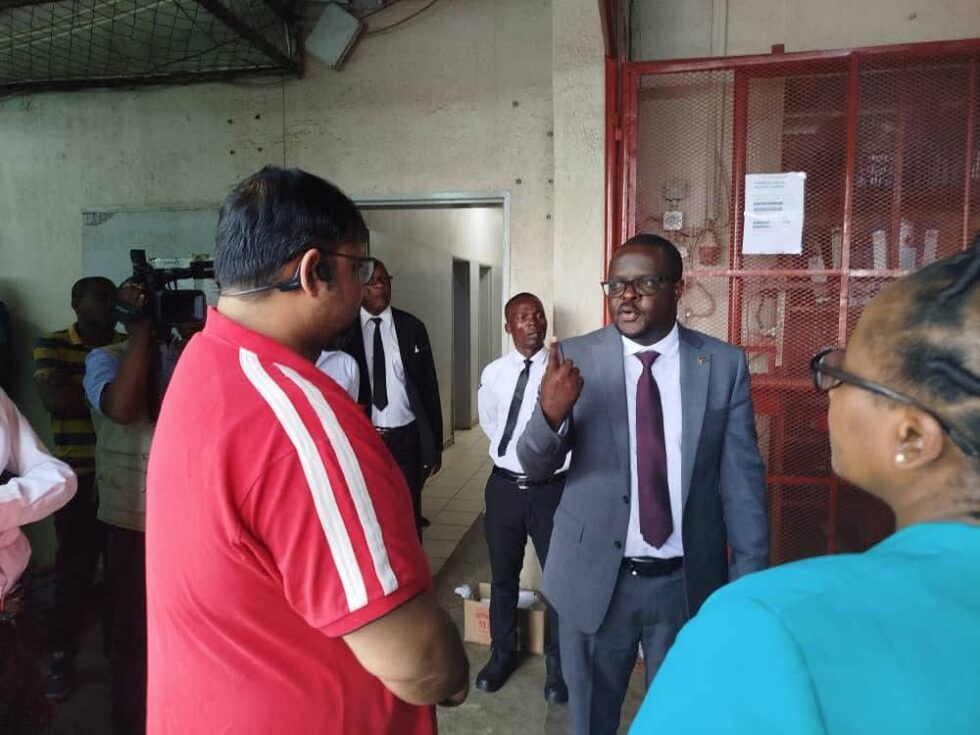
At 4 pm, it was time to pay a surprise inspection visit at Central Poultry (AKa Dudu).What I saw here was not just modern day slavery but imprisonment and the response we received from the enslaved workers as we began to hear their grievances was like in Rambo films when Silvester Stallone would come to free hostages.We saw the countenance of visibly burdened workers brightening up as I began to assure them of Govt’s commitment to protect them from abuse.They were so overjoyed that they kept chanting hopeful songs as we moved from section to section.What we saw at ‘Dudu’ was ‘too much’.The breach of the labour laws and workers rights was so grave that we could not allow them to operate for another hour hence we issued a prohibition order to stop their operations until they fix the issues.

From Falls, we went to Njewa (at around 7 pm) to reopen two companies, PlasticMax and Hongsheng that were closed for breaching labour laws and workers rights but have since fixed the issues for which a prohibition order was issued.

How do you intend to sustain these positive developments in the Labour Ministry?

My ministry has well established Acts of Parliament, policies,  procedures and the Labour laws themselves. My mandate is to ensure implementation and there is a well established structure at Capitol Hill, in every District council, City assemblies and Municipalities across the country to ensure every rule is followed to the book. The Courts, Police, MRA, Immigration just to mention a few are also our major stakeholders in ensuring labour issues are efficiently handoed. I will grab every labour issue by the collar, and trust you me, the good times for the employer and the worker have arrived.

Ministers Vitumbiko Mumba, Chithyola, Gumba, Kawale to Engage Malawi Diaspora this Saturday

By Durell Namasani

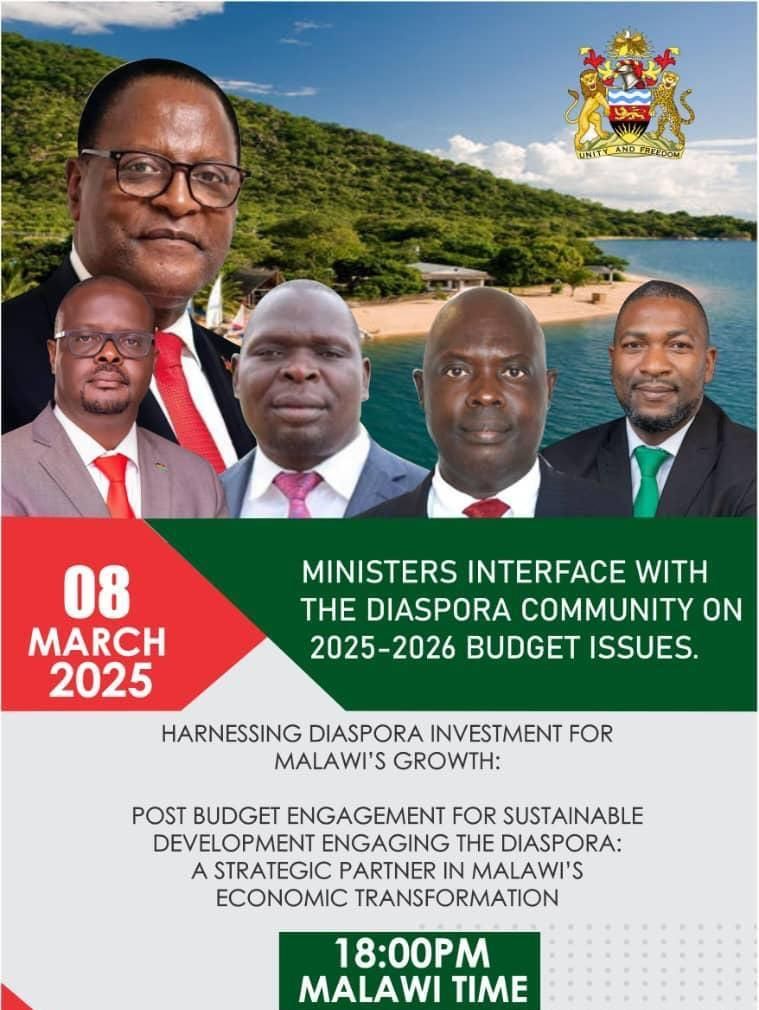
Four Malawian cabinet ministers are set to engage the country’s diaspora this Saturday, 8th March, focusing on the 2025-2026 Malawi national budget and its implications for the economy. The event will be a key post-budget engagement, centered on the theme “Harnessing Malawi Diaspora for Investment Growth.”

The ministers participating in the panel are: Vitumbiko Mumba, the Minister of Trade; Simplex Chithyola, the Minister of Finance; Sam Kawale, the Minister of Agriculture; and Deus Gumba, the Minister of Lands. This virtual event aims to strengthen the relationship between Malawi and its diaspora, underscoring the strategic role the diaspora plays in the country’s economic transformation.


The discussions will explore how the diaspora can contribute to sustainable development, particularly in addressing the current challenges facing Malawi, such as forex issues and international trade uncertainties. The event is seen as an opportunity to engage the diaspora in finding solutions to these problems while leveraging their potential as investors and ambassadors for Malawi’s global branding.

Finance Minister Simplex Chithyola recently presented the national budget in Parliament, which forms the backdrop for the discussions. The budget includes strategies to enhance economic stability, and the involvement of the diaspora is viewed as vital in achieving long-term growth and development.

The online event will provide a platform for diaspora members to interact with the ministers and discuss the budget’s impact. Those interested in participating can join the webinar through a provided link.

This engagement comes at a crucial time when Malawi needs to harness the power of its global citizens, both for economic growth and to strengthen the nation’s presence on the world stage. It is an essential step towards fostering collaboration between the government and the diaspora for Malawi’s future.