
Saturday, April 4, 2026
No menu items!
spot_img
Home Blog Page 717

Malawi faces worsening food crisis as 5.7 million people at risk

0

By Burnett Munthali

Malawi is on the brink of a severe food crisis, with an estimated 5.7 million people—28 percent of the population—expected to face crisis-level food insecurity between October 2024 and March 2025, according to the latest Malawi Emergency Monitoring (MEM) report. This marks a significant increase from the 4.4 million people who experienced acute food insecurity in 2023, signaling a worsening humanitarian situation fueled by multiple economic and environmental challenges.

The MEM report attributes the deepening crisis to difficulties in accessing agricultural inputs and the lingering impact of Cyclone Freddy, which devastated parts of the country. Poor harvests, rising food prices, and the continued depreciation of the Malawian kwacha have further compounded the problem, leaving millions vulnerable to hunger.

Southern Malawi hit hardest

The crisis has disproportionately affected households in southern Malawi, where many families have been forced to drastically reduce their daily food intake. According to the MEM findings:

40 percent of families reported eating fewer than two meals per day in August 2024.

30 percent of households revealed that they had gone an entire day without eating, indicating a severe deterioration in food security.

The situation has led to increased malnutrition rates, particularly among children and pregnant women, raising concerns over the long-term health impacts of prolonged hunger. With food prices skyrocketing and maize shortages becoming more pronounced, households are resorting to desperate survival strategies, including selling off essential assets and reducing expenditures on health and education.

Government and humanitarian response

In response to the crisis, the Malawian government and international aid agencies have ramped up efforts to provide emergency food assistance. However, funding constraints and logistical challenges have slowed down intervention efforts. The government has pledged to expand its social protection programs and increase subsidized farm input distribution, but these measures may not be sufficient to fully address the escalating crisis.

Meanwhile, humanitarian organizations such as the World Food Programme (WFP) and USAID are working to mobilize additional resources to support affected populations. Aid agencies have called for urgent international assistance to prevent the crisis from spiraling into a full-blown famine.

Call for long-term solutions

While short-term relief efforts are crucial, experts stress the need for long-term solutions to enhance Malawi’s food security and resilience. Key recommendations include:

Investing in climate-resilient agriculture to mitigate the impact of extreme weather events.

Strengthening input supply chains to ensure farmers have access to fertilizers and seeds at affordable prices.

Enhancing irrigation infrastructure to reduce reliance on erratic rainfall patterns.

Diversifying food sources to lessen dependence on maize, which remains the country’s staple crop.


Outlook for 2025

With the peak lean season approaching, the situation is expected to worsen in the coming months, placing further pressure on vulnerable households. If immediate action is not taken, Malawi could face one of its worst food crises in recent years, with devastating consequences for millions of people.

As the country grapples with the growing food insecurity crisis, strong policy interventions, enhanced donor support, and sustainable agricultural reforms will be critical in ensuring that Malawi can avert an even greater humanitarian disaster.
SUGAM pushes for Sugar Bill enactment

0

By Chisomo Phiri

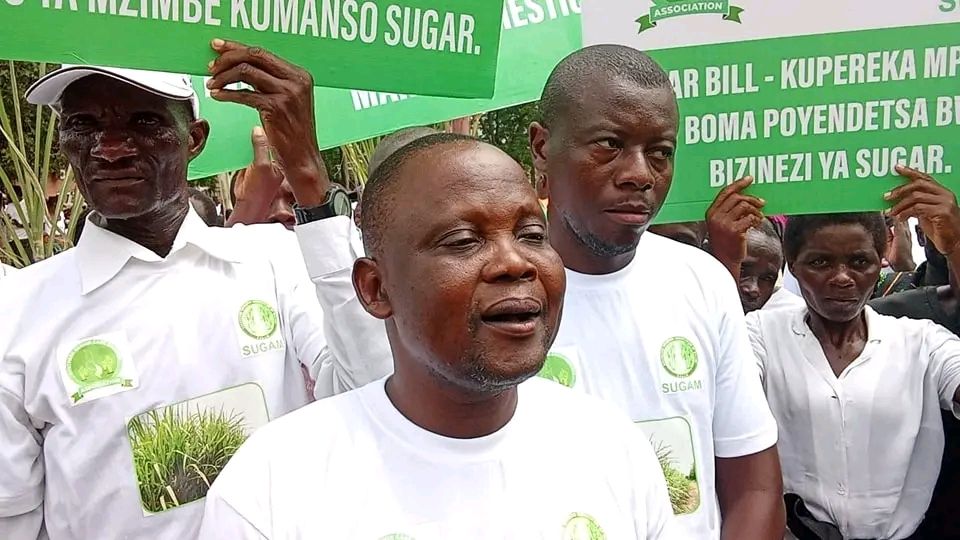
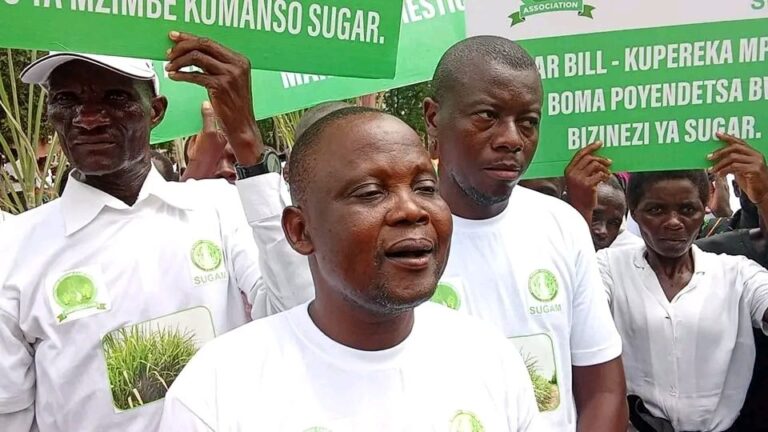
The Sugar Cane Growers Association of Malawi (SUGAM ) on Thursday issued an ultimatum to the government to present the Sugar Bill to Parliament by February 14, 2025, or face a vigil at Capital Hill.

Board chairperson of the Lakeshore Cane Growers Association, Robert Seyara,presented a petition to Nkhotakota District Commissioner Ben Tonho, emphasizing the importance of the Bill’s passage.

Robert Seyara


“Considering that the forthcoming meeting of Parliament, which starts on February 14, is the longest meeting before dissolution of this cohort of Parliament in July, we expect government to provide us with demonstrable evidence of being to present the Sugar Industry Bill to Parliament by the 14th February.

“If this does not happen by the date, SUGAM and its affiliates joined by sugar consumers and Malawians of good shall hold a vigil at Capital Hill in Lilongwe from February 25 till the executive branch of government present the Bill to the National Assembly for enactment,” he said 

On his part ,Tonho praised SUGAM for their peaceful approach and promised to present the Bill to the relevant authorities.

The Sugar Bill aims to address several key issues in the sugar industry, including scarcity of sugar on the domestic market, illegal importation, and exploitation.

If enacted, the law would provide for fair and transparent pricing of sugarcane and its byproducts, minimizing court battles between the government and millers.

Essentially, the Bill would bring much-needed sanity to the sugar industry.

Kamangila,Manda mediation session set for February 12

0

By Chisomo Phiri

The High Court in Lilongwe has scheduled February 12, 2025, for a mediation session in a case where Judge Kenan Manda is seeking K250 million in compensation from prominent lawyer Alexious Kamangila over Facebook posts that allegedly accused him of fraudulent conduct.

According to the notice of mediation, the session will take place at 11:30 am in Judge Semion Mdeza’s chambers.

Kamangila and Manda


The development comes after the High Court issued an interlocutory injunction in October last year, restraining Kamangila from making any statements about Judge Manda until further notice.

In civil cases, mediation is typically an optional step where a neutral third party facilitates a discussion between both parties to explore potential compromises and determine if the matter can be settled out of court.

If mediation fails, the case proceeds to trial under a different judge.

Malawi Law Society says Nankhuni never embezzled money from his clients

0

By Linda Kwanjana

Malawi Law Society (MLS) has distanced itself from claims which some quarters are alleging that Lawyer Gift Nankhuni embezzled money from his client the allegations which are emanating from the press release issued by the Malawi Law Society.

In an exclusive interview Honorary Secretary Gabriel Chembezi while responding to a question “Did Mr Nankhuni embezzle the sum of Mk477, 805, 833.33?”

This is what Counsel Chembezi had said.

“No, he did not embezzle the sum of MK477,895,833.33. He failed to invite the rest of the individuals before making the payment as agreed,” Says Chembezi in his response.

Gift Nankhuni


Asked further on what were the actual charges in the matter in terms of facts that Counsel Gift Nankhuni had committed.

This is what Chembezi said again in verbatim.

“Mr. Nankhuni was representing MR Saliyeti Kanyamula in a court matter registered as Civil Cause Number 905 of 2013: Saliyeti Kanyamula vs Attorney General (Regional Commissioner for Lands-Centre) where the Malawi Government was accused of repossessing land belonging to Mr. Kanyamula without compensation. Mr. Nankhuni successfully represented Mr. Kanyamula and the High Court ordered the Attorney General to pay compensation to Mr. Kanyamula. Before payment was made by the Malawi Government to Mr. Kanyamula, Mr. Nankhuni was informed that Mr. Kanyamula was a representative of other 14 individuals who were victims having lost their land due to the repossession without compensation. Mr. Kanyamula reques5ted that the other individuals should be added as parties to the case. Mr. Nankhuni advised them that it would not be possible since judgment was already delivered in favour of Mr. Kanyamula. However, Mr. Nankhuni agreed that once payment was received from the Attorney General, he would invite the other interested parties to receive their payment. When the Attorney General made the payment, Mr. Nankhuni only paid Mr. Kanyamula and did not inform the other individuals. Mr Kanyamula failed to pay the money to the other individuals. The individuals lost their land and did not receive any compensation.

On the summary Nankhuni paid all the finances to the beneficiary but when the Attorney General made the payment, Mr. Nankhuni only paid Mr. Kanyamula and did not inform the other individuals.

Mr Kanyamula failed to pay the money to the other individuals.

The whole charges are actually different from the particulars that Mr Nankhuni was charged with as per the findings of the Disciplinary hearing which were provided to us on request from the Honorary Secretary which were as follows;

1. You were engaged by the complainants and Saliyeti Kanyamula (deceased) as inhabitants
of Kuliyani Village, Traditional Authority Chitukula in Lilongwe District to represent them
in a matter in which they were seeking compensation from the Malawi Government.
2. Your firm commenced an action registered as Civil Cause Number 905 of 2013: Saliyeti Kanyamula vs Attorney General (Regional Commissioner for Lands-Centre). The
summons only indicated Saliyeti Kanyamula as the plaintiff only when he was acting as
the representative of Kuliyani Village, a fact which was disclosed to you.
3. The claim was successful and the plaintiff was paid the sum of MK725,000,000.00 in 2020.
Since the complainants were not included as parties to court case, the compensation was only paid to Saliyeti Kanyamula and they did not benefit in any way.

Asked if at all  Counsel Nankhuni was convicted of factual allegations that he was charged with MLS says yes, Mr. Nankhuni was found guilty of the charges levelled against him that is why the Disciplinary Committee has suspended him and has ordered that he should pay the other individuals the sum of MK477,895,833.33.

On why was the suspension which involves huge sum of money was only for six months?

MLS says the Disciplinary Committee considered the totality of the evidence and the conduct of Mr. Nankhuni in the handling of the matter.

“Apart from failing to honour the agreement to invite the rightful individuals before making payment to Mr. Kanyamula and failing to pay the rightful individuals the money, Mr. Nankhuni’s conduct of the matter was within the acceptable professional standards,” says the Honorary Secretary.

This appears contrary interms of issues of payment as in the findings of the Disciplinary Committee Mr Nankhuni was said to be guilty as follows.

“Findings of the Committee:
The Committee found you guilty on the following charges:
1. Fraudulent or improper conduct in the discharge of your professional duty contrary to
Section 89(2)(b) of the LELPA. Having been informed by Mr Kanyamula that he was
representing other people before payment was made to Mr Kanyamula, you failed to protect the interests of the complainants when you paid Mr Kanyamula all the
compensation without first notifying the complainants.
2. Engaging in misconduct that brings the profession of the law into disrepute contrary to Sections 89(2)() of the LELPA. Having been informed by Mr Kanyamula that he was representing other people before payment was made to Mr Kanyamula, you failed to protect the interests of the complainants when you paid Mr Kanyamula all the compensation without first notifing the complainants,” reads the MLS findings on the matter.

Meanwhile , MLS says the matter  was not   referred to the Director of Public Prosecution (DPP) or the Police for further investigations and actions because Mr Nankhuni did not steal or embezzle the money of the complainants.

“Therefore, the Disciplinary Committee did not deem it appropriate to refer the matter to the Director of Public Prosecutions as there were no elements of criminality in the conduct of Mr. Nankhuni,” says Chembezi.

Meanwhile Nankhuni is on suspension for 6 months and this is untill July this year.

The findings of the Disciplinary committees and the enquiry as provided by the Honorary Secretary are attached as follows.

Minister Hails New Classroom Blocks at Makhetha Primary School

0

By Shaffie A Mtambo

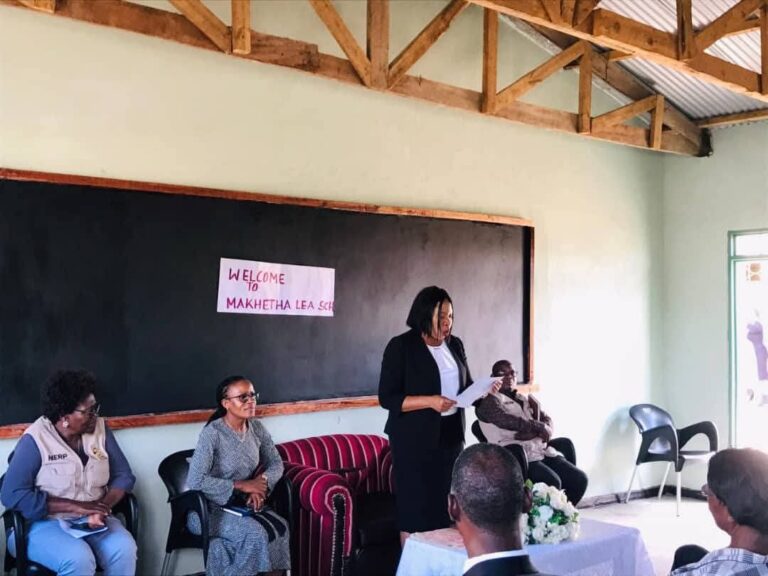
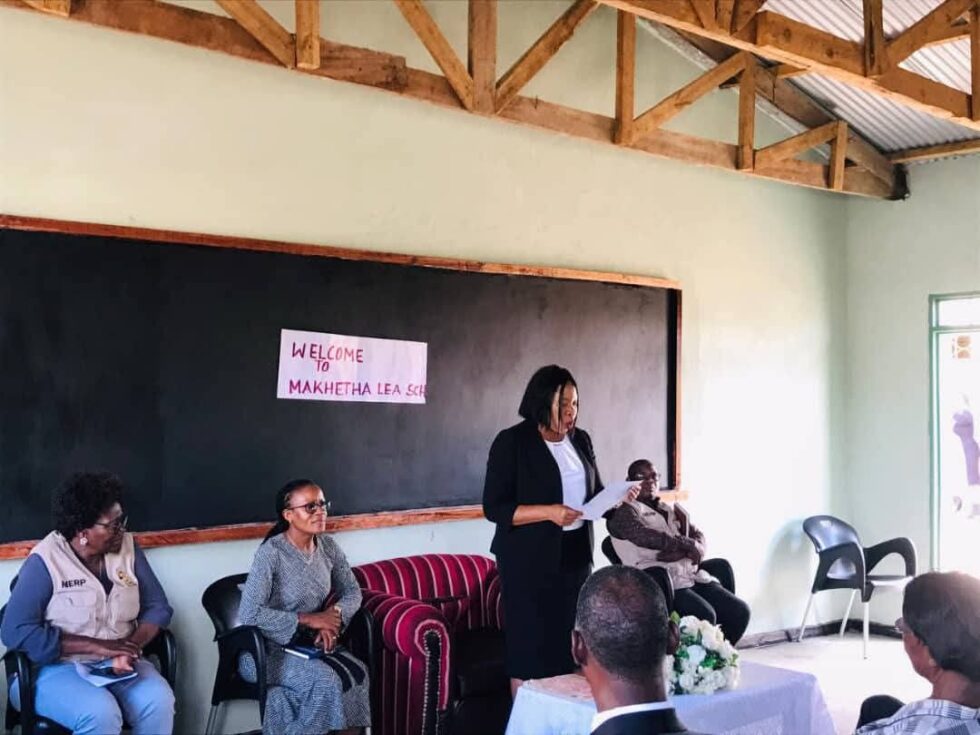
Malawi’s Minister of Basic Education, Madalitso Kambauwa Wirima, has expressed her satisfaction with the newly constructed classroom blocks at Makhetha Primary School in Blantyre. The two blocks, built under the Malawi Education Reform Programme (MERP), are expected to alleviate the school’s longstanding shortage of classrooms.

During her visit to the school, Kambauwa Wirima praised the initiative, highlighting its potential to improve the learning environment for students. “The classroom blocks will help mitigate some challenges that learners have been facing due to lack of adequate classrooms,” she said.

Kambauwa in Blantyre


Noffan Chipetere, the school’s headteacher, echoed the minister’s sentiments, noting that the new blocks will make a significant difference in the school’s operations. “We have had a shortage of classrooms for a long time, and this new infrastructure will greatly improve our ability to provide quality education,” Chipetere said.

The construction of the classroom blocks is part of the broader Malawi Education Reform Programme (MERP), a World Bank-funded initiative aimed at enhancing the country’s education system. MERP commenced in 2021 and is expected to conclude by the end of this year. The program has made significant strides in improving education infrastructure and resources across Malawi.

The minister’s visit to Makhetha Primary School was an opportunity to assess the progress of the MERP project and engage with students, teachers, and community members. Kambauwa Wirima’s positive remarks about the new classroom blocks reflect the government’s commitment to providing quality education and improving learning outcomes.

As the education sector continues to evolve, initiatives like MERP play a vital role in addressing the challenges faced by schools like Makhetha Primary.