
Wednesday, May 6, 2026
No menu items!
spot_img
Home Blog Page 804

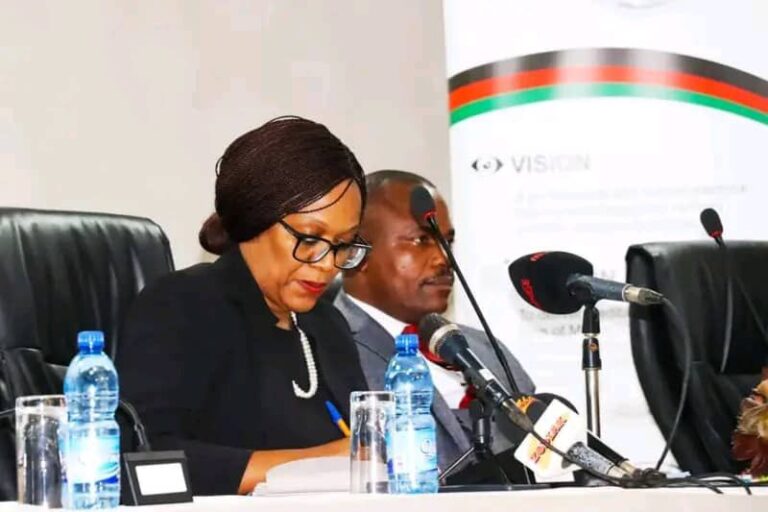
Supplementary voter registration: Speech by MEC Chairperson, Justice Annabel Mtalimanja

0

By Burnett Munthali

In a recent press briefing, the Chairperson of the Malawi Electoral Commission (MEC), Justice Annabel Mtalimanja, delivered a comprehensive speech outlining the key details of the supplementary voter registration exercise set to take place in Malawi. The announcement has sparked widespread attention and discussions about the commission’s preparedness for the upcoming elections, the inclusivity of the process, and its potential to enhance voter participation across the country.

Justice Mtalimanja began her speech by emphasizing the critical importance of the supplementary voter registration process. She explained that the exercise aims to ensure that all eligible citizens, particularly those who have turned 18 after the previous voter registration period or who have not registered for any other reason, have an opportunity to be included in the electoral process.

The supplementary registration is not only for first-time voters but also for those who have changed their residential address, lost their voter cards, or whose voter registration details have been compromised. By addressing these needs, the MEC aims to create an updated and comprehensive voter register that reflects the current electoral demographic.
Mtalimanja


“We must ensure that every eligible citizen has the opportunity to participate in the democratic process. Our goal is to provide an inclusive, transparent, and credible voter register that reflects the true demographic of our nation,” Mtalimanja stated during the briefing.

The MEC Chairperson outlined the logistics of the supplementary voter registration process, stating that the exercise would take place in various locations across the country, including urban and rural areas, to ensure no eligible voter is left out. The registration period, she noted, would be clearly communicated to the public, ensuring that everyone is well-informed ahead of time.

Justice Mtalimanja reiterated that the registration would be done in phases, beginning with an initial period for those who were unable to register earlier. The supplementary registration will be conducted in the same manner as the initial voter registration, with proper protocols for verification of identification and eligibility. Voter registration would be facilitated at designated centers and local government offices, ensuring accessibility for individuals in remote areas.

“We are committed to making this process accessible and straightforward. We want every eligible voter to have an easy and convenient opportunity to get registered,” Mtalimanja assured.

In addressing concerns around the integrity of the voter register, Justice Mtalimanja reassured the public that the MEC would take all necessary measures to ensure accuracy and transparency in the supplementary voter registration process. She highlighted the use of modern technology, including biometric registration systems, which would significantly reduce the possibility of duplicate registrations or voter fraud.

Additionally, Mtalimanja emphasized the importance of public awareness campaigns to educate citizens about the registration process and the required documentation. The MEC, in collaboration with various stakeholders, would work to provide the public with clear and easy-to-understand information about the supplementary registration, what is needed, and where people can register.

“We want to make sure that the voter register is accurate, transparent, and reflects the true intentions of the electorate. Our technological infrastructure will support the integrity of the process, and we will ensure that citizens are well-informed about the registration procedures,” she affirmed.

The Chairperson also highlighted the significance of inclusivity, pointing out that the supplementary voter registration process would specifically target marginalized groups, including youth, persons with disabilities, and other vulnerable communities. Mtalimanja recognized that some citizens, especially in rural areas or among underserved populations, may face barriers to registration. She assured the public that special accommodations would be made for these groups to ensure their participation.

“The success of our democratic process depends on the full and active participation of all citizens. We must ensure that every eligible voter, regardless of their social or economic status, has the opportunity to cast their vote,” Justice Mtalimanja stressed.

Mtalimanja acknowledged the potential challenges that could arise during the supplementary registration process, particularly in relation to ensuring that the registration process runs smoothly and efficiently. She called on all stakeholders, including political parties, civil society organizations, and the general public, to cooperate with the MEC to make the process as smooth as possible.

One of the key challenges, according to Mtalimanja, is ensuring that there is sufficient awareness among voters about when and where they can register. To address this, the MEC plans to roll out an extensive media campaign to keep the public informed. This will include radio, television, and social media campaigns, as well as the distribution of printed materials in multiple languages, to ensure that all Malawians are reached.

“We understand that many of the challenges we face stem from misinformation and lack of awareness. We are committed to providing the public with accurate, timely, and accessible information about the supplementary voter registration,” she said.

Justice Mtalimanja concluded her speech with a call for civic engagement. She urged all Malawians, especially the youth, to take responsibility for their civic duty and to actively participate in the electoral process. She emphasized that the right to vote is not only a privilege but a vital tool for shaping the future of the nation.

“As we move forward with the supplementary voter registration, I encourage all citizens to get involved, register, and encourage others to do the same. Our democracy depends on the participation of every eligible voter. Together, we can build a stronger, more inclusive Malawi,” she concluded.

As the supplementary voter registration exercise begins, the MEC’s efforts to ensure a comprehensive, transparent, and inclusive process will be under close scrutiny. The work of the Commission in providing access to voter registration for all eligible citizens is a key part of ensuring the legitimacy of the upcoming elections and the continued strengthening of Malawi’s democratic institutions.

The MEC’s commitment to inclusivity and accuracy, along with its emphasis on public awareness and transparency, is a positive step in creating a fair electoral process. As Malawians prepare for the upcoming election cycle, the supplementary voter registration exercise will be crucial in determining how well the nation can engage its electorate and continue the process of democratic development.


Dr Ken Zikhale Ng’oma engages senior officials from the Ministry: Mining Symposium Plans Unveiled

0

By Wadza Botomani


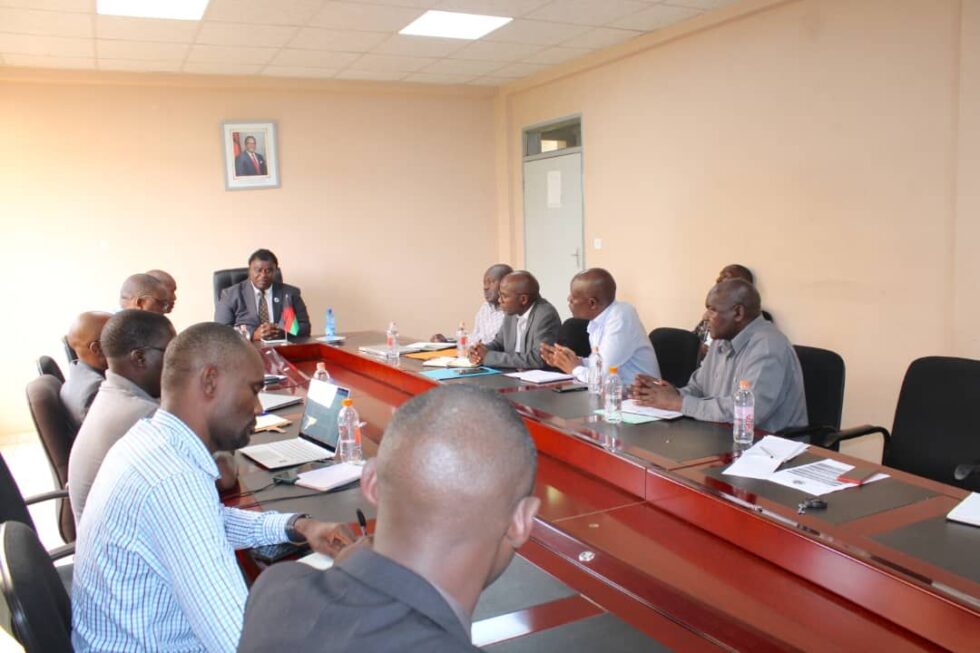
In a significant move to stimulate Malawi’s mining sector, Minister of Mining, Dr. Kenneth Zikhale Reeves Ng’oma, convened a meeting with senior officials from the Ministry on Friday, January 17th. The gathering aimed to strategize on unlocking the country’s vast mineral potential in line with the transformative Agriculture, Tourism, and Mining (ATM) Strategy introduced by the government.

During the meeting, Ng’oma underscored the importance of aligning mining development strategies with national interests to foster economic revitalization. He emphasized the need for a united workforce capable of addressing the challenges the sector faces. “Malawi is endowed with a wealth of precious minerals that have yet to be fully explored,” he remarked, highlighting the opportunities that lie ahead.


The Minister’s address also included a firm commitment to tackling illegal mining activities and mineral smuggling, which have plagued the industry for years. These challenges not only undermine the country’s economic potential but also pose significant risks to regulatory compliance and environmental sustainability.

Ng’oma’s leadership comes at a crucial time as he has recently taken over the Ministry following a cabinet reshuffle by President Lazarus Chakwera. His appointment has sparked optimism among stakeholders in the mining sector, who are eager to see decisive action and clear direction from the government.

As part of the Ministry’s initiative, plans for a mining symposium were unveiled, aimed at promoting dialogue among industry players, government officials, and stakeholders. This symposium is expected to provide a platform for discussing innovative mining practices, investment opportunities, and strategies to enhance the sector’s contribution to the national economy.

“To create a robust mining industry, we need periodic trainings to promote the sector,” Ng’oma concluded, reiterating the importance of capacity building and continuous learning for staff and stakeholders involved in mining. The Minister’s vision aligns with the broader goals of the ATM Strategy, which seeks to integrate mining with agriculture and tourism to create a more diversified economic base for Malawi.

The mining symposium is poised to attract local and international investors, researchers, and policy-makers, potentially leading to collaborative efforts that could transform the mining landscape in Malawi. The symposium will also serve as a venue for showcasing the country’s mineral resources, which include rare earth elements, coal, and precious stones, thus positioning Malawi as an emerging player in the global mining industry.

With the Minister at the helm, the Ministry of Mining is set to embark on a new chapter aimed at maximizing the country’s mineral wealth, creating jobs, and contributing significantly to Malawi’s economic growth. Stakeholders are eager to see how Ng’oma’s strategies will unfold in the coming months, as the nation looks to harness its mining potential to uplift communities and foster sustainable development across the country.

Dr Zikhale with mining officials

Mixed reaction over Minister Vitumbiko Mumba heated exchange with business representative

0

By Burnett Munthali

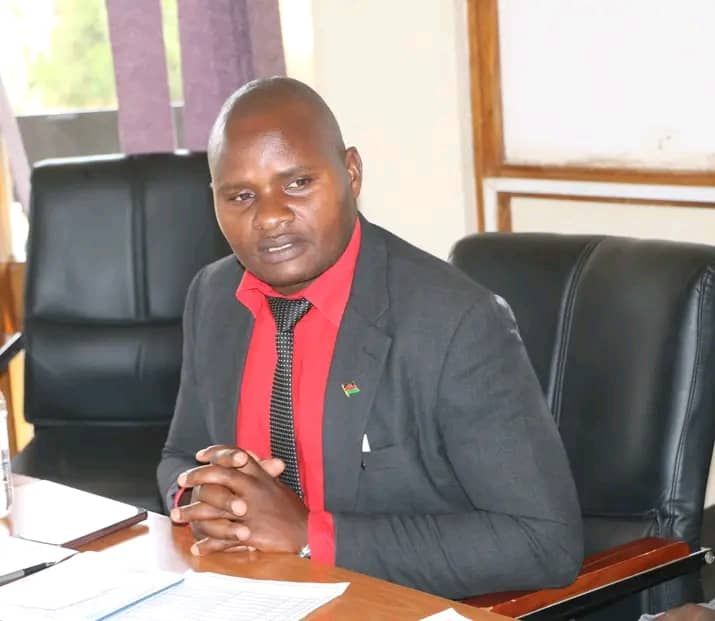
A video clip making rounds on social media has put Minister Vitumbiko Mumba under scrutiny after he was caught in a heated confrontation with a woman at a company he ordered to close. The altercation, which has sparked widespread criticism, shows the minister visibly angry and unwilling to listen to the woman’s explanation, ultimately dismissing her efforts by saying, “You guys are stupid.”

The company in question was among several businesses ordered to shut down by the minister on allegations of non-compliance with government regulations. However, in the video, the woman, who appears to represent the company, calmly tries to explain that no employees are working at the site. She further clarifies that the company had hired contractors to address specific compliance issues, asserting that the business was not operational at the time of the inspection.

Mumba and the HR manager


Despite her detailed explanation, Minister Mumba appears uninterested and continues to accuse the company of defying his closure order. His refusal to engage in dialogue or consider the woman’s statements has drawn criticism for his lack of listening skills and professionalism.

The video has ignited a firestorm on social media, with many condemning the minister’s behavior as a failure in leadership.

One observer commented, “A leader should listen before jumping to conclusions. This attitude only creates unnecessary conflict.” Another wrote, “Even if the company was wrong, dismissing someone trying to explain their side is a clear sign of poor leadership.”

Critics have also highlighted that the minister’s actions could discourage businesses from cooperating with authorities, especially if their concerns are not taken seriously.

Supporters of the company argue that the minister’s assumption that the business was operational was unfounded, as the presence of contractors does not equate to resuming operations. They have called for a fair investigation into the matter and better communication between authorities and businesses.

The incident has prompted calls for Minister Mumba to issue a public apology and reflect on his approach to leadership. Civil society groups and activists have urged the government to address the issue, emphasizing the importance of respectful engagement between public officials and citizens.

One activist stated, “Accountability starts with how leaders interact with the people they serve. Dismissing concerns and using derogatory language undermines trust in public institutions.”

Leadership experts have also weighed in, criticizing the minister’s conduct. They argue that effective leadership requires listening and understanding all perspectives before making decisions.

Dr. Edith Kamwana, a governance expert, noted, “Leaders must prioritize communication and conflict resolution. Dismissing someone’s explanation outright not only damages relationships but also creates an environment of hostility.”

As the video continues to circulate, there is growing pressure on the government to ensure that public officials are trained in communication and conflict resolution. The incident has also reignited discussions about the importance of professionalism in government enforcement activities.

Minister Vitumbiko Mumba’s confrontation with a business representative has highlighted the need for respectful and constructive dialogue between leaders and stakeholders. As the public awaits an official response, the incident serves as a reminder of the importance of listening, understanding, and accountability in fostering trust and cooperation between government and citizens.

Labour inspection raises questions about workplace standards and workers’ attire

0

By Burnett Munthali

The ongoing government inspections of workplaces have brought to light a controversial issue surrounding workers’ attire in some companies. Labour Minister Vitumbiko Mumba recently encountered employees working without proper uniforms, raising concerns about safety, dignity, and management’s role in ensuring compliance.

The inspections, aimed at assessing compliance with labor laws, took a surprising turn when workers were found dressed in undersized garments, such as undershorts. This discovery has sparked heated debates about the balance between worker rights, corporate responsibilities, and the role of government oversight.

Shirtless workers


During a recent visit to a company, the Minister asked employees why they were not dressed in uniforms or appropriate work attire. The workers explained that they were left with no choice but to work in minimal clothing because the company had failed to provide them with uniforms.

Some employers reportedly claimed that the absence of proper clothing was a precautionary measure to prevent theft. “They believe workers might hide stolen items in their uniforms,” a worker stated. However, this rationale has been criticized as demeaning and a violation of workers’ rights.

Labour rights activists have condemned the practice of allowing workers to operate in minimal clothing, arguing that it compromises both their safety and dignity. “How can employees perform their tasks effectively when they lack the basic equipment, including proper uniforms?” one activist asked.

The lack of uniforms exposes workers to hazardous conditions and undermines their sense of respect and self-worth. It also reflects poorly on companies that fail to prioritize the welfare of their employees.

Minister Mumba has called for immediate action to address the situation, emphasizing the need for companies to comply with labor laws that require them to provide adequate uniforms and protective gear to employees.

“Workers deserve to be treated with dignity and respect. It is unacceptable for companies to justify negligence with claims of preventing theft. Employers must find alternative solutions that do not compromise workers’ safety or dignity,” the minister said.

The incident has prompted calls for reforms in how companies are monitored and held accountable. Labour organizations and unions have urged the government to impose stricter penalties on companies that fail to provide proper working conditions.

Additionally, they have suggested that companies adopt transparent systems to address theft concerns without infringing on workers’ rights.

This controversy highlights deeper issues within Malawi’s labor sector, including the need for stronger enforcement of workplace standards and the promotion of ethical practices by employers. It also underscores the importance of government inspections in exposing and addressing such issues.

The government is expected to release a comprehensive report on its findings from the ongoing inspections, with recommendations for improving workplace conditions. Companies found in violation of labor laws could face penalties or legal action.

As workers continue to voice their concerns, the nation looks to the Ministry of Labour to champion reforms that ensure fairness, safety, and dignity for all employees. For now, the spotlight remains on employers to meet their obligations and create workplaces that respect the rights and welfare of their workers.

Government Closes Chaminade Marianist Secondary School Over Corporal Punishment Violations

0


By Elywin Chighali Mhango

The Ministry of Basic and Secondary Education has taken decisive action by shutting down Chaminade Marianist Secondary School, located in Lilongwe, due to the unauthorized use of corporal punishment and governance issues within the institution.

Public Relations Officer for the Ministry, Mphatso Nkuonera, confirmed the closure on Friday, emphasizing that corporal punishment is not only outdated but also illegal under national law. “It is true that the ministry has closed Chaminade Marianist Secondary School for administering corporal punishment. As you are aware, this act is against the laws of the country, and the closure is effective immediately,” Nkuonera stated.

Nkuonera

The move marks the first school closure of 2025 by the Ministry, reflecting its commitment to uphold educational standards and the rights of students. The decision comes as part of broader efforts to ensure that all educational institutions adhere to the governing laws and regulations designed to protect learners.

Chaminade Marianist Secondary School’s administration now faces the challenge of addressing the governance issues that led to this drastic measure, as the Ministry calls for adherence to lawful practices in education.

The closure has raised concerns within the community about the future of the students affected and the implications for educational governance as a whole in Malawi. The Ministry continues to advocate for a safe and supportive learning environment that is free from violence and mistreatment.