


By Chisomo Phiri
A joint Parliamentary committee investigating delays in the licensing of the proposed Mulalo Granular Fertiliser Production Factory in Dowa on Wednesday July 15,2026 heard contrasting accounts from investor Napoleon Dzombe and government officials over the factors that are stalling the project.
Appearing before the committee, Dzombe criticised Malawi’s investment environment, arguing that local investors face lengthy bureaucratic processes that discourage investment and delay projects of national importance.
He said the fertiliser plant is intended to improve access to affordable fertiliser and strengthen the country’s agricultural sector, but has been held back by prolonged administrative procedures.
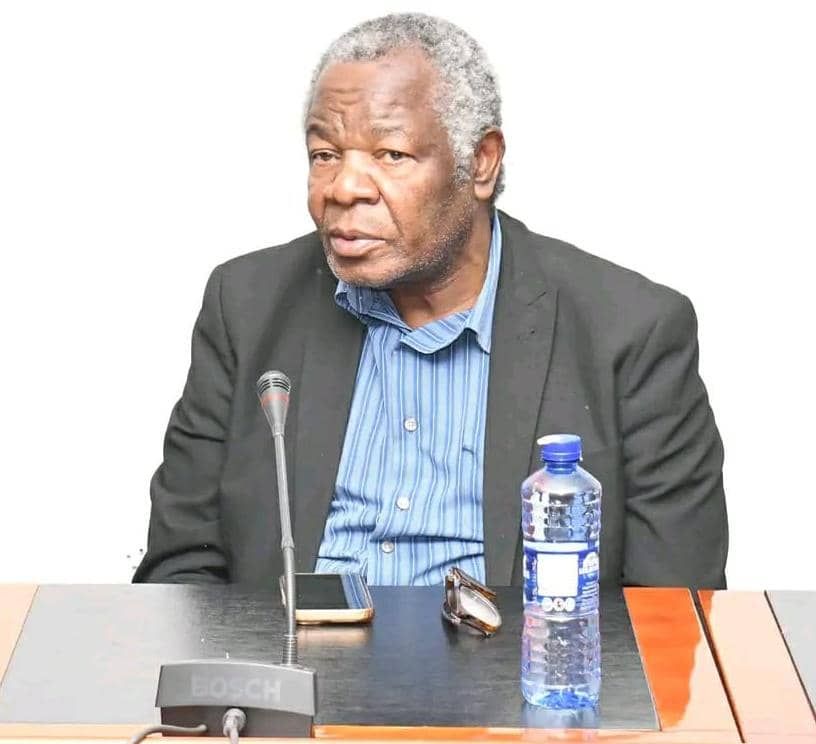
Dzombe questioned the requirement to pay K10 million in environmental processing fees, saying he was reluctant to pay because he viewed the project as a national development initiative.
He also said the delays had discouraged potential investors and business partners, with some withdrawing their interest in the project.
According to Dzombe, the setbacks have taken a significant financial and personal toll, forcing him and local farmers in Dowa to source fertiliser from foreign manufacturers while awaiting government approval.
He also defended the ownership of the proposed factory site, telling lawmakers that the loss of the original title deed should not invalidate his ownership of the 26-hectare property.
He explained that the land was surveyed in 1971 and the title deed was issued in 1979 before it was misplaced, adding that he was surprised that land documentation had become one of the major issues delaying the project.
Dzombe further told the committee that the project was not the first investment he had struggled to implement in Malawi.
He recalled losing more than K500 million while pursuing plans to construct an international bus terminal after years of planning and investment.
He said that experience, together with the current delays, has made him cautious about committing more money to government processes.
The investor said he remains confident that the factory can begin producing fertiliser this year if all approvals are granted without further delay.
He maintained that excessive taxes, regulatory requirements and lengthy approval processes had slowed progress despite his willingness to invest.
On his part, the Malawi Environmental Protection Authority (MEPA), Executive Director Wilfred Kadewa said the authority had identified six major environmental and technical concerns that had to be addressed before the project could be approved.
He said these include hazardous waste management, risks associated with corrosive and toxic chemical processes, management of phosphogypsum waste, the factory’s proximity to the Kang’ona River, emergency preparedness measures and gaps in land ownership documentation.
Kadewa said the developer also failed to adequately explain how hazardous materials, including acid residues, contaminated sludge, phosphogypsum and wastewater, would be treated and safely disposed of.
He added that the proposed extraction process involved hazardous chemicals capable of generating toxic by-products, while emissions and wastewater required additional safeguards to protect nearby communities and the environment.
According to him, the licensing process experienced a delay of about nine months between July 2025 and March 2026 because the developer did not promptly resubmit a revised Environmental and Social Impact Assessment (ESIA) report and delayed paying the required K10 million processing fee.
Kadewa said these were factors beyond the authority’s control.
Principal Secretary for the Ministry of Natural Resources Misheck Munthali acknowledged that the developer had begun some construction works before obtaining the required environmental approval.
He told the committee that although the law would have allowed authorities to halt the project, they exercised discretion because of its national importance and public interest.
Munthali stressed that there had been no political interference and that government’s priority was to ensure compliance with environmental laws while protecting public health and the surrounding communities.
He informed lawmakers that the MEPA Board approved the project on July 14,2026 after determining that the developer had satisfactorily addressed the outstanding concerns.
He said the environmental approval process has now been completed and the environmental certificate and operating licence are expected to be issued by July 22,2026, allowing the project to proceed subject to the remaining regulatory conditions.
The inquiry, led by the Parliamentary Committees on Natural Resources, Energy and Climate Change, Industry, Trade and Tourism and Agriculture and Irrigation, brought together officials from the Ministry of Natural Resources, MEPA,ESIA consultants, the Malawi Bureau of Standards (MBS) and the National Water Resources Authority (NWRA).
It was intended to establish the causes of the delays and identify measures to improve investment facilitation while maintaining compliance with environmental and regulatory requirements.