


By Rick Dzida
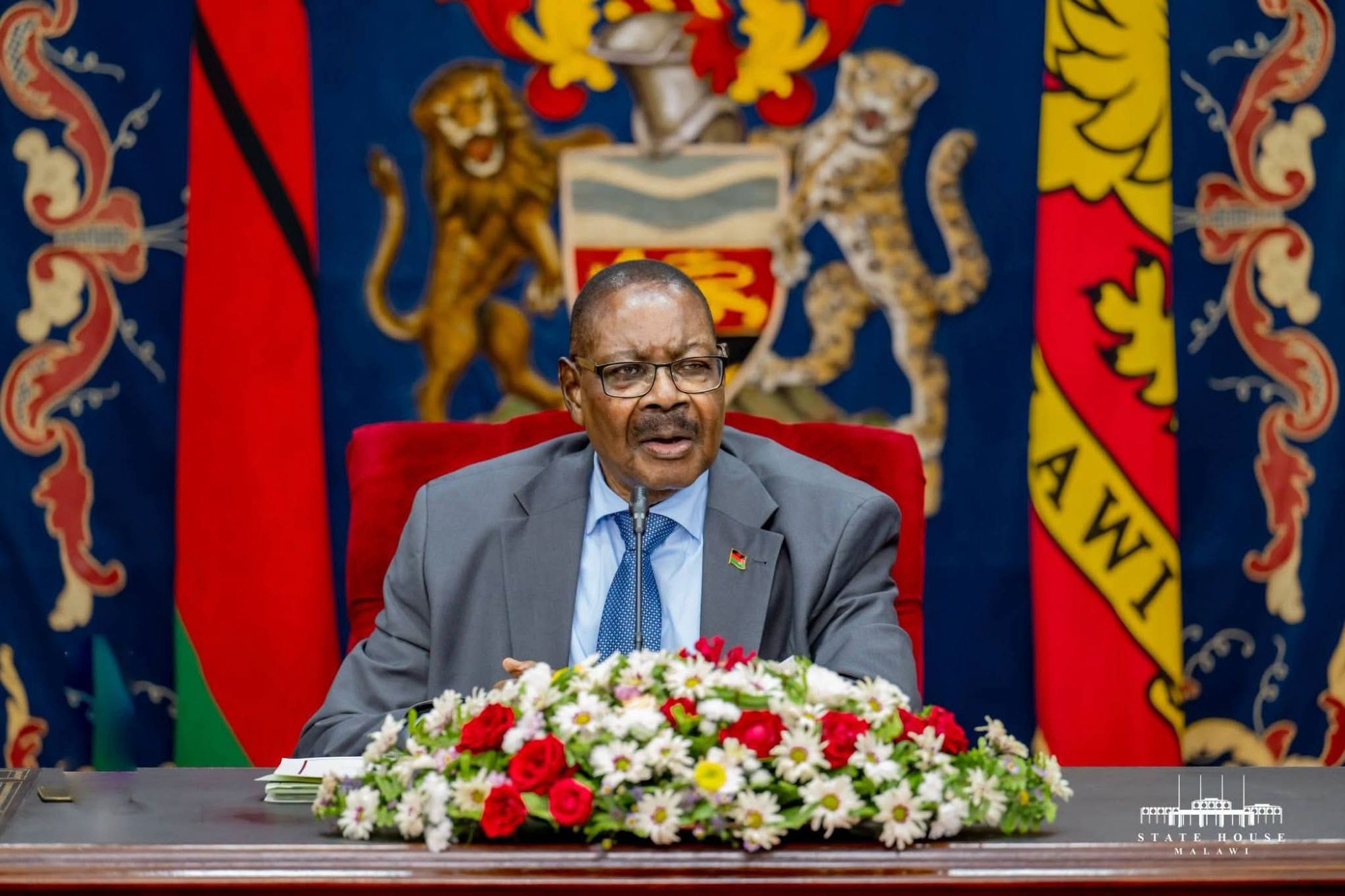
Let us stop hiding behind political politeness. The economic trajectory of Malawi under Peter Mutharika’s returned administration is not a rescue mission—it is a horror show of recycled incompetence.
While regime propagandists desperately celebrate fractional drops in food metrics, the cold, hard, inescapable macro-data proves that Malawi’s economic lungs are being systematically crushed by the exact same structural vices that destroyed Lazarus Chakwera’s presidency.
Malawians did not vote for a recovery; they voted for a changing of the guard at the graveyard. Prominent social commentator Onjezani Kenani ruthlessly stripped away the regime’s illusions on Facebook, stating flatly that the country has merely jumped from a frying pan into the fire. This lateral plunge into economic misery has ignited a wave of raw, unadulterated rage across the populace:
Reacting to Kenani’s digital indictment, Chimangomoses Nkhoma laid bare the fatal flaw of Malawian tribal voting: “We elected hyenas to take care of goats, now we are wondering how goats are being eaten”.
Frank Jolijo Banda turned his fury on the entire democratic experiment, warning, “Democracy is a scam… politicians are not our real leaders—wake up Africa.”
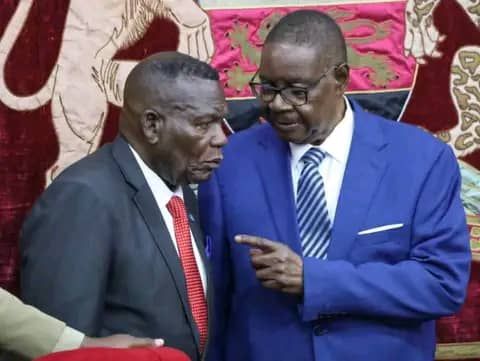
The current administration’s economic strangulation is so severe that citizens are now looking back at their former tormentors with nostalgic longing. As Cham’dondo Cham’dondo bitterly wrote, “Bola Chakwera yemwe guys awa atiphatu” (Chakwera was better; these guys are actively killing us). This is the tragic epitaph of the DPP’s return: they are economically executing the very electorate that handed them power.
To understand why the streets are boiling with anger, one must ignore government press releases and look directly at the catastrophic numbers. The Mutharika administration is presiding over a collapsing balance sheet, offering nothing but excuses while the country bleeds.
The Reserve Bank of Malawi may brag that annual inflation slightly decelerated, but this is a statistical mirage that feeds no one. Non-food inflation broke an aggressive record high of 33.2%, violently driven by skyrocketing petrol and diesel prices.
Real GDP growth is projected to languish at a pathetic 2.3% to 3.8%—massively trailing behind the country’s rapid population expansion. This guarantees a fifth consecutive year of declining GDP per capita, plunging millions deeper into extreme, unresolvable poverty.
The World Bank reports a crippling current account deficit of nearly 20% of GDP. Foreign exchange reserves have completely bottomed out, remaining catastrophically below the absolute baseline requirement of three months of import cover. The Kwacha is in freefall, utterly rejected by international vendors who now demand cash upfront rather than credit lines.
Because of this forex bankruptcy, Malawi’s monthly consumption of 60 million litres of fuel is starved. In a desperate, humiliating turn of events, the Ministry of
Information admitted that the nation’s strategic fuel reserves were completely depleted.
Motorists are trapped in mile-long midnight queues for intermittent petrol, transport costs are breaking business supply chains, and the state has been forced to beg the African Development Bank (AfDB) for emergency bailouts just to import essential fertilizer and prevent total agricultural collapse.
The current crisis is not a natural disaster; it is a human-made collapse overseen by specific entities who have failed to secure Malawi’s basic survival commodities
Energy and mining Minister Jean Mathanga has consistently deflected blame onto global shipping costs, the Middle East conflict, and a staggering K1.2 trillion accumulated policy debt liability. While she issues empty assurances to parliament that fuel lines are stable, the dry pumps across the country expose a total failure to manage national reserves.
The National Oil Company of Malawi (NOCMA)—swimming in near-trillion Kwacha losses—and the Malawi Energy Regulatory Authority (MERA) have fundamentally crippled private importers. By enforcing suppressed pricing and mismanaging the Automatic Pricing Mechanism (APM), they have driven petroleum vendors into insolvency, bringing national logistics to a grinding halt.
Roza Mbilizi, Minister of Agriculture has reduced the Ministry of Agriculture into a diplomatic begging bowl. Rather than securing reliable structural inputs, the ministry relies on piecemeal 500 metric tonne donations from Morocco and empty promises of a manufacturing plant that will not open until 2028
The Smallholder Farmers Fertilizer Revolving Fund of Malawi (SFFRFM) has completely failed to coordinate early procurement. Due to logistical gridlocks and severe dollar shortages, smallholder farmers face staggering costs of K15,000 to over K30,000 per bag, sabotaging the upcoming farming seasons before seeds are even planted.
The most damning evidence of this continuity of failure is revealed in Malawi’s skyrocketing national debt. Neither regime has shown a shred of fiscal discipline, choosing instead to fund elite comfort while burying future generations in an unpayable debt tomb.
Lazarus Chakwera’s administration took over a public finance system with a national debt of roughly K3.64 trillion to K4 trillion. Through uncontrolled state travel, bloated government ministries, and catastrophic domestic bank borrowing to cover structural deficits, the MCP-led regime blew the debt ceiling wide open, leaving behind an astronomical K23.9 trillion mountain of debt that pushed the country into official external distress.
Peter Mutharika stepped into this fiscal minefield promising immediate relief. Instead, his Finance Minister, Joseph Mwanamvekha, has admitted that total public debt remains anchored at an unsustainable 90.9% of GDP.
Interest payments alone are projected to consume a horrifying K2.793 trillion in the current fiscal year—a figure that wildly exceeds the combined national budget for agriculture, health, and education. To keep the state afloat, Mutharika is actively compounding the crisis, selling off sovereign gold reserves for a quick $30 million and pleading for a fresh $120 million loan from foreign export banks just to buy fuel.
Malawi cannot survive another month of incremental policies, empty austerity rhetoric, and elite-driven public procurement scams. If the Mutharika government wishes to avoid an outright national bankruptcy and civilian revolt, it must immediately execute the following radical manoeuvres
First, immediately halt the bleeding of public funds. The presidency must permanently ban all non-essential state travel, slash cabinet portfolios by half, and end the multi-billion Kwacha allowances routinely paid to corrupt bureaucrats. Every single saved Kwacha must be redirected into stabilizing the import cover.
Second, the Reserve Bank must rapidly accelerate its monetization of local gold reserves to construct an alternative sovereign asset base. The state must bypass parallel forex black markets by building immediate, direct bilateral commodity-exchange agreements with regional fuel-producing nations.
Third, The hyenas must be locked out of the vault. The administration must instantly transition all public procurement to an open-source, blockchain-verifiable digital portal. The Anti-Corruption Bureau must be granted complete operational and financial autonomy to indict state actors without requiring executive clearance.
Fourth, the government must treat the youth unemployment crisis as a national security threat. This requires a total shift from rain-fed subsistence farming to heavily guarded, state-backed commercial solar-irrigation hubs designed to absorb millions of jobless youths into an export-oriented agrarian industry.
In conclusion, the portrait on the statehouse wall has changed, but the systemic rot remains untouched. If Peter Mutharika continues to utilize Lazarus Chakwera’s failed economic playbook, the citizens of Malawi will not wait for the next electoral
cycle to demand their country back. The fire is burning, and time has officially run out.