By Jones Gadama
Joseph Mathyola Mwanamveka has returned to the Ministry of Finance and Economic Affairs not as a rookie but as a proven technocrat, and his second coming has already shifted the tone of Malawi’s economic conversation.
Born 19 October 1964, Mwanamveka trained at the University of Malawi where he earned undergraduate and postgraduate qualifications in economics, and graduated from Chancellor College in 1989.
He turned down offers from MIPA, Lever Brothers and the Ministry’s EP&D to start at the Reserve Bank of Malawi, where he spent seven years and was central to creating the Money and Capital Markets department that later laid the legal and financial groundwork for the Malawi Stock Exchange, Malawi Stockbrokers Limited and the country’s discount houses.
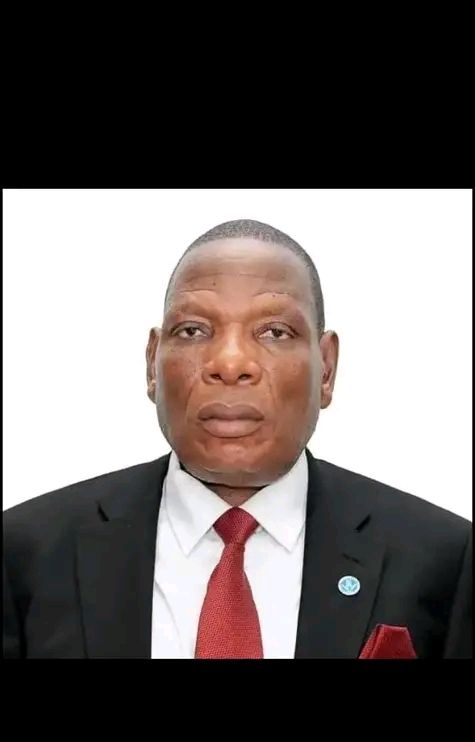
From there he moved to head Treasury at FINICOM, later NEDBANK/MyBucks, and in 1998 became the first CEO of Continental Discount House, Malawi’s first discount house, while also helping found ECAMA, the Economic Association of Malawi.
That mix of central banking, private finance and policy institution-building is why many call him the most technically grounded finance minister Malawi has had.
Mwanamveka first served as Minister of Finance and Economic Affairs from 2019 to 2020 under President Peter Mutharika. In that window he delivered stability when it was needed most. Inflation stayed in single digits at 9.6 percent.
He presented a K1.7 trillion budget that gave education 25 percent, the biggest share on record, and pushed domestic resources to the development budget to 7.2 percent, also a high for the Mutharika term.
At the height of Covid and falling donor aid, he still managed a 41.2 percent jump in revenue, from K969 billion to K1.37 trillion, without derailing macro fundamentals.
Reappointed on 5 October 2025, he walked into a far tougher room: inflation at 28.7 percent, public debt above 90 percent of GDP, and interest payments consuming nearly half of all government revenue. Instead of excuses, Mwanamveka moved fast. He tabled *an K11 trillion 2026 budget* anchored on fiscal discipline, debt restructuring, and growth drivers in agriculture, mining, tourism and manufacturing.
He prioritized food and fuel security, unlocked fresh donor engagement, and insisted that any IMF programme must protect Malawian interests first, calling the initial engagement what it is, a scoping mission, not a signed deal.
Growth projections have responded, moving from 2.7 percent in 2025 to about 3.8 percent in 2026, and markets have noted the return of a data-driven, transparent hand at the Treasury.
Beyond the numbers, Mwanamveka has brought institutional memory and a reform mindset that matches President Peter Mutharika’s vision of resetting the economy and liberating Malawi from the mess left by Chakwera and the MCP administration.
His emphasis on economic honesty, value for money, and transparency has restored confidence in public finance management, and his ability to explain tough choices in plain language has calmed both Parliament and the private sector.
For decisive leadership, technical competence, and reforms already visible since his appointment, this publication awards *Joseph Mwanamveka 20 points with 20 being the highest score*.
He is, by performance and record, the best Minister of Finance Malawi has ever had, and the clearest sign yet that under President Mutharika the country is on a path to fiscal sanity and real development.