


By Burnett Munthali
The 2026 Umhlangano wa Maseko Ngoni celebrations in Ntcheu, Malawi, demonstrate how traditional cultural institutions can evolve beyond ceremonies of dance, entertainment and remembrance into platforms for social transformation and community development. The six-day gathering, held under the theme of strengthening unity, culture and community development, reflects an important shift in the role of cultural festivals in modern Malawi. While the preservation of Ngoni identity remains central to the celebrations, the programme shows that culture is increasingly being used as a vehicle for confronting some of the most serious problems affecting communities.
One of the strongest messages emerging from the celebrations is the attempt by Ngwenyama iNkosi ya Makhosi Gomani V to redefine what it means to be a warrior in the modern era. Historically, the Ngoni people are remembered for their military strength, courage and territorial expansion. However, Gomani V argues that the battles facing communities today are different. Instead of physical enemies, society is confronted by depression, mental health challenges, suspected suicides, non-communicable diseases, crime, early marriages, teenage pregnancies and school dropouts. This comparison between the warriors of the past and the challenges of today is particularly significant because it calls upon the Ngoni people to apply their traditional values of courage, discipline and unity to contemporary social problems.
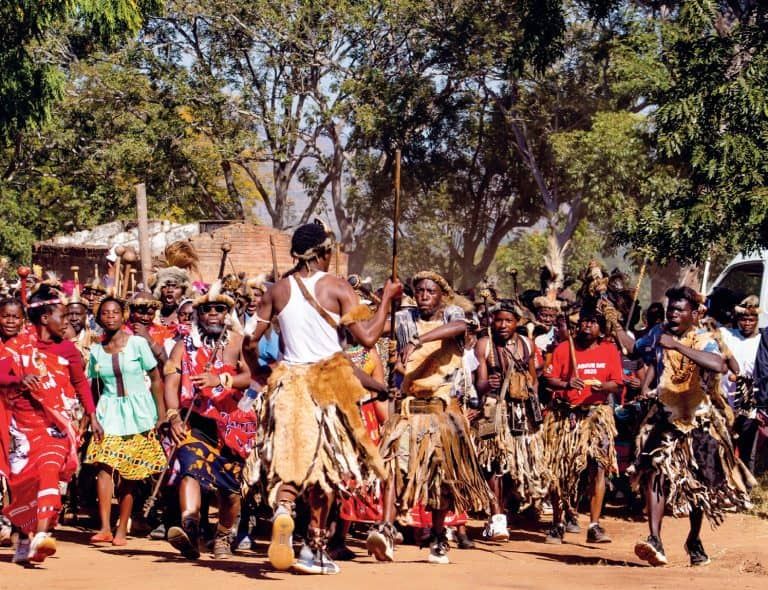
The expansion of Umhlangano from a shorter ceremony into a six-day programme also reflects a deliberate effort to give the gathering greater social meaning. Cultural activities such as ingoma, ligubo and ngoma remain important because they preserve traditions and provide younger generations with an opportunity to understand their heritage. However, the inclusion of royal outreach programmes, discussions on governance, charity activities, environmental issues, women’s empowerment and community development indicates that the institution is broadening its relevance. This transformation is important because traditional leadership remains influential in many rural communities and can help mobilise people around issues that government institutions alone may struggle to address effectively.
Another important dimension of the celebrations is the emphasis on community ownership of development. Gomani V’s message that communities must mobilise themselves and take responsibility for challenges affecting their areas represents a powerful development philosophy. Rather than waiting entirely for government intervention, communities are being encouraged to participate actively in solving their own problems. This approach can strengthen local development initiatives, especially when traditional leaders, government officials, civil society organisations and ordinary citizens work together.
The involvement of women through the programmes led by Her Royal Majesty Rishaladza Mathebula Gomani V is equally significant. Her engagement with women, girls, female traditional leaders and spouses of Amakhosi highlights the growing recognition that cultural institutions must include women in discussions about development and social progress. The women’s conference, hospital visit and engagement with vulnerable children demonstrate that the Umhlangano is attempting to connect cultural leadership with practical social concerns. Empowering women is essential to sustainable community development because women play a central role in families, education, health and local economies.
At the spiritual centre of the celebration is the sacred Kukhwisula ceremony at Nkolimbo, where members of the Royal Family, Amakhosi and heritage elders honour ancestors and remember departed members of the Ngoni family. This aspect of Umhlangano demonstrates that, despite its modern development agenda, the festival remains firmly rooted in Ngoni spiritual identity and historical memory. The connection with ancestors provides continuity between past and present generations. It reinforces the belief that cultural identity is not simply about clothing, music and dance, but also about remembering history, respecting those who came before and maintaining the traditions that define a people.
The participation of Ngoni delegations from Mozambique, Zambia, South Africa, Eswatini and Lesotho further gives the festival a regional dimension. The Ngoni people are spread across national borders as a result of historical migrations, and gatherings such as Umhlangano help strengthen connections among communities with shared ancestry. In this sense, the celebration promotes cultural diplomacy and regional unity. It reminds people that cultural identity can survive political borders and continue to connect communities across Southern Africa.
The K180 million budget also reveals the scale and ambition of the event. Funding from Ngoni communities, corporate organisations and fundraising activities shows considerable commitment to sustaining the institution. However, such a large investment also raises an important question about sustainability and impact. As Umhlangano increasingly presents itself as a platform for development, communities will reasonably expect the discussions and programmes to produce lasting results. The success of the festival should therefore not only be measured by attendance, performances and entertainment, but also by whether it contributes to reducing early marriages, school dropouts, gender-based violence and other challenges identified during the gathering.
Ultimately, the 2026 Umhlangano wa Maseko Ngoni represents an evolving model of cultural leadership in Malawi. It preserves traditional ceremonies and ancestral connections while recognising that culture must remain relevant to the realities facing modern communities. The greatest strength of the gathering lies in its attempt to transform unity from a ceremonial slogan into practical action. If the values of courage, discipline, respect and collective responsibility promoted during the festival continue beyond the celebrations, Umhlangano could become an increasingly powerful institution for both cultural preservation and community development.
The broader lesson is that tradition and development do not have to exist in opposition. Malawi’s traditional institutions possess enormous social influence, historical legitimacy and community networks. When these strengths are combined with education, health awareness, women’s empowerment, environmental protection and responsible governance, cultural institutions can become important partners in national development. The challenge for the Maseko Ngoni Kingdom will be to ensure that the powerful messages delivered during Umhlangano are translated into concrete and lasting action in the communities long after the drums fall silent and the celebrations come to an end.