


By Lyson Swala
How long must Malawians continue spending hours in fuel queues before the government delivers a lasting solution to the country’s persistent fuel shortages?.
This is no longer just a question of fuel availability. It is a question of leadership, accountability, economic management and the government’s ability to ensure that a basic commodity essential to the functioning of the economy is consistently available.
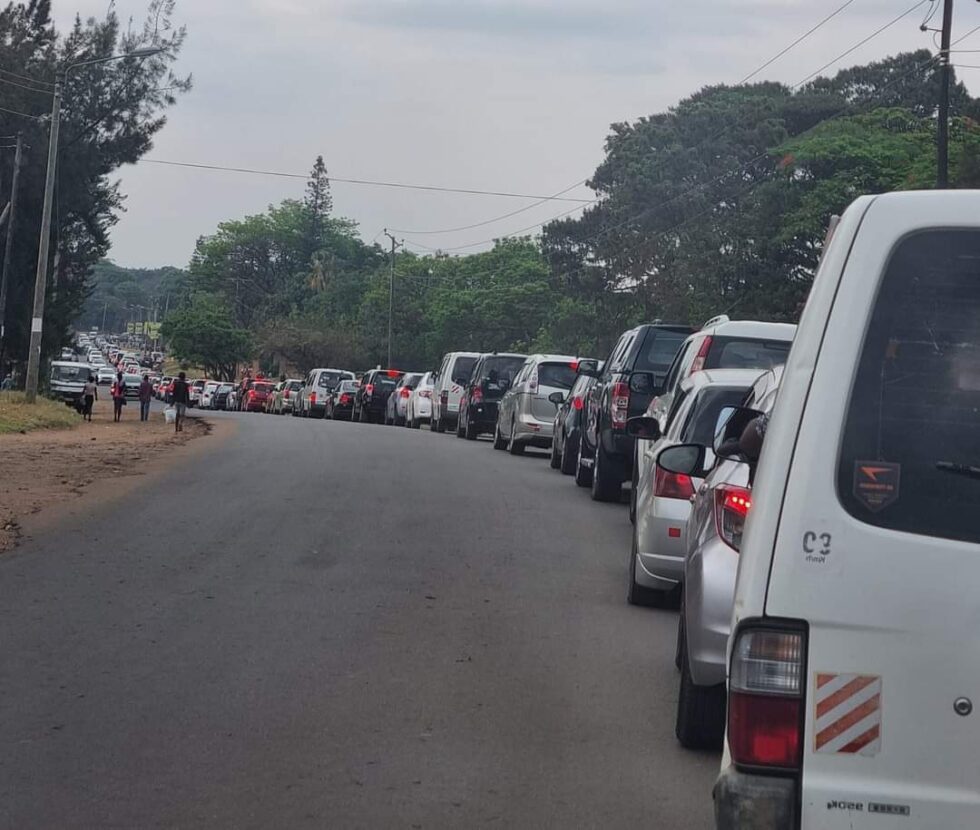
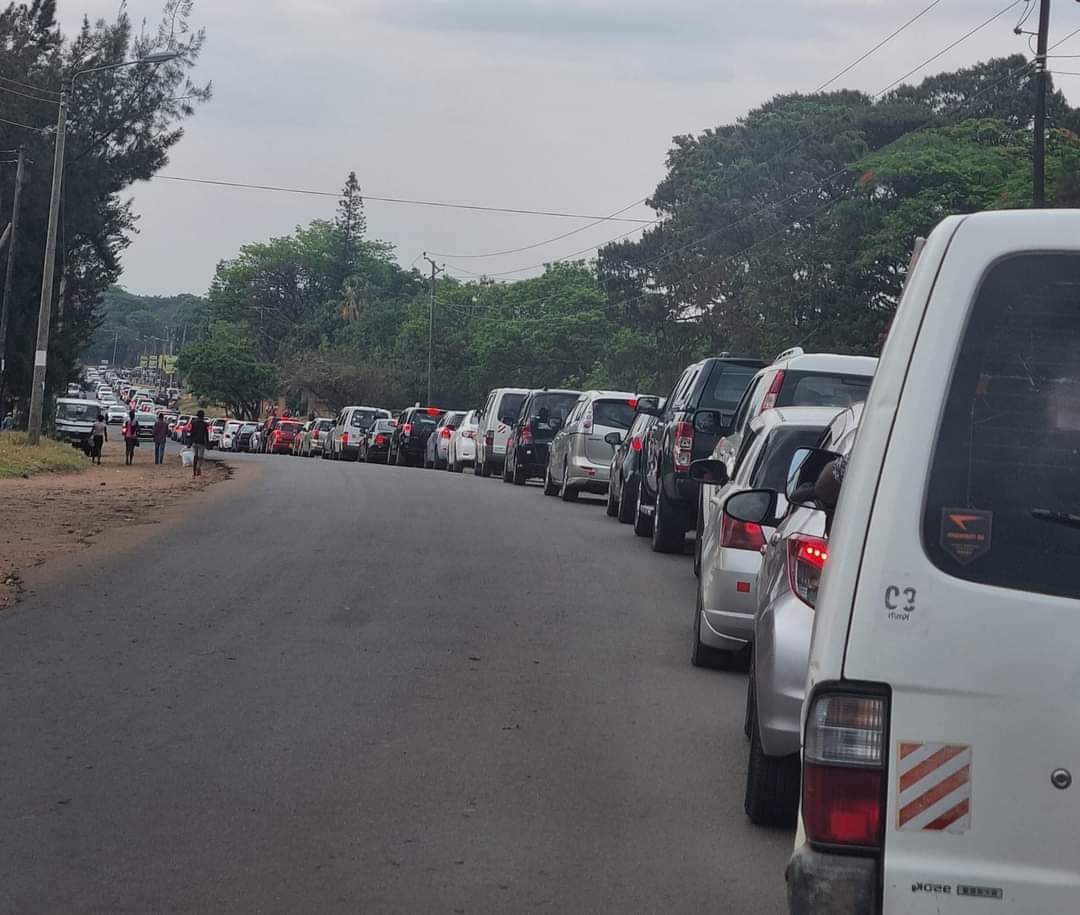
Across Malawi, fuel shortages have become a source of frustration for motorists, transport operators, businesses and ordinary citizens.
Long queues at filling stations have disrupted daily routines, wasted productive hours and raised serious concerns about the country’s fuel supply system.
For many motorists, finding fuel has become an exhausting exercise. Instead of concentrating on their businesses, work and family responsibilities, they must worry about where they will find their next litre of petrol or diesel.
Public transport operators face their own challenges, with fuel shortages threatening their operations and placing pressure on transport fares.
Businesses that depend on reliable transportation must contend with delays and additional operating costs, while ordinary Malawians risk bearing the consequences through higher prices of goods and services.
The question is simple: Who will take responsibility for ending this cycle?
Malawi cannot continue operating as though fuel shortages are an unavoidable part of everyday life.
A country cannot aspire to economic growth while motorists spend hours searching for fuel and businesses struggle to operate in an environment characterised by uncertainty over the availability of a critical commodity.
Fuel is not a luxury. It is a lifeline for the economy.
Agricultural produce must be transported to markets.Patients must reach hospitals. Goods must move between districts and cities. Public transport must operate.Construction projects, manufacturing activities and countless small businesses depend on reliable fuel supplies.
When fuel disappears from filling stations, the consequences extend far beyond motorists waiting in queues. The entire economy feels the impact.
The government’s handling of the fuel situation therefore deserves serious scrutiny.
Former Minister of Energy Ibrahim Matola has blamed the government’s decision to abandon the Government-to-Government (G2G) fuel procurement arrangement for contributing to the shortages.
The arrangement was intended to enable Malawi to procure fuel directly from countries that refine petroleum products, with the potential for more favourable prices and credit arrangements when foreign exchange was scarce.
Matola’s criticism raises an important question: What alternative measures have been put in place to guarantee a consistent and reliable fuel supply following the change in policy?
If the government believes that abandoning the G2G arrangement was the right decision, it must explain how the replacement system will deliver better results. If the previous arrangement had weaknesses, the public deserves to know what those weaknesses were and how the government intends to address them.
Changing a policy is a legitimate government decision.However, such decisions must be judged by their outcomes, not merely by the arguments used to justify them.
Malawians need fuel in filling stations, not endless explanations about why it is unavailable.
The government must also be transparent about the factors driving the shortages. Is the problem primarily linked to foreign exchange constraints, procurement arrangements, delayed payments, logistical challenges or weaknesses in fuel distribution? Are sufficient volumes being procured to meet national demand? What measures are being implemented to prevent recurring shortages?
These are not unreasonable questions. They are questions that citizens have every right to ask when fuel shortages begin affecting their livelihoods.
The public should not have to rely on rumours, speculation and political exchanges to understand a crisis with such far-reaching economic consequences.
Government authorities responsible for energy, fuel procurement and distribution must provide regular, credible updates on the situation, including the measures being taken to restore stable supplies and the expected timeline for improvement.
Where there are administrative failures, they must be addressed. Where foreign exchange shortages are responsible, the government must explain its strategy for dealing with them. Where procurement arrangements are inadequate, they must be reviewed and improved.
What Malawi cannot afford is a situation in which one explanation replaces another while the queues continue growing.
There is also a need to move beyond emergency responses.
Dispatching fuel to selected filling stations may provide temporary relief, but it does not necessarily resolve the underlying problems. A lasting solution requires a procurement and distribution system capable of meeting demand consistently, even when the country faces foreign exchange pressures and fluctuations in international fuel markets.
The government must demonstrate that it has a credible plan to achieve that objective.
This includes improving supply planning, strengthening accountability across the fuel supply chain, communicating honestly with the public and ensuring that decisions are guided by evidence rather than political considerations.
At the same time, fuel companies and other players in the supply chain must be held to their responsibilities where evidence establishes failures or irregularities.
The ultimate objective should be a system in which motorists can visit filling stations with reasonable confidence that fuel will be available, rather than having to queue for hours or travel from one station to another in search of supplies.
Malawi’s economic challenges are real. Foreign exchange constraints, import dependence and the cost of procuring petroleum products cannot simply be wished away. Nevertheless, these difficulties make effective planning and transparent management more important, not less.
Citizens understand that the government cannot control every international market development. What they expect is a government that anticipates challenges, communicates clearly and responds decisively when problems arise.
They also expect political leaders to recognise that the cost of policy failures, wherever they occur, is ultimately borne by ordinary people.
Every hour spent in a fuel queue is an hour that could have been used productively. Every additional transport cost places pressure on household budgets. Every business disruption threatens income, employment and economic activity.
These costs may not always appear directly in government statements, but they are real to the people experiencing them.
The fuel queues have become a test of the government’s ability to turn policy decisions into practical results.
Malawians do not need promises that the situation will improve without clear evidence of progress. They need a credible explanation of what went wrong, what is being done to correct it and when they can reasonably expect normal fuel supplies to return.
The government must therefore communicate a clear recovery plan, provide measurable progress updates and take responsibility for the effectiveness of its policies.
If the current approach is not working, it must be reviewed. If an alternative procurement system is proving inadequate, the government must be prepared to make the necessary adjustments. The interests of the country must come before the desire to defend a particular policy decision.
Ultimately, the success of any fuel procurement arrangement should be measured by its ability to deliver sufficient supplies reliably, affordably and sustainably.
The question remains: When will the fuel queues end?
For the motorist who has spent hours waiting at a filling station, the answer cannot be another political statement. For the transport operator losing income, it cannot be another promise. For the business owner struggling to meet operating costs, it cannot be another explanation without a solution.
Malawians deserve a fuel supply system that works.
The government must now demonstrate that it has the leadership, the plan and the political will to deliver one.
Until then, the queues will remain a painful reminder that when essential public services and economic necessities fail, it is ordinary citizens who pay the price.