


By Rick Dzida
The pristine silence of the Chikangawa forest has long been shattered, but the whispers emerging from Malawi’s Parliamentary Ad Hoc Committee inquiry carry a deeper, more chilling resonance.
What was initially presented as a tragic consequence of inclement weather is rapidly dissolving into a mosaic of dark irregularities.
Shrouded in contradictions and haunted by the testimonies of terrified locals, the demise of former Vice-President Saulos Chilima and eight others begins to look less like a cruel twist of nature and far more like a meticulously executed execution.
When the pieces of this fractured puzzle are laid side by side, logic refuses to yield to the simple narrative of an accident.
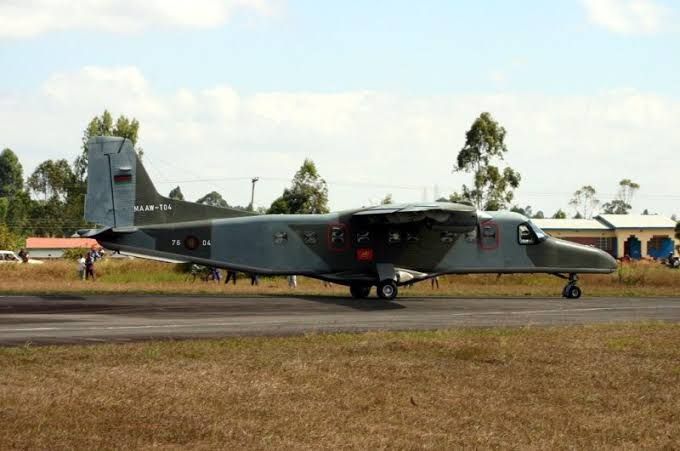
The first tear in the official fabric comes from the harrowing eye-witness accounts.
A patriotic witness Ephraim Duma recounted a surreal, terrifying sight: the military Dornier aircraft hovering abnormally low—scarcely two metres above the ground—with its cabin door flung open. At that threshold stood Chilima himself, desperately beckoning for rescue before the door was abruptly forced shut from within.
When Duma trailed the doomed aircraft to its final resting place, he found not a burning wreckage awaiting rescue, but an ominous vanguard of soldiers who allegedly turned their weapons upon a curious citizen.
This terrifying atmosphere of active containment is heavily reinforced by another resident, Flora Mkandawire. She testified to hearing three sharp, deliberate gunshots echoing through the trees immediately following the impact.
When she attempted to fulfil her civic duty by reporting the crash to the police at 11:00 pm, her words fell upon deaf ears; no official search operation was initiated until the afternoon.
Instead of gratitude, Mkandawire was met with targeted threats that forced her to flee her home and sleep in open fields. Logically, if this were a routine aviation disaster, why would eyewitnesses be chased with live ammunition, and why would an early reporter be terrorised into silence? These are not the protocols of a rescue mission; they are the standard cleanup tactics of a crime scene.
Equally haunting is the silent testimony of the recovered mobile phone. Effiness Katunga Kanyemba, the grieving widow of Chilima’s personal physician, Dr Dan Kanyemba, presented a devastating paradox.
Though the state insisted the plane went down shortly after 10:00 am, she testified that her husband’s mobile phone was still actively ringing as late as 4:00 pm. When the device was finally returned to her weeks later, it was completely pulverized and shattered beyond recognition.
If the impact had instantaneously destroyed the aircraft and killed its occupants, the phone would have been silenced forever. The fact that it rang for hours, only to be returned completely crushed, points squarely to manual intervention—a deliberate attempt to erase digital footprints and ensure no desperate final messages could expose the truth of what transpired in those dark woods.
Beyond the immediate vicinity of the forest, the institutional response from the state radiates a damning level of foreknowledge and coordination.
Testimonies revealed that retired Lieutenant General John Msonthi was apparently aware of the precise crash coordinates early on and had already communicated the grim reality to a close acquaintance of Chilima.
This begs a damning question: if the upper echelons of the military infrastructure knew exactly where the wreckage lay, why subject the nation to a performative, agonizing public search?
The deception deepened when authorities officially suspended search operations on the evening of June 10, citing nightfall. For an institution like the Malawi Defence Force, which prides itself on 24-hour operational capacity and alternate shifting, abandoning a missing Vice-President in the dark is an act of calculated negligence.
This artificial delay bought valuable, unmonitored hours under the cover of darkness—hours that perfectly align with the testimonies of villagers who saw unauthorized individuals manipulating the crash site long before the official rescue teams arrived.
Finally, the state’s own words became its undoing, tangled in a web of conflicting narratives.
President Lazarus Chakwera initially addressed a panicked nation by claiming the plane had successfully reached Mzuzu, a statement flatly contradicted by subsequent aviation reports. Who fed the Commander-in-Chief this blatant falsehood?
Simultaneously, former Commander General Vincent Phiri publicly insisted that the aircraft had gone down deep within an impenetrable, remote forest, yet investigators found the wreckage sitting almost within arm’s reach of inhabited local villages.
When these anomalies are synthesized, the natural accident theory completely collapses. A routine flight does not inexplicably alter its planned route without explanation. A routine crash does not feature open doors, pleading statesmen, echoing gunshots, delayed rescue operations, and systematically destroyed phones.
The logical mind is forced to abandon the comforting illusion of a tragedy caused by bad weather. Instead, the evidence unearthed by the Parliamentary Ad Hoc Committee points aggressively toward a sinister truth: Saulos Chilima’s plane did not merely fall from the sky; it was brought down by the heavy, invisible hand of a political assassination plot.