


By Jones Gadama
A constitutional expert has challenged the Public Affairs Committee’s (PAC) statement on presidential incapacitation, arguing that the committee has not presented evidence that meets the constitutional test for incapacity under Section 87 of the Constitution.
Dr. Kelsen Moreson, an International Constitutional and Governance Expert, made the remarks in an opinion dated 24 November 2026, responding to PAC’s statement entitled “Statement on the Debate Regarding Presidential Incapacitation and the Constitutional Role of the First Vice President”.
“The statement raises legitimate concerns about economic hardship, transparency and executive coordination,” Dr. Moreson said. “Its central difficulty, however, lies in the movement from concerns about government performance to an inference of presidential incapacity, and from expectations about the First Vice-President to demands presented as constitutional imperatives.”
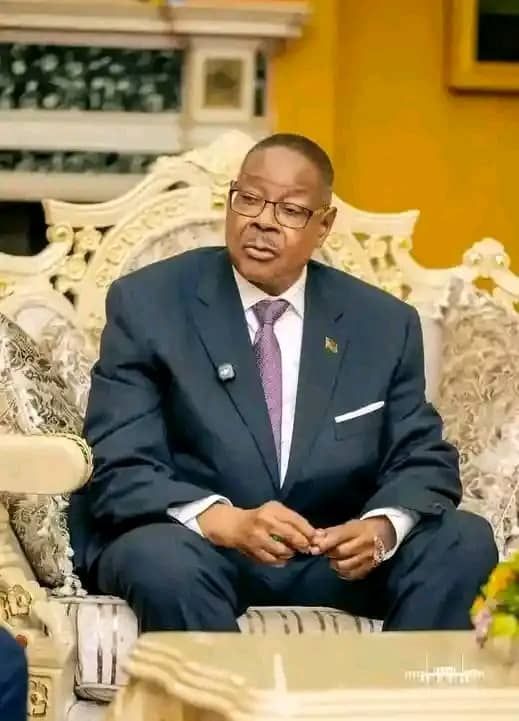
He said Section 10(1) of the Constitution provides that in the resolution of political disputes, its provisions shall be regarded as “the supreme arbiter and ultimate source of authority”.
“Where incapacitation is at issue, recourse must be to the Constitution,” he said. “Neither political expediency nor executive convenience can displace its prescribed mechanism.”
PAC had in its statement pointed to foreign exchange and fuel shortages, high cost of living, shortages of essential medicines, persistent electricity blackouts and intermittent water supply, and had asserted that “the circumstantial situation manifests incapacity of the Head of State to discharge duties”.
Dr. Moreson said those challenges demand urgent intervention, and that Section 30(4) requires the State to respect the right to development and justify its policies to citizens.
“Poor policy outcomes, administrative failures and structural economic constraints are not medical findings,” he said.
He added: “A government may perform poorly under a fully functioning President; the reverse inference is equally unsound.”
Dr. Moreson also addressed PAC’s reference to the manner of the President’s return from a private visit and the absence of public cheering.
“What constitutional test makes a public reception a test of capacity?” he asked. “The Constitution prescribes no such test. Nor does a live address conclusively establish capacity, just as its absence cannot establish incapacity.”
He cited Section 87(1), which he said sets the substantive threshold that the President must be “incapable as to be unable to discharge the powers and duties of that office”.
He further cited Section 87(2), which provides that the President shall not be deemed incapacitated until and unless there is a written declaration certified by a board of independent medical practitioners that the President is unable to discharge the duties of the office, the declaration is signed by the First Vice-President and a majority of the Cabinet holding office at that time, and the declaration is submitted by the First Vice-President to the Speaker of the National Assembly.
“These are cumulative safeguards, not optional formalities,” Dr. Moreson said.
He explained that under Section 87(3), submission triggers the immediate assumption of presidential powers by the First Vice-President as Acting President, while Section 87(7) requires the medical board to be selected under Parliament’s Standing Orders.
“The statement identifies no such declaration,” he said. “That omission does not establish that the President is healthy; it establishes that the statement has not demonstrated constitutional incapacity.”
On PAC’s suggestion that Parliament should have been convened, Dr. Moreson said parliamentary scrutiny is legitimate, but a parliamentary debate cannot substitute for the initial procedure under Section 87(2).
He said Parliament has a specific subsequent role under Section 87(4) when a President already declared incapacitated submits a medically certified declaration of fitness.
“The sequence matters,” he said.
Dr. Moreson also discussed the history of debates on presidential health in Malawi, noting that since President Mutharika first assumed office in 2014, questions about his health have periodically resurfaced in political discourse, including the controversy surrounding his extended United States visit in 2016.
He said the recurrence of the debate calls for a consistent evidential standard rather than assumptions about the motives of those raising it.
“Presidential health is a legitimate public concern to the extent that it affects the discharge of public duties,” he said. “But illness, age, absence from public ceremonies and constitutional incapacity are not interchangeable concepts.”
He said Section 21 protects personal privacy, while Section 12(1)(c) demands open and accountable government, and that these principles require a proportionate balance between private medical information and public assurance about continuity of government.
Dr. Moreson said PAC’s conclusion linking alleged secrecy to alleged plunder of public resources and suggesting hostility towards the First Vice-President deserves evidence and, where warranted, investigation by competent institutions.
“They cannot be established merely by repeating concerns about presidential visibility,” he said. “Neither political actors nor government officials should instrumentalise presidential health for convenience.”
On PAC’s demand that the First Vice-President preside over state functions rather than other officials, Dr. Moreson said if the First Vice-President has been denied a function expressly vested in her by law, that specific breach should be identified.
“If an official has exercised presidential powers without lawful authority, that delegation should be scrutinised,” he said. “If the concern is that the Vice-President is insufficiently utilised, it should be advanced as a governance concern rather than automatically characterised as a constitutional violation.”
He said allegations of gender-based exclusion likewise require evidence and must be assessed under Sections 20 and 24.
“Meaningful utilisation of the First Vice-President may strengthen coordination and continuity,” he said. “But presidential discretion cannot be converted into a mandatory obligation by public expectation, just as discretion cannot be invoked to override an express constitutional duty.”
Dr. Moreson said the deficiencies in PAC’s legal reasoning do not diminish the seriousness of citizens’ hardship.
He cited Section 88(2), which provides: “The President shall provide executive leadership in the interest of national unity in accordance with this Constitution and the laws of the Republic.”
He also cited Section 12(1)(c), which recognises that public trust can only be maintained through “open, accountable and transparent Government and informed democratic choice”.
He described PAC’s demand for a live national address as understandable as a confidence-building proposal, but said the suggestion that recorded communications are inherently suspect because of concerns about artificial intelligence is not supported by evidence of manipulation.
“Nor is a live broadcast a constitutional test of capacity,” he said.
He said the Constitution does impose specific accountability obligations, including Section 65, which requires annual attendance before Parliament immediately before consideration of the official budget, including an address, a report on previous policies and responses to questions, and Section 89(4), which provides for parliamentary questioning under Standing Orders or a motion of the National Assembly.
According to Dr. Moreson, the President and his administration have an opportunity to address the substantive concerns through direct communication, constructive engagement with PAC and other stakeholders, and a credible recovery programme.
He said such a programme should identify measures to restore fuel and forex availability, contain living costs, replenish essential medicines and improve electricity and water supply, with clear timelines and regular progress reports.
He added that PAC’s reported unsuccessful requests for an audience also warrant a constructive response.
“The test of responsive leadership is not merely the frequency of public appearances but the quality of decisions, the effectiveness of implementation and the results experienced by citizens,” he said. “Lawful delegation does not extinguish executive accountability.”
In his conclusion, Dr. Moreson said the statement attributed to PAC raises serious governance concerns, but its inference of constitutional incapacity is not established by the evidence it presents, and its demand for exclusive delegation to the First Vice-President goes beyond the general constitutional framework.
“Neither proposition should be accepted without applying the relevant legal test,” he said.
He said where incapacity genuinely arises, the Constitution must be invoked, not bypassed, where a mandatory function of the Vice-President is infringed, the specific violation must be identified, and where government performance falls short, the executive must account for its decisions and deliver corrective measures.
“These standards apply irrespective of who occupies State House,” he said.
He concluded: “The absence of a constitutional finding of incapacity is not a certificate of satisfactory governance. Equally, dissatisfaction with governance is not a declaration of incapacity. Malawi needs evidence before conclusions, law before political convenience, and measurable results before assurances.”