
By Burnett Munthali
In a world increasingly defined by uncertainty and emotional strain, a new publication is emerging as a quiet yet powerful response to the human need for reflection and healing.
At the centre of this initiative is Janet Karim, whose story is closely intertwined with the creation and vision behind a journal designed to inspire resilience through daily gratitude.
The publication, titled _365 Days of Gratitude_, is being introduced as more than just a writing tool, but as a structured pathway toward personal transformation over time.
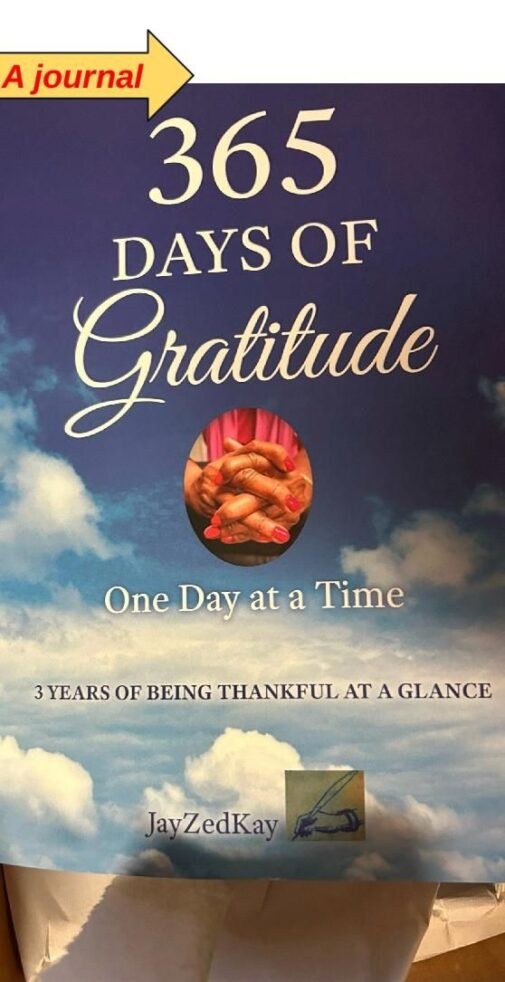
It is presented as a three-year guided journal aimed at helping individuals cultivate mindfulness and appreciation in their everyday lives.
The project, released by JayZedKay Books Publications, reflects a broader shift within the publishing industry toward materials that prioritise mental wellness and intentional living.
For Janet Karim, the idea behind the journal is deeply rooted in the belief that gratitude, when practised consistently, has the power to reshape perspectives and restore emotional balance.
Her story reflects a growing awareness that small, daily habits can have profound long-term effects on how individuals perceive their lives and challenges.
By encouraging users to record their thoughts and reflections each day, the journal creates a personal archive of growth, resilience, and evolving self-awareness.
This emphasis on consistency highlights Karim’s understanding that transformation is rarely immediate, but instead unfolds gradually through disciplined reflection.
The journal’s three-year format sets it apart from conventional notebooks, offering users a rare opportunity to revisit past entries and observe changes in their thinking over time.
Such a structure is particularly significant in a world where many seek quick solutions, yet struggle to sustain meaningful personal development.
Karim’s approach challenges this mindset by promoting patience, introspection, and long-term commitment to self-improvement.
The availability of the journal on Amazon signals an ambition to reach audiences far beyond its immediate context, making the practice of gratitude accessible on a global scale.
This accessibility aligns with a wider movement that recognises the importance of mental health tools in navigating modern life.
In recent years, gratitude journaling has gained recognition among researchers and mental health professionals as a practice linked to reduced stress and increased overall well-being.
Karim’s work appears to draw on this growing body of knowledge, translating theory into a practical and user-friendly format.
The journal is therefore positioned not merely as a product, but as a guided experience that encourages users to reconnect with the positive aspects of their lives.
Its simplicity is deliberate, reflecting an effort to ensure that individuals from all backgrounds can engage with the practice without feeling overwhelmed.
By framing gratitude as both a daily exercise and a long-term journey, Karim underscores the importance of consistency in achieving lasting change.
Observers note that such initiatives are becoming increasingly relevant as people search for stability amid social, economic, and emotional pressures.
The journal’s message resonates particularly strongly in times when uncertainty can easily overshadow appreciation.
For many, it offers a structured way to regain a sense of control and perspective.
Ultimately, Janet Karim’s story is one of transformation, not only in her own outlook but in her effort to inspire change in others.
Her work suggests that even in the face of adversity, there remains a quiet power in reflection and gratitude.
As the demand for mental wellness resources continues to grow, publications like _365 Days of Gratitude_ highlight the evolving role of storytelling and self-expression in shaping healthier, more resilient societies.
In this way, the journal stands as both a personal tool and a broader statement about the enduring human capacity for hope and renewal.