By Rick Dzida
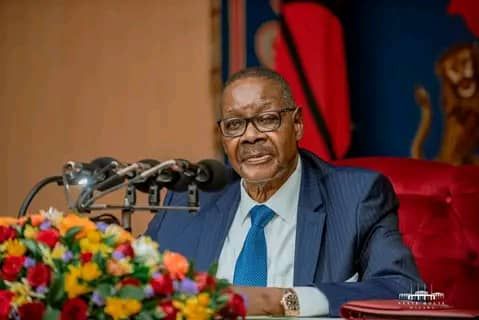
Is President Mutharika in total deep slumber? A widening leadership vacuum at the highest levels of the Malawian state has triggered a profound institutional crisis, casting doubt on the executive’s willingness to defend constitutional boundaries.
As the ruling Democratic Progressive Party (DPP) contends with severe internal volatility, President Peter Mutharika’s persistent administrative passivity has effectively compromised the rule of law.
By permitting party bureaucrats to challenge state mechanisms and ignoring explicit statutory protections, the presidency is presiding over a structural erosion that threatens both domestic stability and the republic’s international standing.
The ongoing governance crisis is defined by a series of high-profile institutional collisions that collectively signal an abandonment of constitutional fidelity.
At the core of this breakdown is the executive’s failure to maintain the Separation of Powers mandated under Sections 7 and 9 of the Constitution of Malawi.
This overreach became glaringly evident following public actions by DPP Secretary General Peter Mukhito, who initiated an open political assault against parliamentary leadership.
This blatant encroachment on legislative autonomy directly violated constitutional principles, a crisis further compounded by the administration’s fractured communication strategy.
While the party secretariat actively undermined the legislature, the Minister of Information and Digitalization (ICT), Shadreck Namalomba, issued an opposing state view.
Namalomba asserted that the Executive respected the independence of Parliament and distanced the government from judicial actions taken by Austin Mkoka against the National Assembly.
This public contradiction—where the ruling party’s administrative arm openly works against the declared policy of the state’s information ministry—exposes a total absence of executive oversight and central coordination from the presidency.
Paradoxically, while Shadreck Namalomba upholds separation of powers between the legislature and the executive in a written document, reports are awash that he verbally attacked Suleman’s level of knowledge when Namalomba himself is being addressed as Dr. with no traces of a PhD thesis from an accredited academic institution.
Simultaneously, the administration’s core anti-corruption pledges have suffered a devastating blow following the arrest of high-profile party strategist Collins Magalasi.
Magalasi, who previously orchestrated the launch of the DPP’s governance manifesto, was taken into police custody on severe corruption and fraud charges.
His arrest within just ten months of APM administration assuming power represents a clear violation of Section 13 of the Constitution, which binds the state to promote national policy based on transparency, accountability, and good governance.
The fact that a chief architect of the party’s platform faces criminal prosecution indicates a failure of executive vetting and an institutional tolerance for systemic malfeasance.
This disregard for constitutional authority extends to the treatment of the state’s highest offices.
The executive’s decision to systematically sideline Vice President Jane Ansah at prominent state and cultural events, opting instead to delegate official duties to junior cabinet ministers like Alfred Gangata, constitutes a direct subversion of state protocol.
Under Section 79 of the Constitution, the Vice President holds a distinct, elected mandate to assist the President in exercising the supreme executive authority of the republic.
Displacing an elected member of the presidency in favour of subordinate cabinet appointees represents an arbitrary exercise of personal political preference over established constitutional design.
Beyond domestic instability, these compounding constitutional failures have severely damaged Malawi’s reputation within the international community.
The state’s apparent inability to uphold basic democratic structures has triggered a sharp decline in diplomatic confidence among key bilateral and multilateral partners.
Malawi’s development budget remains heavily reliant on direct foreign assistance and budgetary support from western allies and organisations like the World Bank.
International donors condition aid on strict adherence to the rule of law, anti-corruption enforcement, and democratic governance.
The spectacle of the manifesto chairperson facing arrest for corruption, combined with continuous executive overreach into the legislature, signals to international partners that state institutions are highly vulnerable to political capture.
This structural instability risks triggering aid freezes, directly endangering crucial public service funding.
Global investors prioritize regulatory predictability, institutional stability, and judicial independence before committing capital to emerging markets. The deep friction between the party machinery and arms of government creates a volatile legal environment.
When executive actors can arbitrarily threaten the independence of other arms of government or sideline constitutional offices without consequence, foreign corporations view the jurisdiction as high-risk, causing a severe chilling effect on foreign direct investment.
Within the Southern African Development Community (SADC) and the African Union, Malawi has historically sought to position itself as a stable, constitutional democracy.
The current administration’s internal chaos and public disregard for institutional separation undermine this diplomatic posture.
Instead of serving as a regional model for democratic consolidation, Malawi is increasingly being viewed by foreign diplomats as a volatile state struggling with administrative drift, reducing its geopolitical leverage in regional security and trade negotiations.
To restore domestic constitutional balance and repair the state’s fractured international credibility, the presidency must pursue immediate corrective action.
First, the President must issue an explicit, formal directive reaffirming complete commitment to Section 7 of the Constitution, strictly prohibiting party officials from interfering in legislative or judicial functions.
Second, the Office of the President and Cabinet (OPC) must implement a centralized review mechanism ensuring that all ministerial statements and party positions are fully reconciled before public dissemination, ending contradictory messaging.
Third, the executive branch must immediately restore full state honours and duties to the office of the Vice President as mandated by Section 79, ensuring that elected state officials are not bypassed for junior political appointees.
Most importantly, the presidency must publicly commit to a policy of non-interference regarding the prosecution of state and party officials like Collins Magalasi. Allowing independent oversight bodies to operate without executive pressure will signal a genuine commitment to Section 13 of the Constitution, reassuring international donors and restoring diplomatic trust.