By Burnett Munthali
The Malawi Public Universities Students’ Union has appealed for calm following a 100 percent tuition fee increase across public universities.
MAPUSU said it will first engage the government through dialogue before considering other actions.
In a statement released on Thursday and signed by MAPUSU President Wesley Malekano, the union said it is concerned by the anxiety and financial pressure the adjustment has placed on students, parents, and guardians.
Malekano said his leadership convened an emergency meeting to decide the way forward.
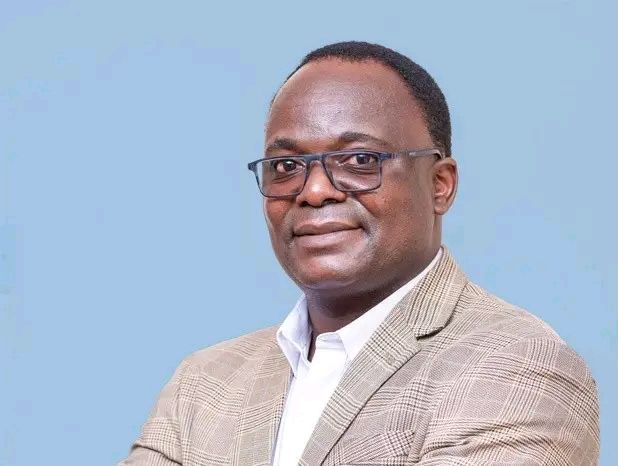
He said the union resolved to pursue diplomatic engagement with key government authorities to seek a review of the decision.
“We are seeking urgent meetings with the Minister of Education to present students’ concerns and discuss the financial implications of the tuition fee increase,” said Malekano.
He said the union also plans to engage the President in his capacity as Chancellor of Malawi’s public universities.
The aim is to seek his intervention on the matter.
“Our goal is to present a well-reasoned, fact-based case to the leadership of this nation,” Malekano said.
He said the objective is to find a sustainable and fair way forward regarding the adjustments.
He urged students to remain peaceful while discussions are being arranged.
Malekano warned that acts of vandalism, violence, and premature demonstrations could weaken the campaign for affordable higher education.
“Destruction of university property and public infrastructure would undermine the legitimacy of students’ grievances,” he indicated.
He said such actions could also prolong academic calendars through institutional closures.
He added that they would divert public attention from the issue of access to affordable education.
Executive Director for the Centre for Human Rights and Rehabilitation, Michael Kaiyatsa, backed the call for dialogue.
He underscored the importance of talks between affected students and government authorities responsible for the fee adjustment.
Kaiyatsa said dialogue is needed to ensure a fair outcome while maintaining peace and harmony.
“School authorities and government officials must engage students peacefully to discuss a situation that will have a negative impact on economically disadvantaged students,” he said.
He urged government to balance quality with access.
Kaiyatsa called on government to strike a balance between providing quality education and ensuring equal access to higher education for both the rich and the poor.
He observed that many poor families struggled to pay university fees even before the latest increase.
“This is a challenge to the education sector in Malawi because many people are already living in difficult economic conditions,” he said.
“The fee hike is therefore a huge blow,” he said.
The adjustment has affected several public universities.
The affected institutions include the Malawi University of Business and Applied Sciences, the University of Malawi, Mzuzu University, the Malawi University of Science and Technology, and the Lilongwe University of Agriculture and Natural Resources.
At those universities, annual tuition has risen from K650,000 to K1.3 million, reflecting a 100 percent increase.
Similarly, the Kamuzu University of Health Sciences has doubled its annual tuition fees.
KUHeS fees have moved from K1 million to K2 million, also marking a 100 percent increase.