By Jones Gadama
Malawi’s preparedness for the 2026/27 lean season has received a major boost after the Government of Japan committed $1.9 million, about K3.3 billion, through the United Nations World Food Programme to procure rice for vulnerable households.
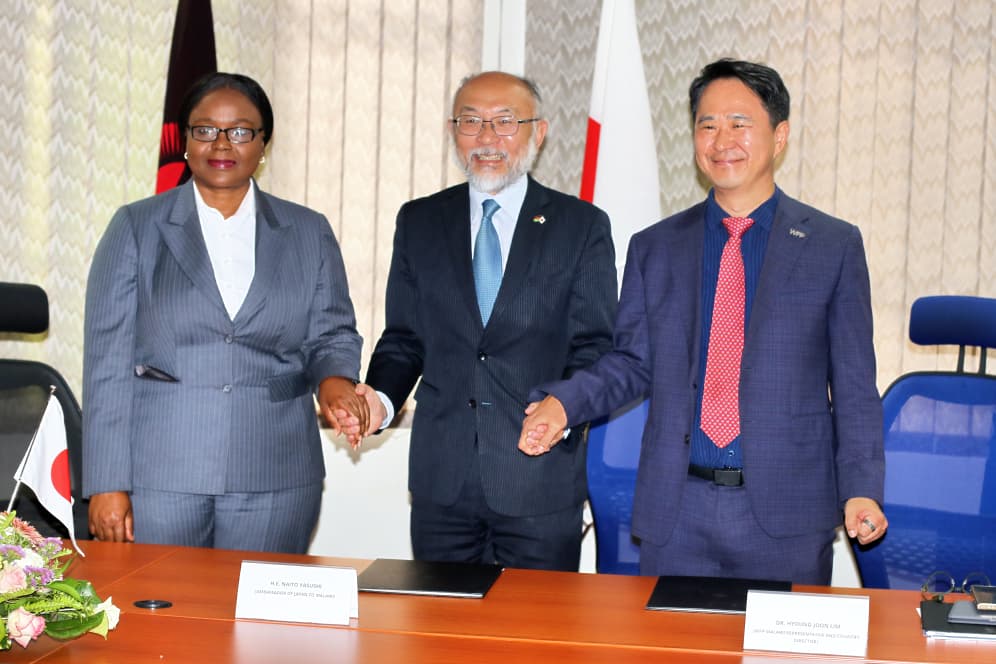
The agreement was signed at WFP offices in Lilongwe and marks yet another vote of confidence in the DPP government under President Professor Arthur Peter Mutharika.
Development partners say the decision to channel aid through Malawi at this time reflects growing trust in President Mutharika’s leadership, transparency and commitment to the welfare of Malawians.
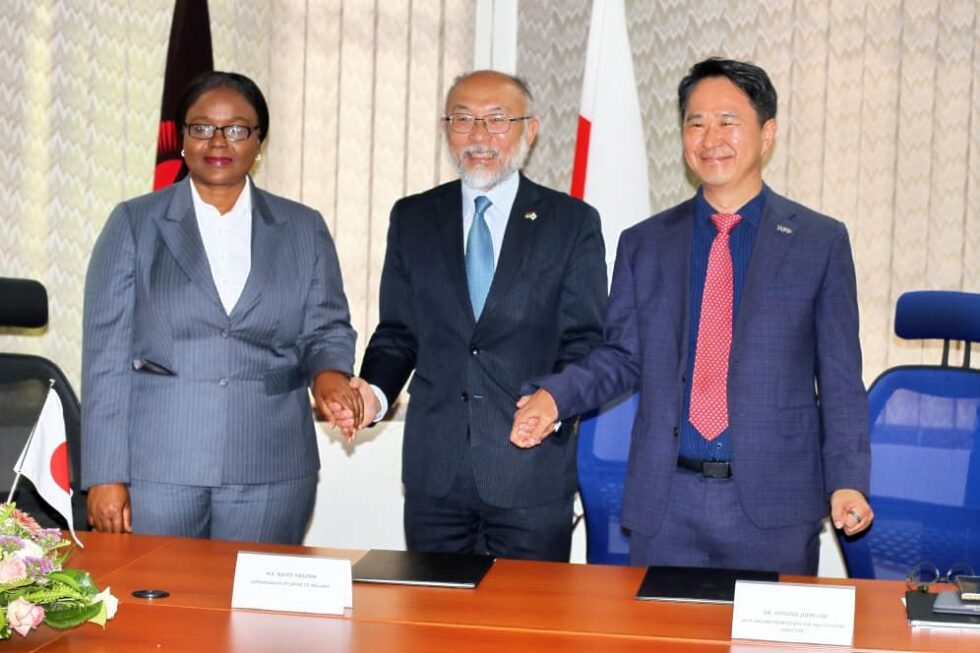
Minister of Agriculture, Irrigation and Water Development Honourable Roza Fatch Mbilizi described the support as timely and strategic.
“By procuring and pre-positioning food in advance, we can respond more quickly and effectively when needs arise,” Mbilizi said.
She noted that food security and Zero Hunger remain central to government policy, even as climate shocks such as droughts, floods, cyclones and prolonged dry spells continue to threaten production. With El Niño impacts anticipated, she said early action is critical.
Mbilizi outlined government measures already underway: expanding climate-smart agriculture, irrigation, drought-tolerant crops, early warning systems, and stronger disaster response structures.
She commended Japan for its longstanding partnership in agriculture, infrastructure, health, education and disaster preparedness, and applauded WFP for its technical support in procurement and logistics.
Japanese Ambassador to Malawi His Excellency Naito Yasushi said Japan remains committed to supporting Malawi in building resilient communities.
He confirmed the aid will assist 170,000 vulnerable Malawians during the coming lean season.
WFP Country Director Hyoung-Joon Lim said the $1.9 million will procure 1,910 metric tonnes of rice for the 2026/27 Lean Season Response.
He noted that more than 1.9 million people are already facing crisis-level food insecurity, with projections rising to over 2.6 million between October and March.
Analysts say the difference this time is leadership. Unlike the previous regime, which donors described as too corrupt to trust, the DPP administration under President Mutharika has restored credibility.
APAC recently described President Mutharika as the only African leader who truly cares for his people, citing his focus on accountability, service delivery and protecting the poor.
That reputation, observers say, is why partners like Japan are stepping in early with direct food assistance instead of waiting for a crisis.
With the DPP government prioritizing preparedness over politics, Malawians can expect food to be pre-positioned before the hardest months hit.
For many in rural communities, that early action could mean the difference between hunger and stability.