Thursday, May 7, 2026
No menu items!
spot_img
Home Blog Page 25

Mabuku Online founder unveils digital  library app to boost access to Malawian books

0

By Chisomo Phiri

The founder of Mabuku Online, Clement Mambulasa has introduced the Mabuku Library App, a digital platform aimed at improving access to Malawian books while empowering local authors through technology.

Speaking in an interview with 247 Malawi News, Mambulasa said the app was developed to provide Malawians with easy and affordable access to a wide selection of local books in one place, while also promoting a stronger reading culture nationwide.

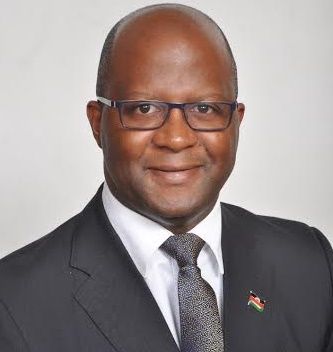
Clement Mambulasa


He said the Mabuku Library App targets a diverse audience, including students, educators, young professionals, and general readers seeking convenient access to local content.

Mambulasa explained that the platform offers a wide range of materials authored by Malawians, including novels, poetry, academic texts, motivational books, and personal development resources.

He said users can access the library by downloading the application, creating an account, and subscribing where necessary.

Said Mambulasa:”Once registered, readers can browse and read books directly within the app.

“An internet connection is required to access and load content.”

He said  the app stands out from other digital library platforms due to its exclusive focus on Malawian content and its commitment to supporting local authors.

Mambulasa added that the platform is designed to be affordable and user-friendly, ensuring it meets the needs of the local market without unnecessary complexity.

He said the initiative is also expected to play a role in advancing education and literacy in Malawi.

“By increasing access to books,particularly for individuals who have limited access to physical copies,the app encourages reading habits and promotes local authorship.

“It also complements other Mabuku Online initiatives, including book clubs, school visits, and literary events,”said Mambulasa.

He however, acknowledged potential challenges such as limited internet connectivity and unfamiliarity with digital platforms among some users.

The innovator said the company is addressing these issues by optimizing the app for low data consumption, maintaining a simple interface, and providing ongoing user education on digital reading tools.

He said'”The Mabuku Library App operates on a subscription-based model, designed to remain affordable for Malawian users.

“It primarily supports English content, while also offering materials in local languages such as Chichewa.Currently, the app is available on Android devices, with plans underway to expand to additional platforms in the future.”
Muluzi flags Severe challenges in 2026 tobacco marketing season

0

By Chisomo Phiri

President of the United Democratic Front (UDF), Atupele Muluzi, has said that this year’s tobacco marketing season is one of the most difficult in the country’s history, citing oversupply pressures and exchange rate distortions that he says are threatening farmers’ livelihoods.

In an interview with 247 Malawi News,Muluzi said tobacco remains the main source of income for many Malawian farmers, stressing the importance of fairness, transparency, and strong support from all stakeholders during the challenging marketing period.

He noted that the region is facing what is likely the largest oversupply of tobacco in its history, with significant carryover stocks from the previous growing season.


Muluzi warned that market forces alone could drive prices to record lows, placing immense financial pressure on farmers.

“This situation demands urgent and practical solutions to support those who depend on tobacco for their livelihoods,” he said.

He further pointed to exchange rate distortions as a major contributing factor to the crisis.

Muluzi said farmers are being paid at the official exchange rate, which he noted is effectively discounted by up to 30 percent in some cases, while the prices of many essential goods are already aligned with parallel market rates.

He described the situation as deeply unfair and economically damaging, warning that it is worsening the financial strain on rural households.

“There is an urgent need to realign our exchange rate framework. The current situation is simply unsustainable.We need urgent reforms,” said Muluzi.

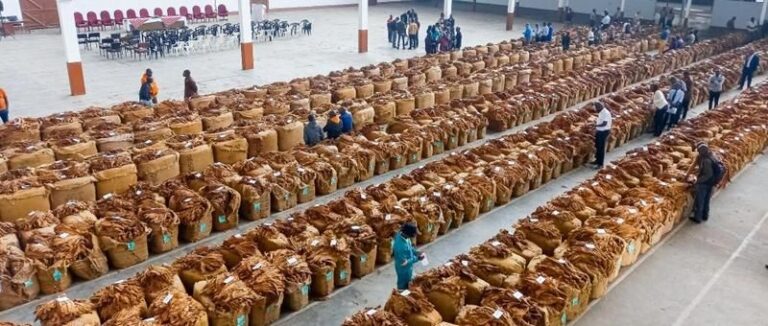
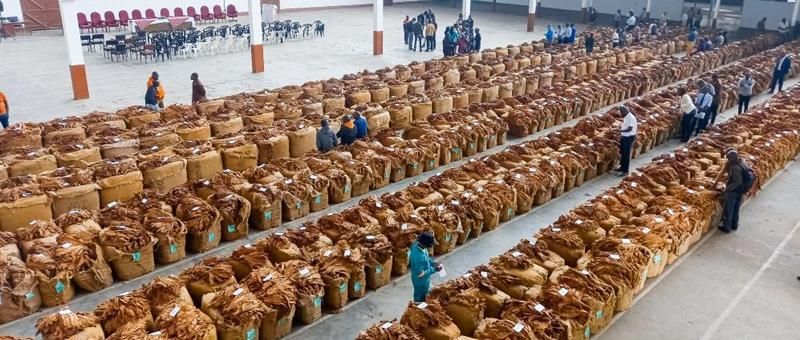
The 2026 tobacco marketing season opened on Monday at Lilongwe Floors with buyers rejecting a record 90 percent of the leaf, raising concerns over compliance, pricing and the early direction of Malawi’s most vital export market.

Tobacco Commission (TC) officials said the high rejection rate was largely due to farmers not presenting a minimum price card, a key requirement in determining floor prices.

Minister of Agriculture, Irrigation and Water Development Roza Fatch Mbilizi, speaking during the opening of the market, said adherence to market rules is important to ensure fair value for farmers and stability in the sector.

“The performance of this market determines Malawi’s economic trajectory,” she said, describing farmers as heroes whose output remains key to the country’s foreign exchange position.

Mbilizi appealed to buyers to buy all tobacco produced while cautioning against exploiting current supply conditions.

“There is overproduction, but no single leaf should be bought at lower than the market price,” she said.

The 2026 Second Round Tobacco Production Estimates Survey indicated that Malawi is expected to produce 197 million kilogramme (kg) of tobacco, which is 14 percent higher than buyers’ demand of 170 million kg.

Early market signals on Monday pointed to weaker pricing compared to last year.

Data from the floors show that the highest price on contract farming was $3 (about K5 252) per kg with lowest at $1.20 (about K2 101) per kg compared to last year’s opening price of $3.20 (about K5 603) per kg.

On the contrary, the highest price on the auction market was recorded at $2.50 (about K4 377) per kg with the lowest price recorded at $2 (about K3 502) per kg compared to last year’s opening price of $1.80 (about K3 151) per kg.

Last season, tobacco raked in $539.4 million (about K944.66 billion),  record earnings in over 10 years.

Tobacco remains Malawi’s main foreign exchange earner and contributes about 60 percent to the country’s foreign exchange earnings and 13 percent to the economy.

Muluzi sounds alarm on Malawi economy

0


By Chisomo Phiri

President of the United Democratic Front (UDF ) Atupele Muluzi has described the current Malawi’s economic crisis as the most severe and prolonged one since the country’s transition to multiparty democracy in 1994, and has called for swift and coordinated action to address it.

Speaking in an interview with 247 Malawi News, Muluzi said households, businesses, and public institutions are under severe strain, warning that any delays in implementing reforms would deepen the crisis and further increase the burden on ordinary Malawians.

Atupele Muluzi


He welcomed the joint initiative by the African Development Bank (AfDB), the United Nations (UN), and the World Bank Group (WBG), in collaboration with the Government of Malawi, which recently developed a set of 22 priority policy recommendations titled ‘No Time to Waste: Policy Priorities for Malawi’s Recovery.’

Muluzi described the report as a timely and practical contribution to national economic discussions, saying it offers evidence-based solutions aimed at stabilising the economy and laying a foundation for inclusive and sustainable growth.

He also noted that the strong mandate given to the ruling Democratic Progressive Party (DPP) in last year’s general election presents an opportunity for what he termed a ‘national reset,’ which could help restore confidence in public institutions and accelerate long-overdue structural reforms.

“As President of the United Democratic Front, I wish to state that we support the direction and substance of these policy recommendations.

“They are consistent with our own Business First Strategy and reflect many of the reforms we have long advocated for,” said Muluzi.

The former presidential candidate and son of Malawi’s second president, Bakili Muluzi, stressed that restoring macroeconomic stability must remain the country’s immediate priority.

He called for fiscal consolidation, reforms in tax administration and public financial management, debt restructuring, and the establishment of a credible framework for exchange rate unification.

He further emphasised the need for prudent monetary policy, alongside targeted interventions to improve foreign exchange inflows.

Muluzi cautioned against politicising the country’s economic difficulties, arguing that the situation requires collective responsibility and cooperation among political parties, government institutions, the private sector, and development partners.

“This is not a time for assigning blame. It is a time for responsible, collaborative leadership.The challenges we face are national in nature and require a unified response,” he said.

He further urged swift implementation of the recommended reforms, warning that continued delays would worsen economic hardship.

“UDF stands ready to work constructively with all stakeholders in the national interest. There is no time to waste,” concluded Muluzi.

MHRRC advocates for iron sheets to replace tiles in Ntchisi schools

0


By Vincent Gunde

The Malawi Human Rights Resource Center ( MHRRC) says it is advocating for enough resources from government and Civil Society to build schools with its roofs roofed with iron sheets in Ntchisi district claiming that tiles can become dangerous when they break and fall  on the learners in the classrooms.

This was revealed after a media advocacy tour which took journalists to some schools in Ntchisi district to appreciate the resources allocated to it  thereby collecting information which will assist to advocate for resource allocation in case the council has not allocated enough resources for the schools that they monitored.

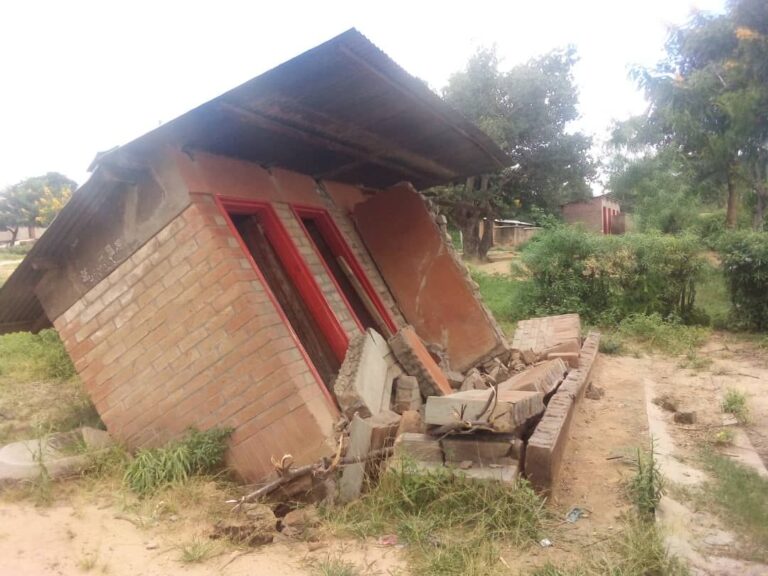
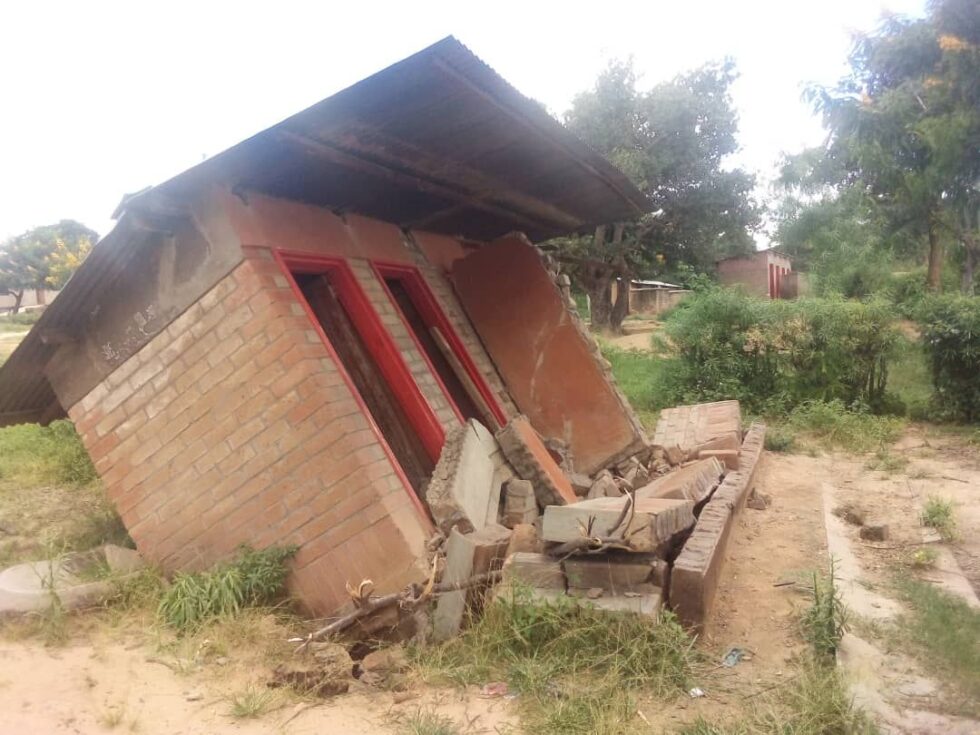
A collapsed toilet at Mthawira LEA School in Malomo – Ntchisi, the community has promised to build another one with thanks to cooperation.


During the media advocacy tour in Ntchisi, journalists accompanied by District Social Accountability Committee ( DSAC) visited Mthawira LEA School at Malomo where they were told that some learners were learning outside the school in an Anglican church, the school has received a good response from the Council, two blocks have been constructed from MERP programme.

Speaking to the journalists, Head teacher of the school MacLoud Mchizampheta, said there’s community participation at the school addressing some of the challenges faced by the school citing a toilet which  collapsed saying the community has promised to build another one.

Mchizampheta said because of the cooperation that is existing between the teachers and community members, the school has managed to buy a new printing machine at K1.3 million saying this has improved performance by the learners.

The journalists visited Mbomba LEA School where a Standard 8 learner Innocent Kalengenya said absenteeism and drop out of learners at the school is very high claiming that at one time, a tile broke from the roof of the classroom and fall on a learner who sustained some injuries saying this contributed to some learners moving away from the school to Dete LEA School which has iron sheets on the classroom roofs.

The media tour ended with a visit to Mtambalala LEA School where a Standard 8 learner Yesinta Chisakasa said two classroom blocks and an office are roofed with tiles which are posing a threat to teaching and learning and has no water.

Chisakasa told journalists that learners do carry buckets from their homes to school to be used for drawing unsafe water from their nearby river for drinking and mopping, saying they are being encouraged that when coming to school, they should carry with them water in plastic bottles for drinking.

She said a borehole was sank at the school and it is producing no water and as such teachers, learners, and the schools’ surrounding community have no where to run but to use the unprotected water from the river.
” Learners who don’t want to carry bottles with water from home are forced to go to the river to drink water using their hands or other sources,” said Chisakasa.

MHRRC’s Capacity Building Development Associate Noel Msiska, has called on government or the council to be committed to make sure that all these classroom blocks should be roofed with iron sheets, saying tiles have a short lifespan and have run out of their time.

Msiska said in some schools of the district, the classrooms are old and dilapidated saying these are not conducive learning environment for the learners.

He expressed gratitude with this media tour for journalists saying the issues identified will inform and provide evidence for advocacy to improve service delivery by the council and government itself.

” This is the time for government to start planning of very good infrastructures that would display a commitment to 2063,” said Msiska.

The media advocacy tour for journalists was organized by the MHRRC with funds from  NCA DCA through DANIDA project under the joint country programme.

.

Mangochi to host key gathering of Malawi’s business and government elite

0


By Burnett Munthali

From April 22 to 24, influential figures from Malawi’s government, finance, and industry sectors will converge in Mangochi for a critical discussion on transparency and accountability in driving national development.

The 2026 Lakeshore Business Leaders’ Summit promises to be a landmark event, bringing together top officials and business leaders to shape the country’s economic future.

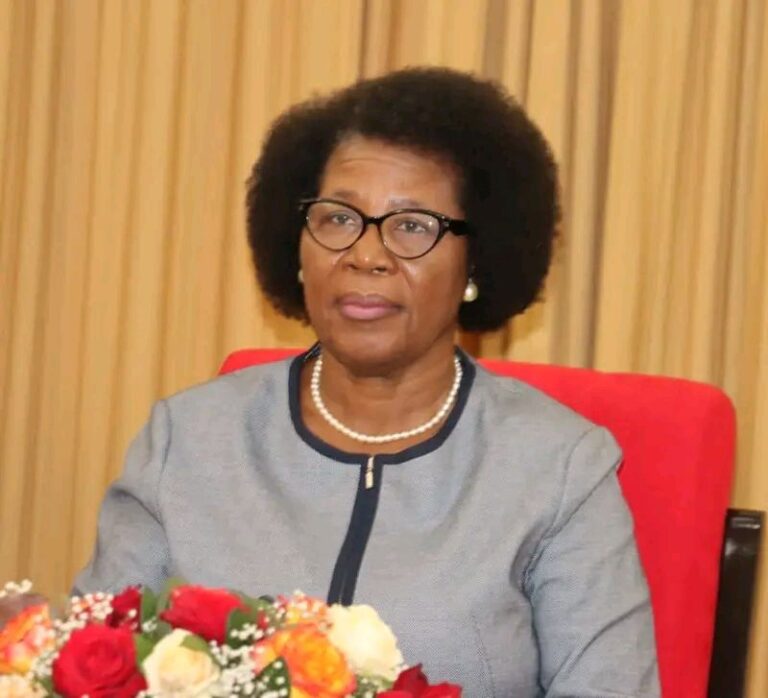
Ansah


At the helm of the summit will be Vice President Dr. Jane Mayemu Ansah, who will serve as the Guest of Honour. Renowned speakers Nyimpini Mabunda and Oscar Kissanga will also share their expertise, lending a strong regional and international perspective to the event.

Other prominent speakers, including Jimmy Lipunga, Agnes Sentala, and Tavona Biza, will contribute to the discussions, making the summit a vital platform for networking and collaboration.

The event will focus on fostering meaningful dialogue around governance, ethical leadership, and economic transformation, providing a unique opportunity for business leaders to engage directly with top government officials on sectoral policies.

By bringing together industry captains, policymakers, and development partners, the summit is expected to play a significant role in shaping Malawi’s economic trajectory.