


By Staff Contributor
No, the speaker was not right as he crossed his boarders
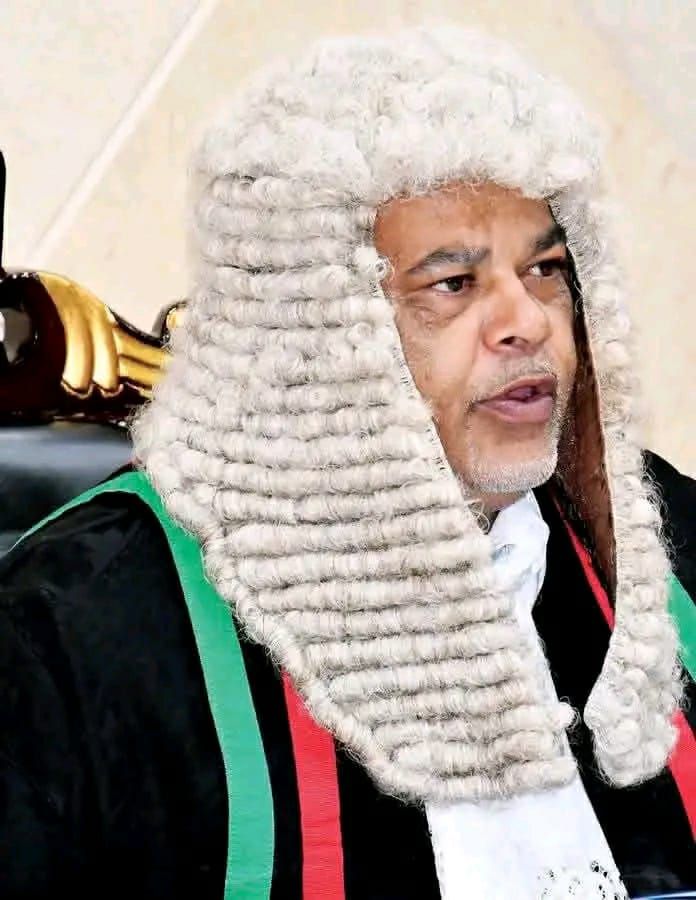
No, the Speaker was not right to announce that Parliament will institute committees to probe public institutions. Rt. Hon. Sameer Suleman made a serious misjudgment that betrays a fundamental misunderstanding of the separation of powers, the mandate of Parliament, and the role of independent institutions in our constitutional democracy. The announcement was made with confidence but without legal grounding, and it has the potential to weaken the very accountability it claims to promote. By inserting Parliament directly into the operational affairs of public institutions, the Speaker has blurred constitutional lines, created the risk of political interference, and duplicated work that is already assigned to bodies with the expertise and legal authority to carry it out. That is not bold leadership. It is institutional overreach, and it is the reason his fitness to continue occupying the high office of Speaker must now be questioned.
Parliament’s authority is clear. Section 62 of the Constitution gives Parliament legislative, representative, and oversight functions. Those oversight functions are exercised through portfolio committees, questions to ministers, motions, debates, and the approval and monitoring of the national budget. The Constitution also establishes independent institutions precisely to avoid the concentration of power. The Auditor General audits public finances. The Anti-Corruption Bureau investigates corruption. The Ombudsman addresses maladministration. The Public Accounts Committee and Public Appointments Committee, both committees of Parliament, already scrutinize reports and summon accounting officers. To now announce that Parliament will set up additional committees to directly “probe” public institutions is to ignore this architecture and to assume powers that do not belong to the Office of Speaker. It suggests a failure to appreciate the difference between oversight of the Executive and direct investigation of institutions that are created by law to function with a degree of independence. When the Speaker cannot draw that line, he exposes a gap in constitutional literacy that is dangerous for the person presiding over the National Assembly.
The practical consequences are worse. Probing is not the same as asking questions. Probing requires forensic capacity, legal powers of evidence gathering, and protection from political pressure. Parliament committees do not have those tools. What they have is political composition. That means any committee set up under this announcement will immediately be viewed through a partisan lens. Institutions will start responding not to the law, but to the political signals coming from Parliament. That is how you politicize technical bodies. It is how you make CEOs and boards choose survival over service. It is how you create paralysis, because accounting officers will now have to answer to their ministry, to the Auditor General, to the ACB, and now to a parliamentary committee that has announced itself as an investigator. That is not efficiency. That is confusion, and it will cost the public in delayed services.
What makes this more disappointing is the public endorsement that followed from organizations that should know better. HRDC rushed to support the Speaker without asking the basic legal questions. HRDC has spent years demanding that state institutions be allowed to work without interference. It has challenged executive overreach in court. Yet on this matter it sided with a move that inserts politics directly into institutions. That is inconsistent. It shows a failure to apply the same principles of institutional independence when the overreach comes from Parliament instead of the Executive. Civil society must hold all arms of government to the same standard, and on this HRDC fell short.
PAC, the Public Affairs Committee, also welcomed the announcement. PAC commands moral authority because it speaks from faith communities. But moral authority must be guided by constitutional accuracy. PAC’s statement did not address whether these new committees have legal backing, whether their findings will be binding, or how they will relate to existing oversight bodies. Instead it praised the idea of “action.” That is not enough. Malawians expect PAC to interrogate proposals, not to clap for them. By failing to do so, PAC has misled citizens into thinking a new structure automatically means a solution, when the real problem is non-implementation of recommendations that already exist.
CDED, which presents itself as a governance think tank, should have provided analysis. A think tank’s role is to test ideas against evidence and law. CDED’s support for the Speaker ignored the fact that committee proliferation is one of the reasons Parliament struggles to process legislation and to conclude work on reports already before it. CDED should know that Malawi’s challenge is not the absence of committees but the absence of follow-through. To endorse another layer without addressing capacity, timelines, and legal mandate is to abandon the research role it claims. That is a lapse in judgment from an institution that the public looks to for policy clarity.
UTM as an opposition party is expected to demand accountability. But accountability requires strategy, not slogans. By aligning with the Speaker on this announcement, UTM missed the opportunity to push for what would actually work: demanding that all outstanding Auditor General reports be tabled and concluded within a set timeframe, resourcing PAC to do its work, and ensuring ministers are held responsible for the institutions under them. Supporting a vague announcement about new committees does not achieve that. It gives the impression of action while avoiding the hard work of making existing mechanisms function. That is political convenience, not principled opposition.
The core issue remains the Speaker’s conduct. The Office of Speaker requires neutrality, knowledge of procedure, and respect for the Constitution. The announcement to institute committees to probe public institutions shows a disregard for all three. It shows a disregard for neutrality because the vague mandate invites selective targeting. It shows a disregard for procedure because it bypasses the established committee system and the legal limits of parliamentary powers. It shows a disregard for the Constitution because it encroaches on the mandate of independent institutions. A Speaker who does not understand the boundary between Parliament’s oversight role and the investigative role of other bodies is not fit to preside over debates about the law. The House deserves a presiding officer who protects its dignity by staying within its powers, not one who expands them without authority.
For that reason, members of Parliament must consider whether Rt. Hon. Sameer Suleman should continue to hold the position. Impeachment is a constitutional process and it exists precisely for moments when the holder of a high office demonstrates incapacity to perform the duties of that office. The Speaker has demonstrated that incapacity here. He has confused the role of Parliament with the role of law enforcement and audit institutions. He has exposed the House to ridicule by making an announcement that cannot be implemented without clashing with the law. He has invited political interference into institutions that need independence to serve the public. That is not a minor error. It is a fundamental failure of understanding, and it undermines public confidence in Parliament.
Malawi does not need more announcements. It needs the implementation of what already exists. Parliament should direct its energy to forcing the Executive to table audit reports on time, to ensuring PAC concludes its work, to using the budget to sanction non-performing institutions, and to summoning ministers to answer for failures in their ministries. That is constitutional oversight. That is what citizens will feel. Creating new committees to probe institutions will not deliver that. It will deliver press conferences, political fights, and another set of unfinished reports.
The Speaker’s announcement was wrong in law, wrong in policy, and wrong in timing. The support from HRDC, PAC, CDED, and UTM does not cure those defects. It only highlights how easily public discourse can be swayed by the appearance of action. Parliament is strongest when it respects its limits. The moment it steps outside them, it becomes part of the problem. Rt. Hon. Sameer Suleman has done that. For the integrity of the National Assembly and for the health of our democracy, Parliament must correct course and members must ask whether he is the right person to lead it.