


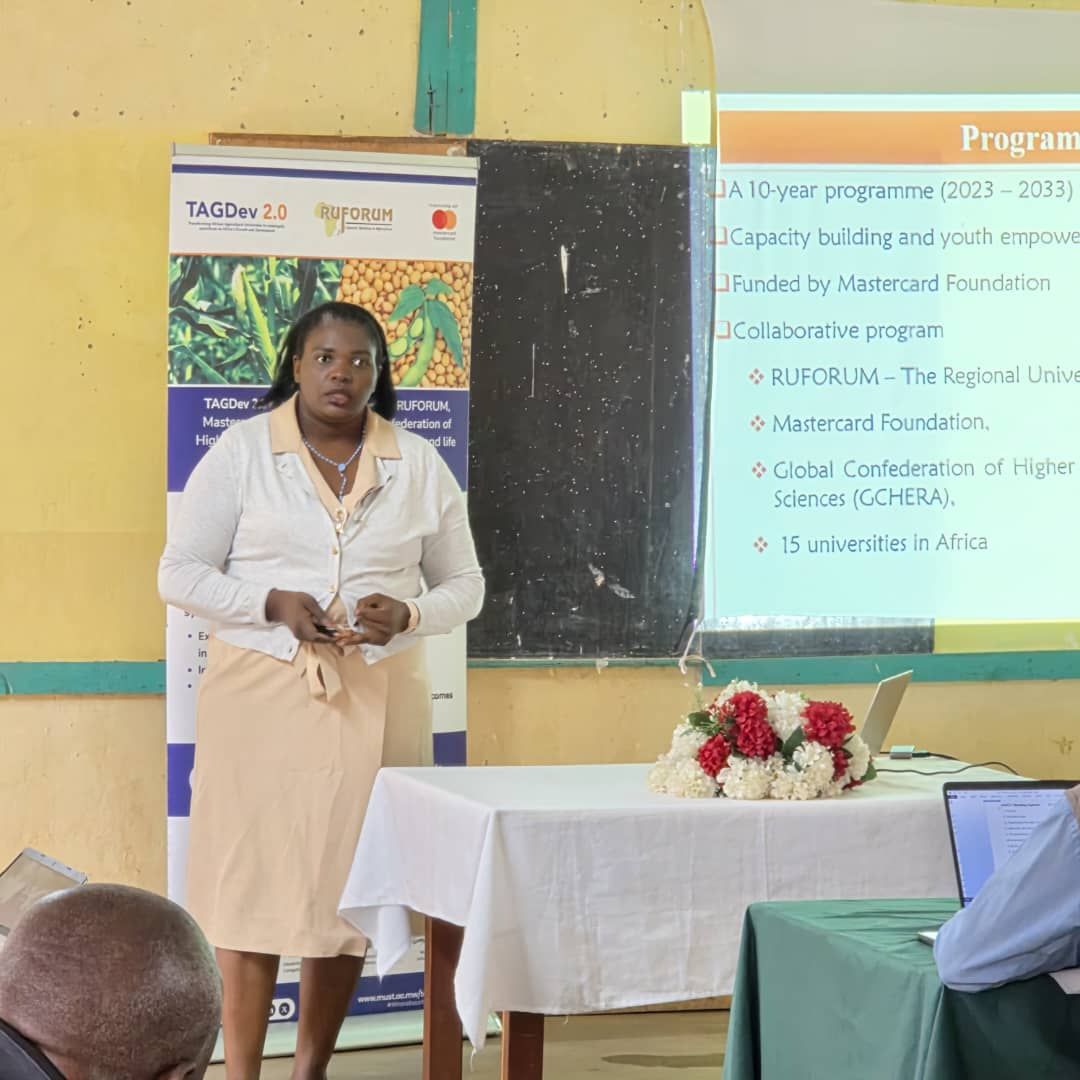
By Vincent Gunde
Transforming African Agricultural Universities to meaningfully contribute to Africa’s Growth and Development (TAGDEV 2.0) is a 10-year program (2023 – 2033 funded by Mastercard Foundation.
The program is being supported by Mastercard Foundation, RUFORUM, and the Global Confederation of Higher Education Associations for Agricultural and Life Sciences (GCHERA). In Malawi, it is
being implemented through a consortium of universities, comprising Malawi University of Science and Technology (MUST), Lilongwe University of Agriculture and Natural Resources (LUANAR),University of LivingstoniaMzuzu University.
Presenting the program to the District Executive Committee (DEC) in Dowa, Dr. Jacinta Nyaika, Head of Horticulture Department at LUANAR, said the programme is aiming at strengthening Universities and TVET institutions to better serve communities by skilling, and empowering Africa’s young people and their institutions to drive inclusive, equitable and climate – resilient transformation of agriculture and agri – food systems.
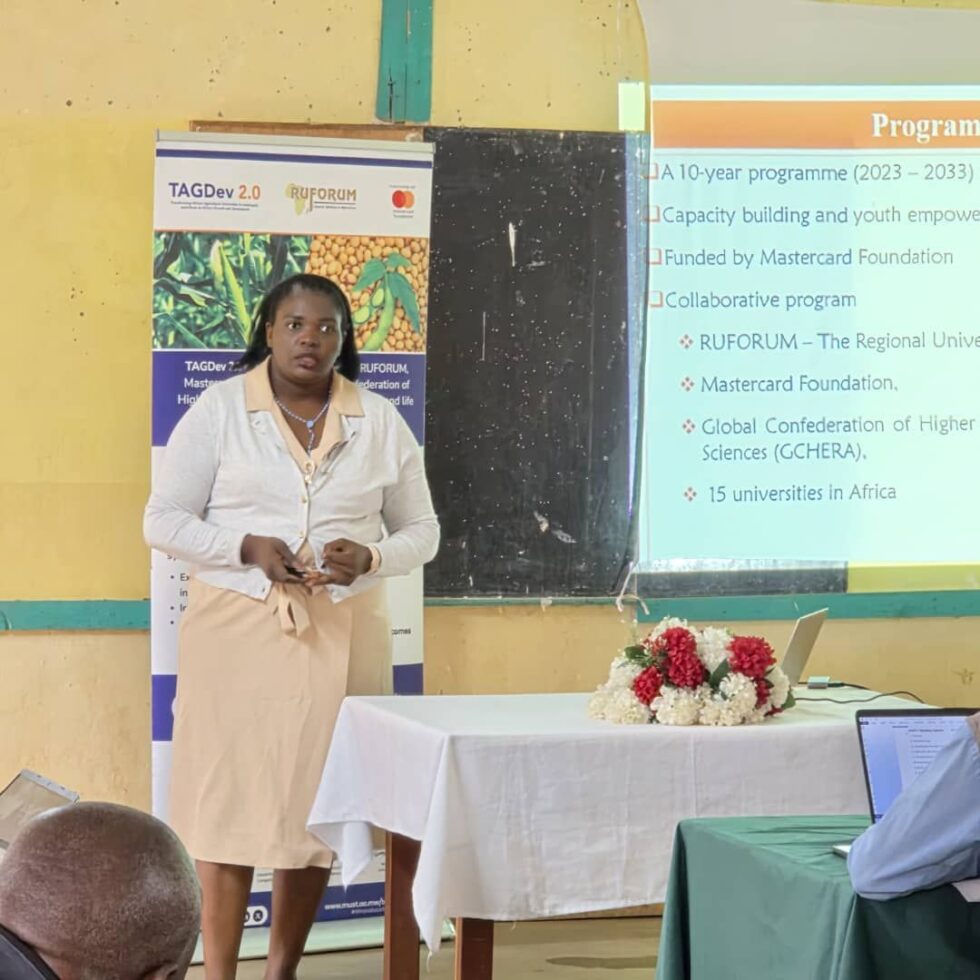
Dr. Nyaika said the program is targeting youth, of which 70 percent will be women, 10 percent differently abled people, and 25 percent refugees and internally displaced people.
She said the program has two main components: providing scholarships and system transformation and Agri – food Systems and Entrepreneurship Center (Asec).
The Head of Horticulture Department said TAGDEV 2.0 is a national program across all districts saying in Malawi, it is fostering entrepreneurship for wealth creation and is being implemented for a period of 10 across temhe country.
Dr. Nyaika said the ASEC component will be implemented for 5 years years in Rumphi, Mzimba, Lilongwe, Dedza, Dowa, Mchinji, Thyolo, Zomba, Mangochi, Blantyre, and Chikwawa. ASEC working package targets providing skills for work and wealth creation to 1,900 TVET students who will be trained in entrepreneurial skills in 8 TVET colleges. The program will also ensure that 2 TVET entrepreneurial curricular are developed and accredited. In addition, 225 students will trained through the school factory model, 1,200 TVET and University graduates produced, 1,400 above secondary school, TVET and University drop – outs skilled, and 600 young women and men with no or below secondary school level.
She said the programme expects 1,200 incubates to graduate on entrepreneurship for innovation, jobs, and wealth creation, a bank of 1,200 innovative ideas will be created, 1,200 prototypes to be developed, 100 SMEs to be promoted and 20 products to be commercialized.
The Head of Horticulture Department said 70,000 Smallholder farmers will be trained in different skills under improved climate and adaptive agricultural production and productivity of value chains in Malawi, 1,680 farmers knowledge and skills enhanced, 8 community seed banks will also be supported, in addition to 8 more Cooperatives to enhance their value chains.
She said in Dowa, the programme will train youth clubs in different agricultural value chains, engage community level governance structures for ownership of the interventions, work with community seed banks that are viable and support in seed system management, work with viable Cooperatives and Associations, and promoting agroforestry trees.
“The program will promote nursery development for agroforestry trees and individual tree planting,” said Dr. Nyaika.
She said in Dowa district that the value chains of focus are maize, soybean, sweet potato and potatoes, dairy, and apiculture.
Dr. Nyaika said she was presenting the program to Dowa DEC as part of the journey forward to clearing a path of engagement and decision-making, and that the discussions with District officials and possible collaborators aimed at identifying different target areas and groups to work with, implementing project activities in targeted areas in collaboration with communities and partners to achieve project objectives. The program will also engage in continuous monitoring progress, learn and adapt to ensure effectiveness, and sustain results.
Moving forward, Dr. Nyaika said through collaboration, transparency, and shared purpose, together they will arrive at the best decision for lasting impact.
In his remarks, Dowa district Civil Society Organizations Network Chairperson Maxwell Kadutsa called on partners implementing various interventions in the district to support the program for it to be implemented in the interest of all.
Kadutsa reminded partners on the need to register with the council and the CSO Network for the district to enhance cooperation, transparency, and accountability on the projects they are implementing in the district.