


By Rick Dzida
Malawians are being systematically blinded by the state. The absolute refusal of the government to disclose the true purpose of President Arthur Peter Mutharika’s frequent international travels represents an existential threat to democratic accountability. When public officials behave like covert operatives, the fundamental contract between the state and its citizens is completely severed.
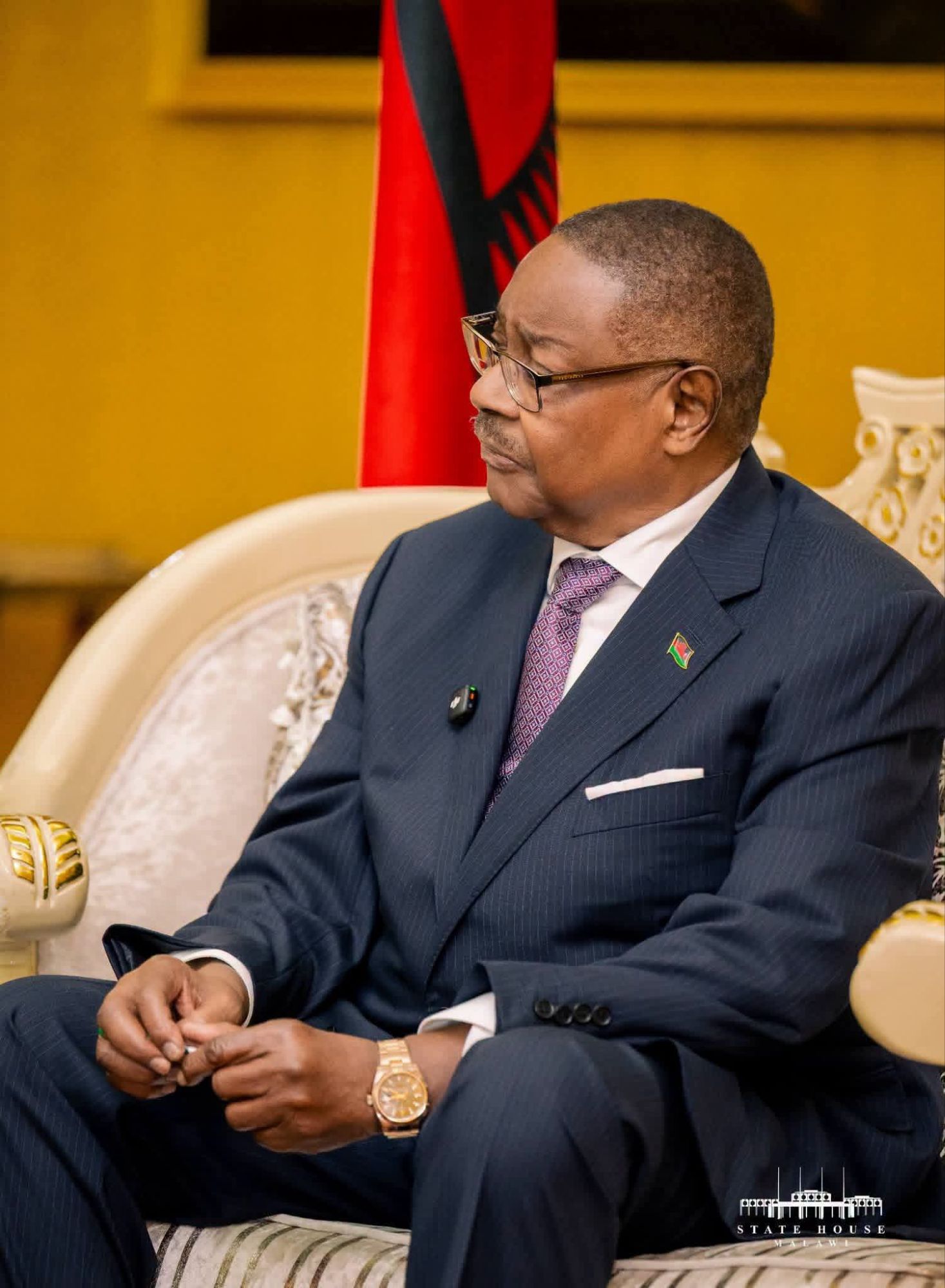
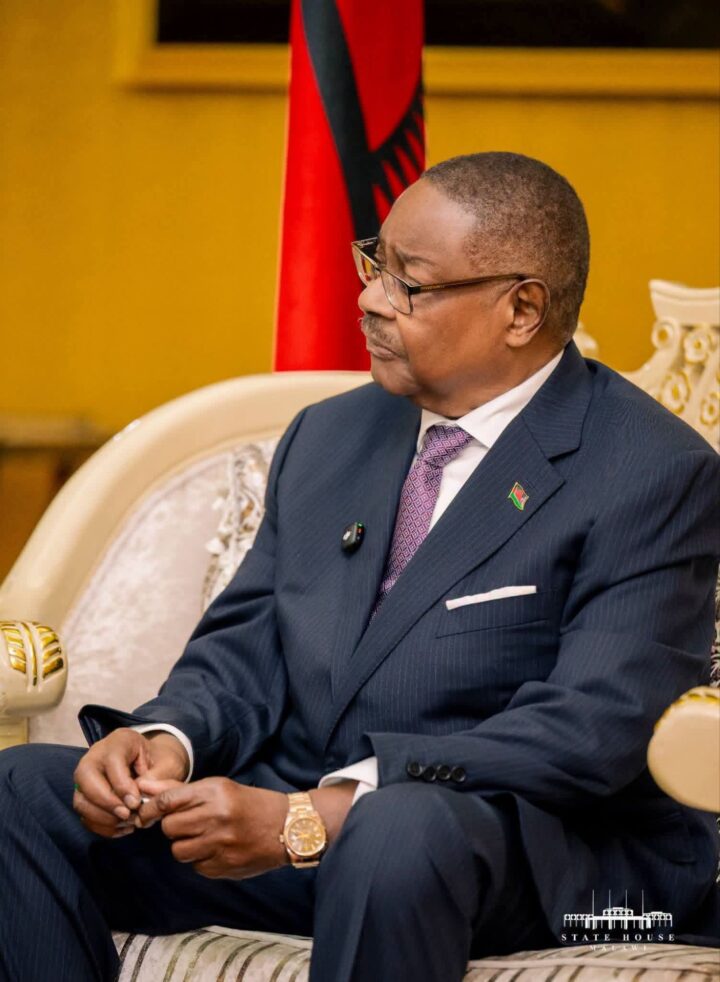
The administration’s silence regarding President Mutharika’s five consecutive “private trips” to South Africa has directly triggered intense domestic speculation. Rumours are currently surging online that the 86-year-old leader left South Africa for medical treatment in India.
Instead of providing clarity, the government weaponizes the Fallacy of Shifting the Burden of Proof. State officials demand that citizens stop spreading “unverified information,” acting as though the public bears the responsibility to discover the truth.
This flips democratic accountability on its head. The state is the sole custodian of public information regarding the head of state. Demanding that the public prove where the President is—while actively hiding him behind state-issued “private visit” templates—is a deliberate tactic designed to deflect institutional guilt and keep citizens permanently in the dark.
On 12 October 2026, Chief Secretary to the Government Justin Saidi was forced to issue a strict dismissal, insisting that Mutharika is not in India but remains in South Africa. This rapid fire-fighting relies entirely on the Appeal to Ignorance also known as Argumentum ad Ignoramiam. The state effectively argues: “Because you cannot mathematically prove he is in India, you must blindly trust our word that he is safely in South Africa.”
Why should Malawians trust a government whose primary communication strategy is reactionary damage control? When an administration operates in absolute obscurity, its official statements carry zero democratic weight. By withholding basic facts like the duration and exact purpose of these trips, the government loses any moral authority to demand public trust.
This heavy wall of secrecy does not just alienate the public; it is fracturing the executive branch itself. Vice President Jane Ansah recently went on record confirming that certain factions within the Democratic Progressive Party (DPP) machinery are systematically excluding her from core government operations.
Unfortunately, this institutional alienation has fuelled a chilling rumor that the government secretly intends to table a bill empowering the Speaker of Parliament to assume caretaker presidency whenever the office falls vacant.
The government’s defenders will dismiss this as a Slippery Slope Fallacy, claiming that a simple “private trip” cannot logically lead to a full-scale constitutional coup.
In a vacuum of information, the worst-case scenario becomes highly plausible. Merging the head of the legislature (the Speaker) with the caretaker executive directly violates the foundational principle of the separation of powers. By sidelining Vice President Ansah, the presidency creates the very structural chaos that makes these constitutional threats a terrifying possibility.
This operational obscurity flies directly in the face of the Constitution of Malawi, creating what the Human Rights Defenders Coalition (HRDC) has condemned as an institutional crisis regarding who actually wields executive authority when the President vanishes.
Sections 83 & 84 of the Malawi Constitution outline strict legal frameworks for the delegation of executive power. When a sitting Head of State departs for extended periods—accumulating trips of 14, 11, and 17 days—without formally handing over power to Vice President Jane Ansah, the state violates the rule of law.
Sidelining the Vice President to pave the way for a rumoured “Speaker-takeover” bill threatens to dismantle the three independent arms of parliament. Using administrative isolation to bypass the constitutionally mandated successor is a direct assault on the republic’s foundation.
While the administration demands strict adherence to austerity measures—penning directives on 11 February 2026 to restrict cabinet ministers to just one local trip per month due to “rising fuel and allowance expenses”—the President enjoys boundless luxury.
As UTM Party leader Dalitso Kabambe rightfully targeted in his 12 October 2026 media briefing, using public treasury funds to bankroll unbudgeted personal travel violates the national budget law. The Public Accounts Committee must urgently probe how State Residences funds are being manipulated to pay for these jaunts.
Malawians are facing a catastrophic domestic fuel crisis where daily transport fares have doubled overnight due to acute foreign currency shortages. For the State House to draw down precious national forex reserves to fund international motorcades, presidential convoys, aides, and personal security abroad while telling the public there is “no money” is an unforgivable betrayal of the citizen’s trust.
This pattern of behaviour is not new; it follows a grim historical precedent in Malawian politics where the State House has a documented history of hiding the true status of its leaders to preserve political control.
The most alarming precedent occurred in 2012 during the Bingu wa Mutharika cover-up. Following the sudden collapse and passing of President Bingu wa Mutharika, senior officials concealed his death from the public and intentionally sidelined the rightful Vice President, Joyce Banda, to manipulate the line of succession.
Today, we see an exact parallel: President Peter Mutharika’s administration utilizes vague “private visit” press releases to mask his current whereabouts, while the inner political circle actively isolates Vice President Jane Ansah.
Furthermore, this administration mirrors its own past deception from 2016 during the prolonged US absence. Following a UN General Assembly, the government strictly denied rumours that the President was gravely ill, claiming he was in “robust health,” only for it to be revealed later that he required emergency medical procedures.
That identical playbook is being used right now during these 2026 South Africa dashes. Chief Secretary Justin Saidi issues bare-minimum departure notices via Kamuzu International Airport, completely refusing to disclose the duration or medical intent of the trips, sparking nationwide public unease.
We refuse to be governed from the shadows. A head of state traveling on public resources is a matter of public record, not a private luxury. The Mutharika administration must immediately end this culture of extreme opacity, lay out the facts of the President’s health and travels, and restore the constitutional dignity that Malawians rightfully deserve.