


By Rick Dzida
The soil of Malawi does not swallow its dead; it hoards them. For sixty years, the state-sponsored architectures of silence have built monuments over shallow graves, rewriting executions as accidents, and massacres as administrative necessities.
From the absolute twilight of the Kamuzu era to the modern, mist-shrouded corridors of contemporary power, the geography of dissent is a map written in blood, designed by regimes that trade human marrow for political longevity.
In May 1983, the air in Mwanza was thick with the scent of crushed pine and false narratives. Dick Matenje, Aaron Gadama, Twaibu Sangala, and David Chiwanga had dared to look into the eyes of Life President Hastings Kamuzu Banda and question the inevitable, crushing ascension of his chosen inner circle.
They were ministers and lawmakers, but dissent reduces titles to targets. The regime’s hammer fell in the dark: they were bludgeoned to death by state security agents. To satisfy the official archive, their battered bodies were stuffed back into a saloon car and pushed into a ravine. The radio broadcasted a simple, flat lie—a traffic accident while fleeing the state.
The metronome of Kamuzu’s paranoia spared neither the exiled nor the enforcers. Henry Chipembere, the firebrand who had once shaken the colonial foundations, found his revolutionary spirit choked out by the bitter bread of exile, dying in 1975 under the relentless, exhausting pressure of a regime that hunted his memory across oceans.
For others, the punishment was less distant. Mkwapatira Mhango, a journalist armed only with truth and exile in Lusaka, became a targeted phantom. In October 1989, three weeks after Kamuzu publicly cursed his name, a state-directed petrol bomb tore through Mhango’s home, burning him, his wives, and his children into ash.
Even those who held the keys to the castle were eventually locked out. Inspector General McWilliam Lunguzi, who spent a lifetime executing the security mandates of the one-party state, found himself discarded when the political winds shifted.
In July 1996, while navigating the post-regime political wilderness, his vehicle slammed into a stationary tractor near Mponela. The state called it a mishap, but the streets knew it as the inevitable return of the old metaphor: the fatal car crash that clears a crowded board.
When democracy arrived in 1994, it wore a yellow shirt and spoke of liberation. Yet, the machinery of the state merely changed mechanics; the crushing of bones continued.
Chief Baghdad, a local leader whose influence threatened the ruling party’s regional monopoly, vanished into the machinery of state-sponsored thuggery, his life snuffed out to secure a district’s fealty.
Then came the calculated silencing of the inside men. Kalonga Stambuli, an economic advisor who knew precisely where the state treasury’s blood was leaking, became a liability. He was strangled to death in 2003, his corpse left behind as a silent warning to any who thought a briefcase could protect them from a regime’s survival instincts.
The music changed, too. Evason Matafale, a prophet with a reggae beat, sang songs that cut through the state’s self-congratulatory noise. He spoke for the poor, pointing his finger at the corruption of the United Democratic Front.
In November 2001, the police came for his voice. Taken into custody for sedition, he returned to his people in a coffin, his body broken by police brutality under the thin, transparent lie of a sudden, natural illness.
By 2011, the state had grown arrogant again, wrapping its paranoia in the robes of academic and civil discipline. Robert Chasowa, a 21-year-old university student who dared to organize pro-democracy resistance against Bingu wa Mutharika’s increasingly autocratic rule, learned the price of youth and courage.
In September 2011, his body was found lying on the concrete of the polytechnic campus. The police quickly produced a forged suicide note, claiming he leapt to his death. The subsequent autopsies tore the lie apart: Chasowa had been hunted down and bludgeoned in the back of the head, his skull shattered by state operatives who feared a student’s leaflet more than an army.
The fear was justified. In July 2011, the streets of Mzuzu boiled over with citizens exhausted by economic stagnation and political arrogance. The response from the regime was swift and leaden. Twenty demonstrators were shot down in cold blood by state police. Their bodies lay in the dust of Mzuzu and Lilongwe, a grim, numeric testament to a government that preferred a cemetery full of quiet subjects to a street full of shouting citizens.
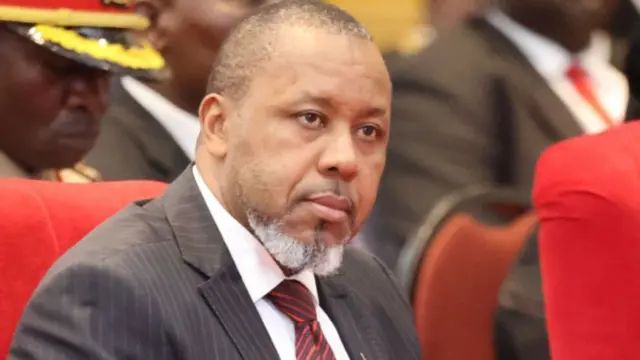
Power in Malawi has learned to use the elements. In June 2024, the struggle for succession within the governing alliance had reached a fever pitch. Vice President Saulos Chilima, a charismatic disruptor who openly challenged the status quo and threatened the entrenched political hierarchy, boarded a military aircraft alongside eight others.
Amidst thick fog and questionable orders, the plane plummeted into the dense trees of the Chikangawa Forest. While the official reports pointed to the weather, the collective memory of the nation looked back through the decades of ravines, tractors, and broken skulls. Dissent, even when dressed in a tailored suit and carrying the seal of the Vice Presidency, remains the most hazardous occupation under the southern sun of Malawi.
The names change, the regimes switch colours, but the soil remains heavy, wet, and silent.