


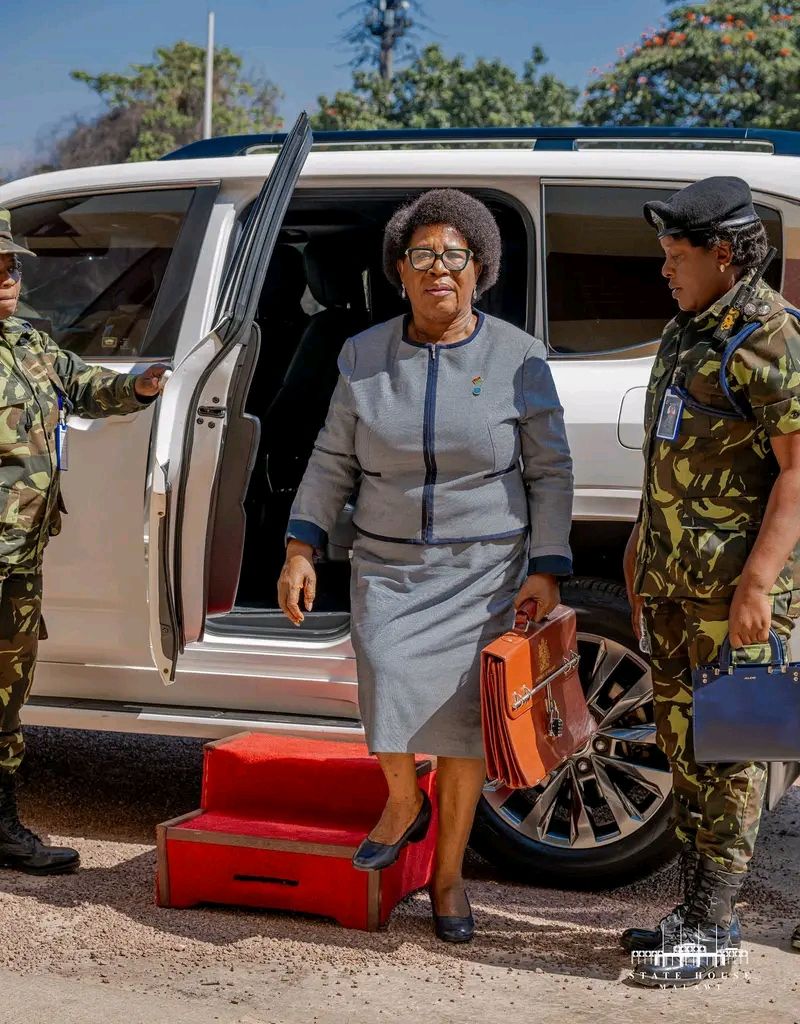
By Linda Kwanjana
“What we need to do in this country is to establish a situation where even if it was the devil who should come and sit in the high office in Ghana, by virtue of certain procedures and practices, the devil cannot get away with doing whatever he wants. He will naturally have to do what people expect of him.” — JJ Rawlings, former President of Ghana.
Every democratic state survives on one central principle: the sovereignty of the people. That sovereignty is the collective power of citizens to determine the course of national life. Because it is impossible for an entire population to gather and make decisions daily, democracy developed the concept of representation. Through elections, the people temporarily delegate authority to leaders, while constitutions and laws embody the collective agreement on how power should be exercised. Therefore, JJ Rawlings Was Right: Institutions Must Be Stronger Than Personal Power.
In essence, democratic legal order exists to ensure that public office serves the expectations of the people rather than the personal wishes of those occupying it. Elections give leaders authority, but constitutional procedures restrain how that authority is exercised. This is precisely the institutional philosophy JJ Rawlings believed in: that systems and procedures must be strong enough to prevent even the most powerful officeholder from acting outside the expectations of the people.
It is against this understanding that Malawi now finds itself confronting a troubling democratic contradiction.
Yesterday, the country witnessed an episode that sharply exposed the widening gap between constitutional principle and political somersaults of the DPP. The Constitution is clear: the President presides over Cabinet, and in his absence, the Vice President assumes that responsibility. Yet what unfolded at State House in Lilongwe defied both constitutional logic and democratic expectation. In the absence of the President, and despite the presence of both Vice Presidents, a Minister, Hon. George Chaponda, was delegated to chair the Cabinet meeting.
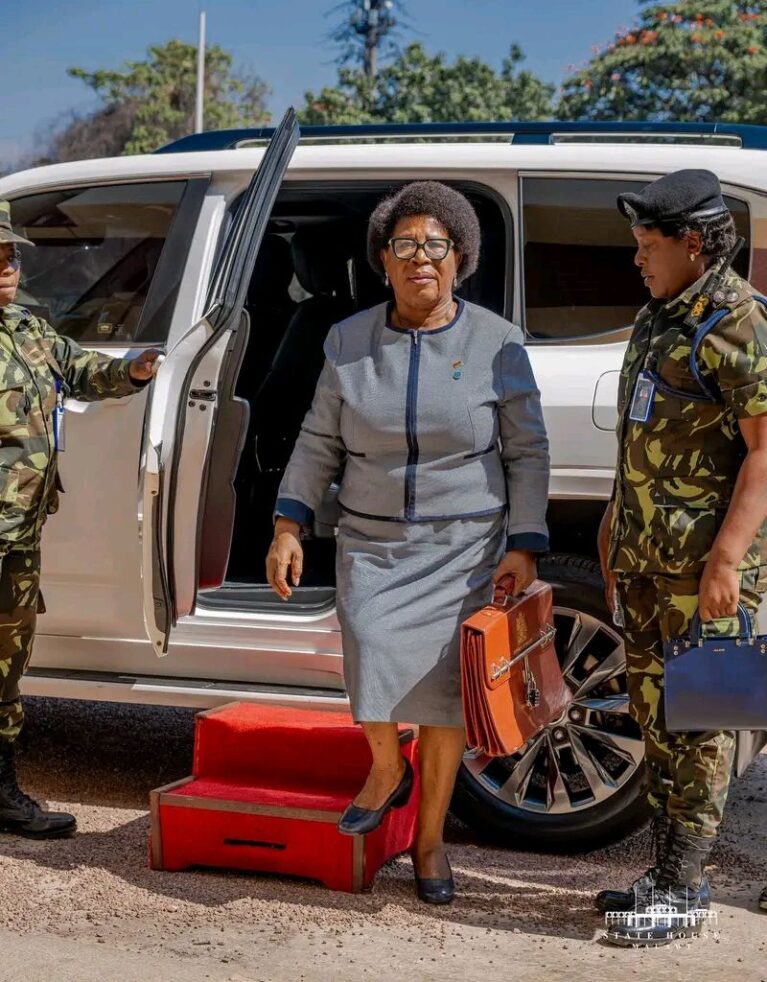
Viewed from any constitutional lens, this was beyond a mere administrative irregularity, cascading fully into a deliberate political statement to the Vice Presidents telling them that “you are, in the DPP eyes, expendable”.
A constitutional office directly elected by the people was reduced to a spectator role within the highest executive forum of the Republic.
The unmistakable symbolism in that was that the Vice Presidents, though constitutionally empowered, were politically sidelined and forced to receive direction from a subordinate minister.
The implications become even more concerning when placed within the broader context of the Democratic Progressive Party’s long-standing internal tensions. The DPP has for years wrestled with factional divisions, but this episode revealed just how deeply those fractures now run. Presented as a mere discretion of the President, the decision to bypass both Vice Presidents sufficiently carried the appearance of institutional mistrust and political exclusion.
More significantly, it reinforced the perception that executive power within the party remains tied to an unwritten convention centred around the Lhomwe belt. In that sense, constitutional order appeared sacrificed at the altar of internal party consolidation and dynastic political calculations.
What made the moment particularly unsettling was the silence of the Vice Presidents themselves. Constitutionally elevated, yet politically emasculated “castrated”. In my view, this episode embodied the helplessness of a leadership structure trapped between legal authority and partisan control. Their presence in that Cabinet room, without the authority their offices command, symbolized a quiet surrender to a political arrangement engineered within the very administration they helped bring to power.
Ultimately, the real casualty in all this is not merely the dignity of the Vice Presidency, but the sovereignty of the people themselves. Malawians elect both the President and the Vice President as part of the executive mandate. To bypass that constitutional hierarchy through political maneuvering is to weaken the meaning of the people’s vote.
It also deepens public anxiety regarding the President’s health and governing capacity. There were no reports of the President having travelled elsewhere away from the State House where the meeting was taking place. What more could justify his presence? Well, in the absence of clarity and transparent adherence to procedure, uncertainty inevitably fills the vacuum. The machinery of the state continues operating, but increasingly under suspicion, speculation, and institutional ambiguity.
Most dangerously, however, this incident establishes a precedent that constitutional offices may be sidelined at political convenience. It suggests that the Vice Presidency, an office intended to guarantee continuity and stability during moments of uncertainty, can be reduced to ceremonial irrelevance whenever factional interests demand it.
That is both a political problem and a direct threat to democratic legal order itself. JJ Rawlings warned that democracy depends not on the goodness of leaders, but on the strength of institutions and procedures that compel leaders to act within public expectations. Malawi must now confront an uncomfortable question: are its constitutional institutions still strong enough to restrain political power, or are they slowly becoming instruments of partisan convenience? Once constitutional hierarchy becomes optional, democracy itself becomes negotiable.